Pasts Imperfect (8.13.26)
This week, classicist Jermaine Bryant discusses Zora Neale Hurston's posthumously published The Life of Herod the Great. Then, a new study of the mass grave at Phaleron (Attica) confirms a local population; UNESCO announces 25 new heritage areas as protected sites, including Sebastia in Palestine; a new, open access book on medieval origin stories of Eurasia; massive geoglyphs in the southwestern Amazon; ancient Scandinavia and polar bears (?) in the Colosseum; recreating Egyptian Blue; the Indigenous oyster middens of New York City; a new exhibition on making medieval manuscripts; new ancient world journals—and more. Let's take a break from the endless Odyssey discourse and get to it.
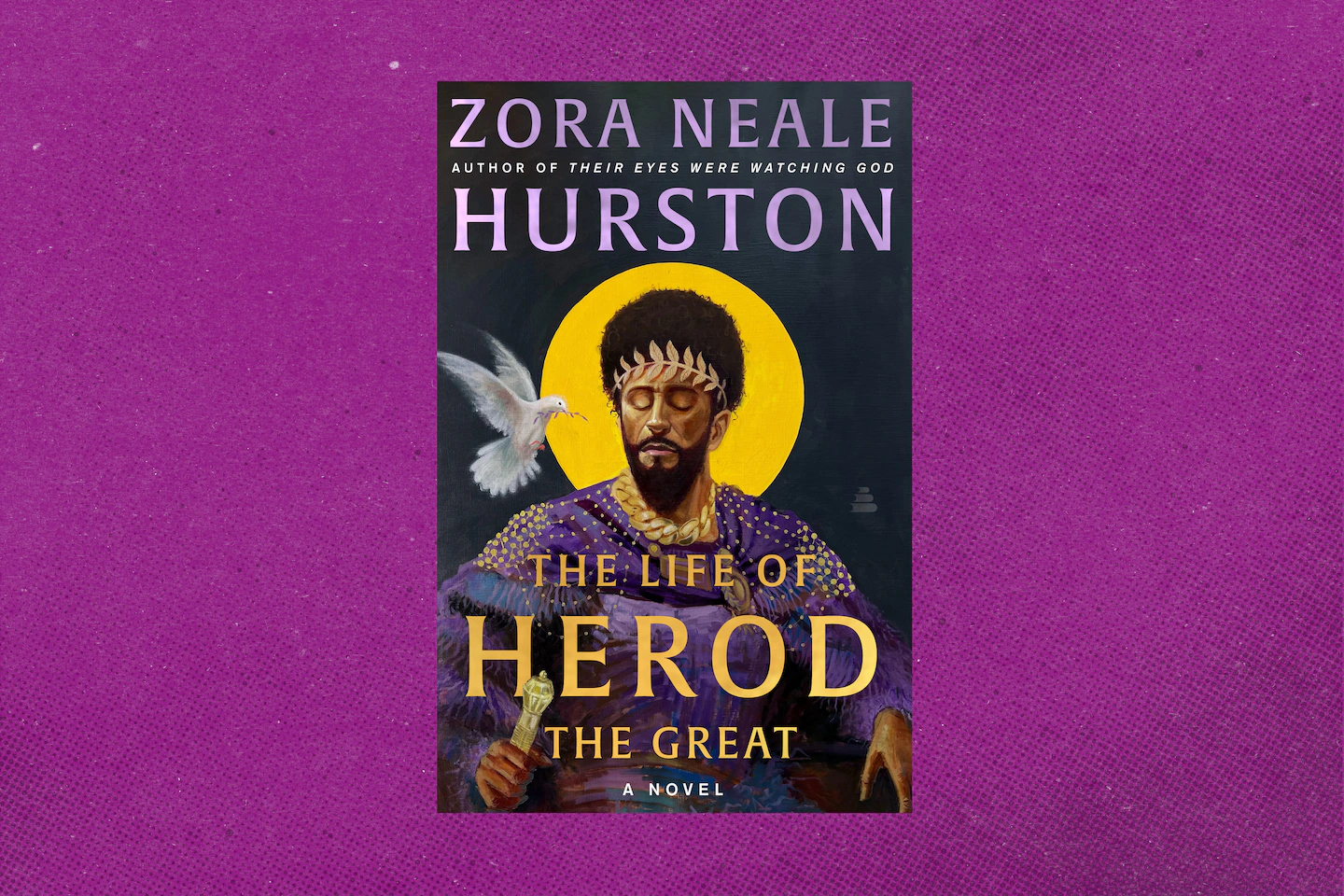
Half-Jews, Hasmoneans, Homophobia: Zora Neale Hurston’s A Life of Herod the Great by Jermaine Bryant
On a winter day in Fort Pierce, Florida in 1960, a patrolling officer spies some smoke rising in the distance. It’s coming from the St. Lucie County Welfare Home. He gets there and breathes a sigh of relief. No one's in danger. Some workers are just burning the contents of an old chest—things left behind by a resident that just passed. Relief turns to panic when the deputy looks into the flames. He snatches a blanket and puts out the fire. Rifling through the remains, he picks out correspondences, scattered writings, and photographs, all belonging to a lost friend of his—Zora Neale Hurston.
Hurston, now a household name in the US, died in poverty and relative obscurity, having suffered a stroke while living in a welfare house in south-central Florida. She would be resurrected years later, largely thanks to Alice Walker, the author of The Color Purple. Walker held up Hurston as an inspiration and was so devoted to the restoration of her legacy that she located the dead writer’s unmarked grave as an act of devotion to her forgotten hero. But even at the time of Hurston’s death, those close to her trusted in the importance of her work. Another friend donated the documents from the recovered chest to the University of Florida, where Hurston’s archive remains to this day.

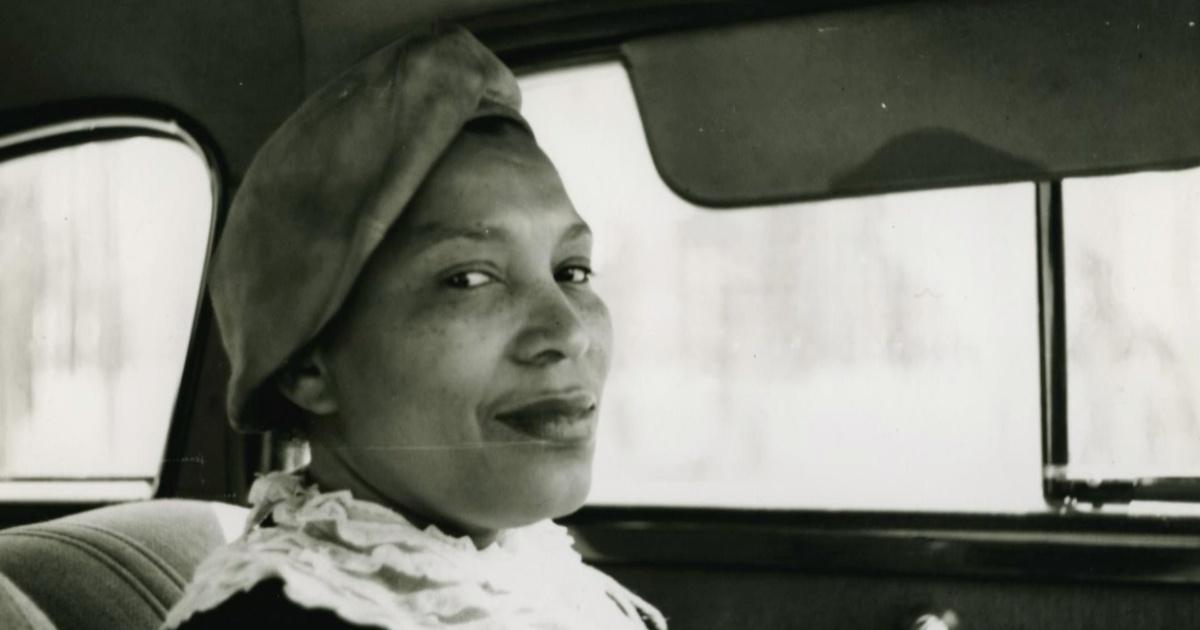
Hurston is primarily known for her novels about Black American experience. The project she had the highest hopes for was on a completely different subject. In the box with the letters and pictures was an incomplete manuscript of a work she hoped would be her masterpiece—a historical epic, The Life of Herod the Great. Seeing a kinship between Black and Jewish histories of oppression, Hurston had initially set out to write a multimillennial history of the Jewish people. She would soon focus the project solely on the life of the person she found most interesting: Herod the Great.
She didn’t view this narrower project as any less ambitious. She actually believed the opposite—that the book’s smaller focus would have even bigger implications than a sweeping history. Hurston believed that Herod was the key figure to understanding the post-World War II, early Cold War era, because he sat at the crossroads of the great historical origins of Western civilization: he lived at the point of contact between the Eastern and Western worlds; he was the ruler of Judea when Jesus was born, which to her marked the end of the Jewish era and the beginning of the Christian one; and since he both appears in the Bible and interacted with famous figures from Greco-Roman history such as Mark Antony and Cleopatra, Herod bridged the two great ancient heritages of the West: Judeo-Christian and Classical.
The novel’s success rested on the reconstruction of a combined Jewish and Classical history of the Mediterranean in the first century BCE. In letters, Hurston details spending countless hours combing through Livy, Josephus, Eusebius, Strabo, and Nicolaus of Damascus. Success to her didn’t just mean that the book would be a gripping story, but a historical contribution that would stand the test of time. The contribution would be nothing less than the uncovering of one of the most unjust conspiracies of all time: Herod, despite his reputation as a cruel king who executed Hebrew children in an attempt to snuff out the life of the baby Jesus, was good and fair.
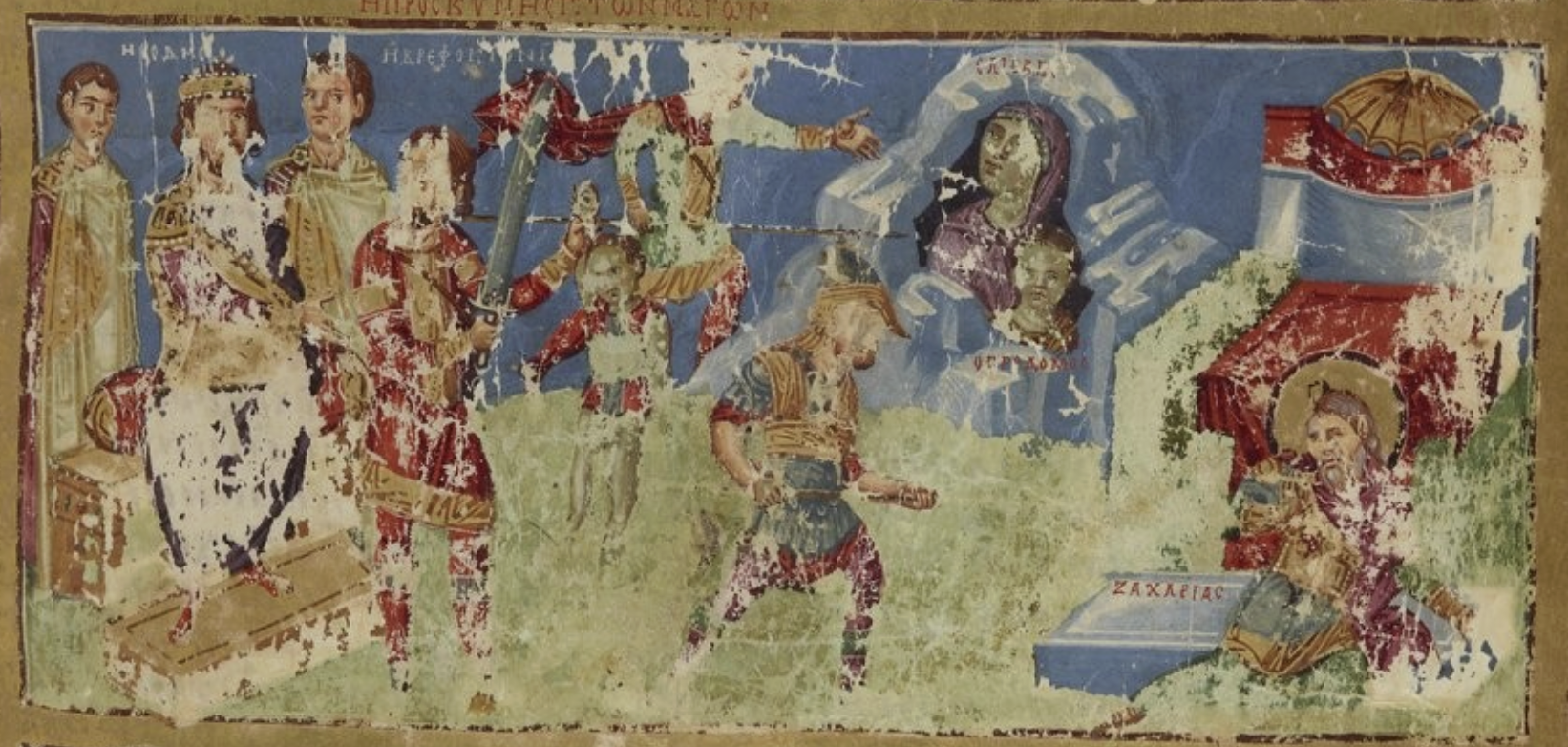
To Hurston, Herod was only unfairly tarred for being an Idumaean, a mere “half-Jew” (hemijudaeus/ἡμιουδαῖος, cf. Joseph. Ant. 14.403) interloper who supplanted the “properly Jewish” Hasmoneans, to whom he was only related by marriage. He was persecuted by the prejudice of the priests and scribes who were also unhappy about his reforms that granted more freedom to non-establishment Jews, reforms that would help clear the way for the coming of Christ. And his supposed worst crime, the Massacre of the Innocents, never happened (this is, in fact, in line with today’s general historical consensus). Hurston’s Herod, by contrast, was a noble warrior, a wise ruler, and storied lover—precisely the hero her times needed.
Convinced that this book would be the great epic of the age, Hurston reached out to British prime minister Winston Churchill to pen a preface. She told her editor that she wanted sword and sandal filmmaker extraordinaire Cecil B. DeMille, director of The Ten Commandments to direct a film adaptation. None of them got back to her. She blamed her lack of success on Herod’s poor reputation in the Bible—the conspiracy at work yet again. Hurston’s stroke would prevent her from completing the manuscript. It wound up tucked away in the trunk and later was partially burned in the fire.
In 2025, thanks to the work of Hurston scholar Deborah Plant, the epic hit shelves for the first time. My reaction to reading it was that—as interesting as I find both the ambition of the project and the actual content of the work—I wish it were less obvious why this was the first time it was picked up by a publisher. Frankly, it’s no Barracoon. Hurston follows the episodes in the sources extremely closely, especially Josephus, whose Jewish Antiquities is the major inspiration for the novel.
Still, Hurston’s framing Herod as a religious and ethnic outsider—Christian except for the accident of being born before Jesus—who must fight the backwards ways of a sinisterly scheming Jewish establishment is absolutely steeped in antisemitic troping, and with the female characters, often runs into misogynistic troping as well. But the real problem is that Hurston never allows Herod to feel human.
The king stands as an infallible, sexy-but-chaste hero, a paragon of morality, and the author is at absolute pains to signal it at all times. In an example from the beginning of the novel, Herod is having marital troubles with his pregnant wife, Doris, when Cleote—a totally-not-enslaved servant-girl “he had acquired” (24) in Egypt to look after Doris—throws herself at him and begs him to take her virginity. She claims that her medical training has led her to diagnose Doris as emotionally and sexually frigid by nature, and is therefore incapable of being a good wife. Herod replies that despite this, he would never take advantage of a woman “of a lower social status” (who is not enslaved because his family “abhors slavery, and frees all slaves [they buy] immediately” nor would he ever snatch a woman’s virginity since it is the thing that “makes a young woman precious to her husband” (25). Herod constantly performs his morality for the reader, particularly at the frequent occasions when characters try to sleep with him.
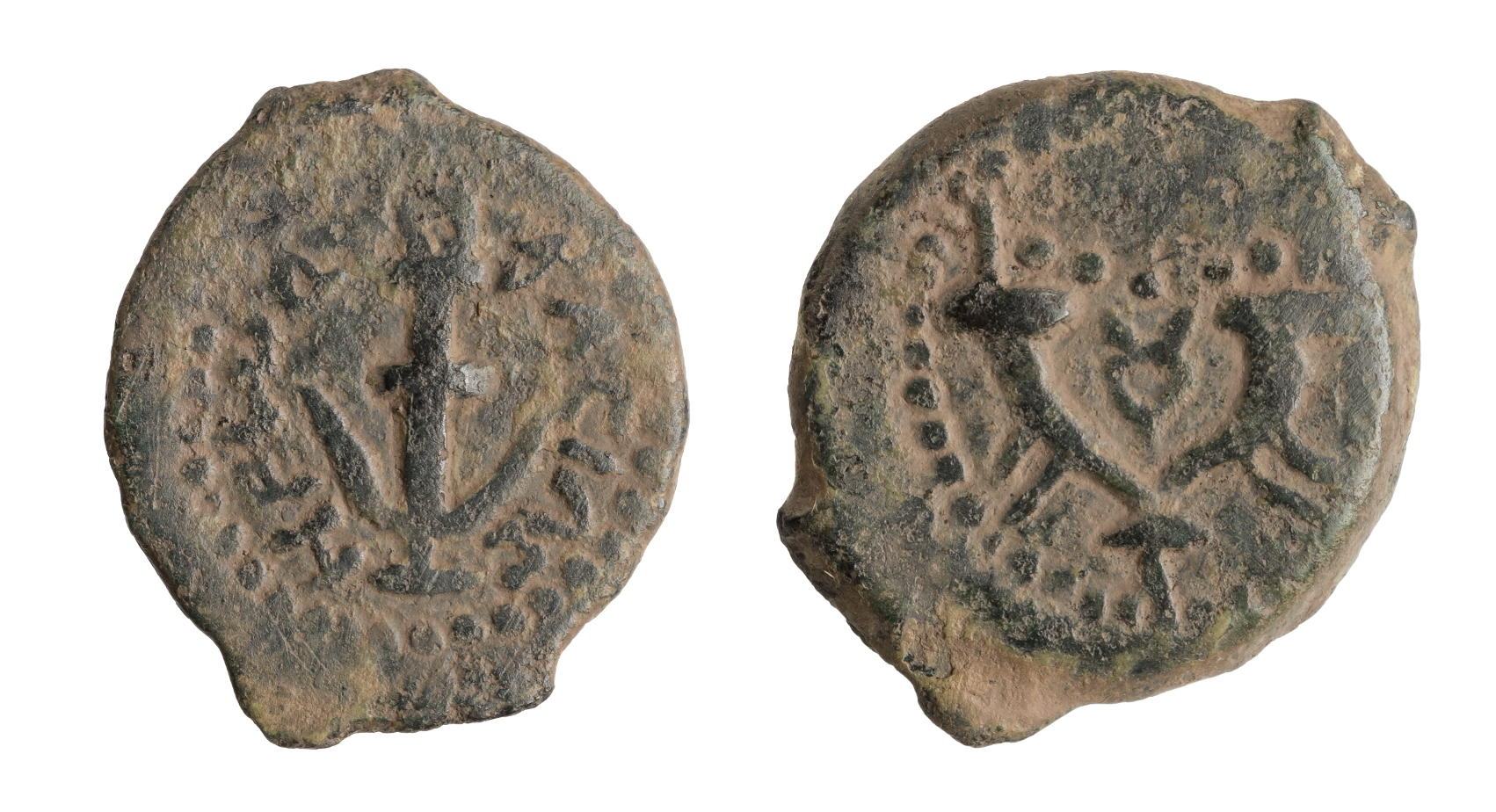
The protagonist often feels less like a reconstruction of a convincing historical Herod (or even a character loosely based on him) than Hurston’s own projection of what any upstanding man would think, say, or do. And sometimes this projection is troubling, such as in Hurston’s treatment of homosexuality.
Hurston was clearly aware of homosexuality’s prominence in the Greco-Roman world, and Herod is consistently positioned as a moral voice against it, even if he never speaks out against it. When the king strikes up an unlikely friendship with everyone’s favorite Mediterranean man-slut, Mark Antony, he fears that the general’s intentions may be more than friendly, and is internally disgusted by this idea. The attraction is positioned as a natural consequence of the king’s beautiful, muscular “masculine perfection” (albeit under the framework of a perverse “Greek custom”), but no confrontation ever happens. Herod’s moral character comes across so strongly that Antony immediately writes the king off as a viable option (153).
It’s hard to come down too hard on the novel considering we do not know what it would have looked like if Hurston had had the chance to finish it. But my own thoughts on the epic that we have are far more mixed than those of its editor, Deborah Plant, who uses Martin Goodman’s recent work on nuancing Herod to demonstrate that in her endeavor, Hurston was not wrong, just early. I would say that the epic that we have reads as strange, but often sensitive, Josephus-esque prudish erotic fanfiction penned by a socially conservative author. At any rate, I found it a fun read and am extremely glad that it survives for the public. I encourage everyone to give it a look.
Public Humanities and a Global Antiquity
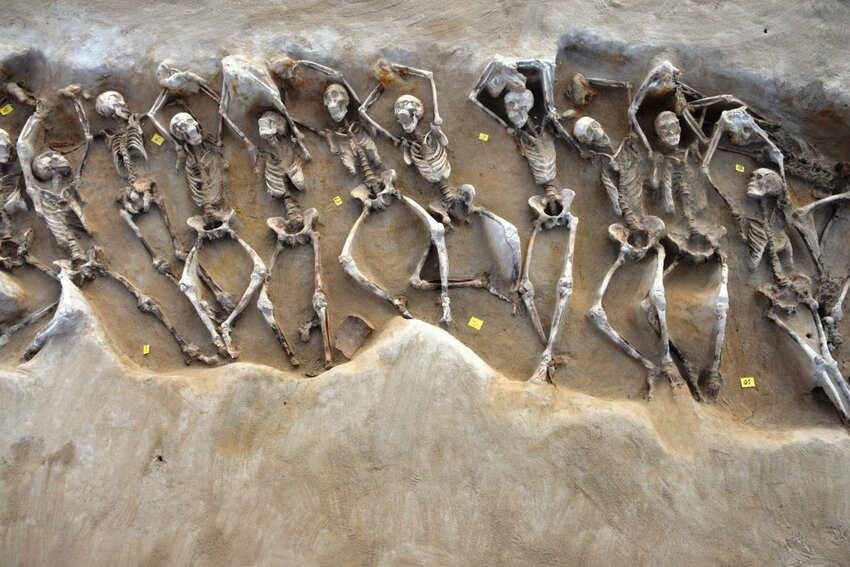
In the Journal of Archaeological Science, there is a new article contextualizing the Archaic era Esplanada mass graves at Phaleron, Greece found in 2016. The discovery of "seventy-nine adult males who were buried in three rows, with many individuals bound with metal shackles," was widely reported. And now Julianne R. Stamer, Jessica E. Rothwell, Matthew Simonton, and many other archaeologists have reported that, using strontium isotopes extracted from teeth, they established that the deceased were locals that were victims of internal political violence in the 7th or 6th centuries BCE." Isotopically, the Esplanada mass grave is not significantly different from the general burial population and is mostly local to Attica (96.9 %, n = 64/66)," they note.
Can UNESCO status preserve a site? The heritage organization announced 25 new sites, including ones in Iran, Lebanon, Kazakhstan, and more. Palestine also now has 12 new properties listed on the UNESCO World Heritage Convention tentative registry. This comes as Israel stands accused of weaponizing archaeology along the West Bank. This includes plans for the site of Sebastia. In comments to the BBC, Israeli activist Alon Arad, leader of Emek Shaveh, "an Israeli group that aims to ensure that the ancient heritage of the region belongs to all communities," stated that "Israeli authorities have bypassed consultation with the local administration and residents of Sebastia" and are using archaeological sites as a means of increasing their own land seizures.
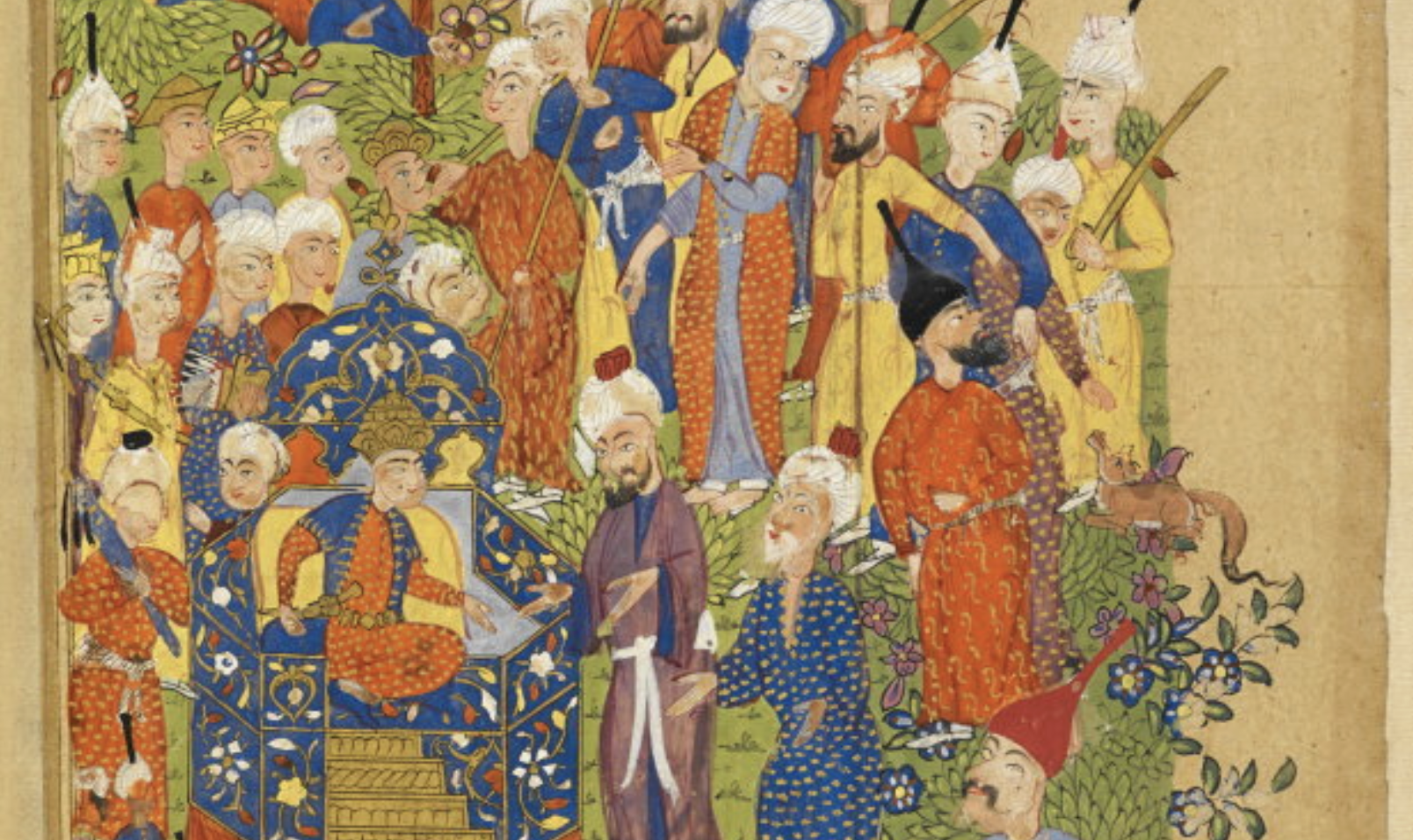
There is a new, open access issue of the journal Medieval Worlds, which looks at medieval origin stories of Eurasia. From the origin stories of Japan in the 8th century to those of early medieval Europe, this issue is an interesting look at foundation myths. I particularly enjoyed Sandra Wabnitz's article on "Fantastic Beasts and Where to Find Them in the Eurasian Steppe: The Beast Motif in Origin Stories of Eurasian Steppe Peoples, 4th-9th Centuries" and Emilie van Opstall's comparison of Greek, Hebrew, Arabic and Latin versions of Sindbad the Sailor.
Lidar is at it again, this time with the mapping of massive geoglyphs in the southwestern Amazon! Researchers headed by Martti Pärssinen of the University of Helsinki speculate that their origins date to an ancient society they call the Aquiry (600 BCE to 900 CE). The geoglyphs vary in size but most span several acres—the largest one is over 120.
Did Romans ever see a polar bear in the Colosseum? In the London Review of Books, Michael Kulikowski had an epic review of Dagfinn Skre's new The Northern Routes to Kingship: A History of Scandinavia AD 180–550.
Pitfall traps for elk and fur-bearing mammals were also common, and a Roman wildlife trade which could manage Egyptian hippopotamuses and sub-Saharan giraffes coped with northern species easily enough: an eclogue of Calpurnius Siculus offers the tantalising possibility that a couple of polar bears might have drifted south on the pack ice from Svalbard and ended their lives in the third-century Colosseum. More certain is the trade in iron, which came from north-central Scandinavia where the subarctic pine forest of the taiga begins
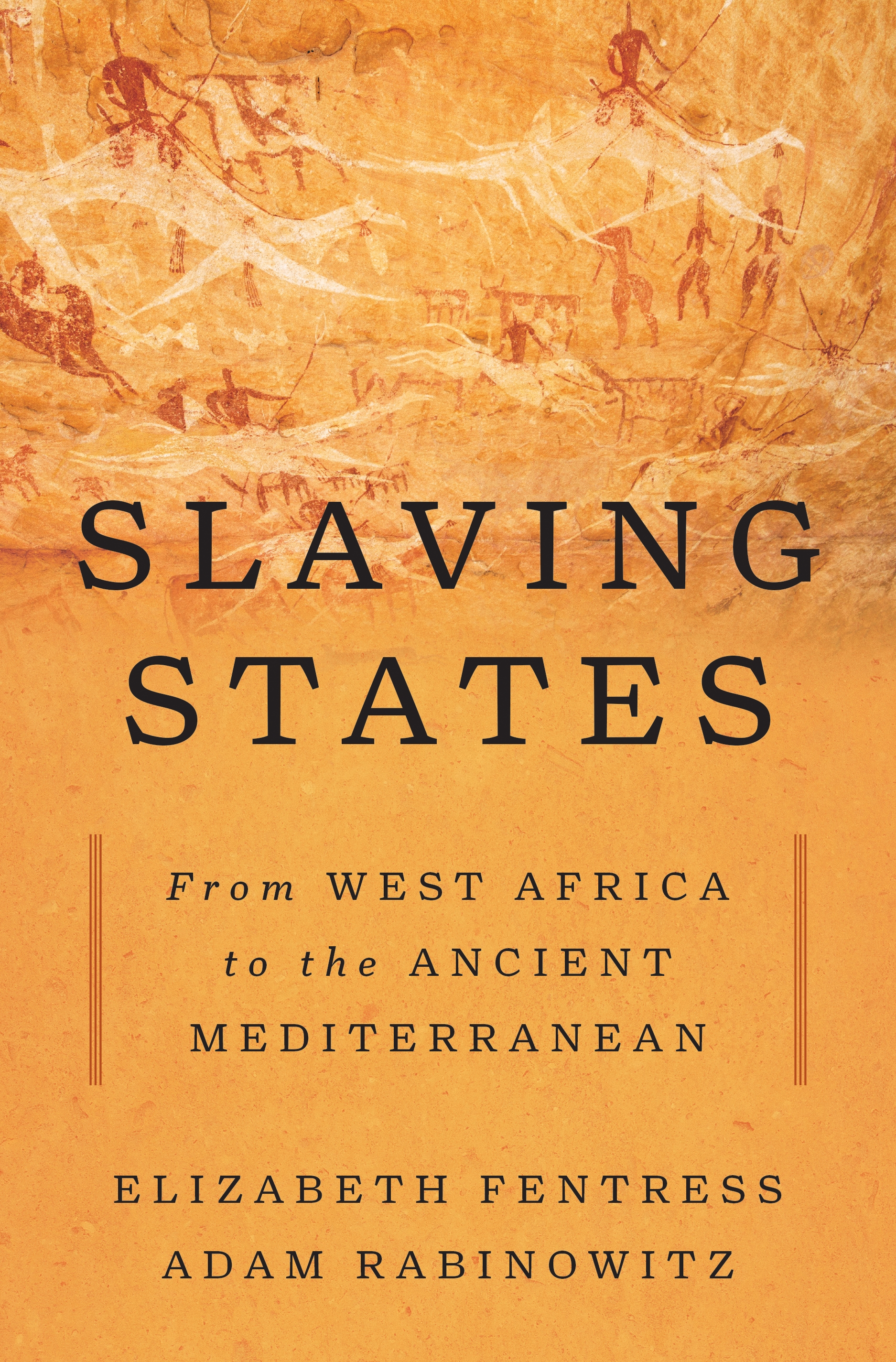
What upcoming books are we excited about? Archaeologists Elizabeth Fentress and Adam Rabinowitz have Slaving States: From West Africa to the Ancient Mediterranean coming out with Princeton Press in late August. Antoon De Baets has a new Cambridge Elements on Censorship of History which is both all-too-relevant and free to read until August 26, 2026. Andrew Wilson (the Ukrainian studies professor, not the archaeologist) has a new book on Kyiv from the medieval to the modern world out next year, The Oxford Handbook of Digital Classical Studies is out in September (or available digitally now), and Youssri Ezzat Hussein Abdelwahed's Household Violence in Greco-Roman Egypt: Social, spatial, temporal, and material perspectives is out now.
One of my (Stephanie's) pet interests is natural dyes, so imagine my awe and delight when I found out about one of the world's most ancient synthetic pigments: Egyptian blue. Archaeometallurgist Vanessa Workman and museum conservator Alexis North of the Penn Museum are collaborating on a project to chemically analyze traces of the pigment in museum objects.
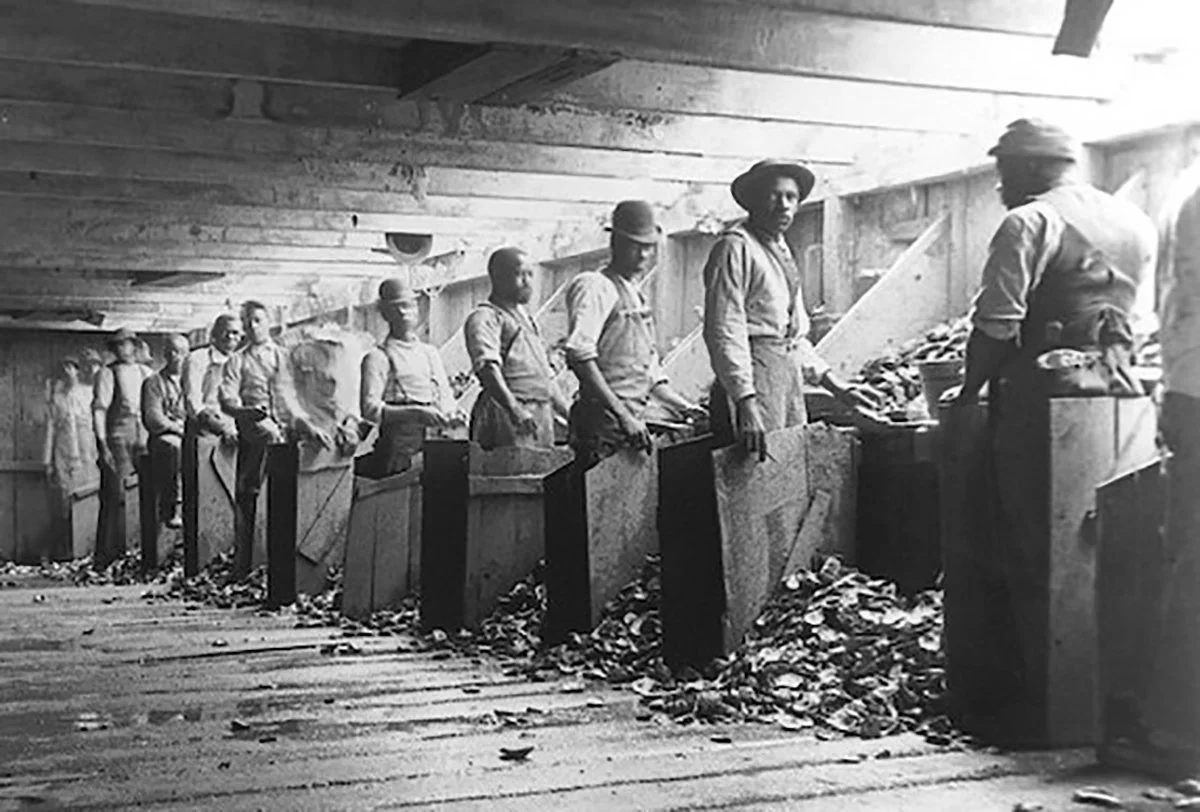
Over at Hyperallergic, co-founder Hrag Vartanian has a great article on "The Lost Pearls of New York City," which looks at Alan Michelson’s public art installation called “The Oyster” on Governors Island. He shucks open some overlooked history of Indigenous shell middens found in New York City, such as the Lenape midden:
It was one of many prominent middens that marked the region, and as Mark Kurlansky explains in his bestselling book The Big Oyster: History on the Half Shell (2006), middens are “the most common marker of a pre-European settlement anywhere in the area of the mouth of the Hudson.” These piles of oyster shells, he notes, were sometimes as much as four feet deep, sometimes buried in the ground, sometimes piled high.
As Vartanian notes, although 17th-century Dutch colonists remarked on these large oyster shell piles, by the 19th century they were ground down for use as road filler or other projects. I'd (Sarah here) also note that in the 19th century, many of the saloons and restaurants that served oysters were Black-owned. A few years ago, the Splendid Table ran a great piece with curator Joanne Hyppolite on the most famous of these oyster barons, Thomas Downing.
Finally? We support science and Anthony Fauci here. Dr. Fauci graduated from the College of the Holy Cross in 1962 with a Bachelor of Arts in Classics alongside a pre-med track. At CAMWS, they established the Dr. Anthony Fauci Award in STEM and Classics. The classics organization gives out $500 to undergraduates who excel at Classics and STEM. The prize committee welcomes contributions to support this award. To make a donation, you may use this link to Paypal.
New Ancient World Journals by @yaleclassicslib.bsky.social
American Journal of Philology Vol. 147, No. 2 (2026) #openaccess
Anzeiger für die Altertumswissenschaft Vol. 78, No. 4 (2025) #openaccess
Archiv für Papyrusforschung Vol. 72, No. 1 (2026)
Cahiers du Centre d’Études Chypriotes Vol. 56 (2026) #openaccess Proceedings of the Postgraduate Cypriot Archaeology (PoCA) Conference
Ciceroniana On Line Vol. 10 No. 1 (2026) #openaccess
Heródoto Vol. 10, No. 2 (2025) #openaccess
Journal of Ancient History and Archaeology Vol. 13 No. 2 (2026)
Journal of Eastern Mediterranean Archaeology and Heritage Studies Vol. 14, No. 3 (2026)
Nova Tellus Vol. 44 No. 2 (2026) #openaccess
Almagest Vol. 17, No. 1 (2026)
Archives Internationales d'Histoire des Sciences Vol. 75, No. 2 (2026)
Aristotelica Vol. 9 (2026) #openaccess
Journal for the History of Astronomy Vol. 57, No. 3 (2026)
Journal of Buddhist Philosophy Vol. 9 (2026)
Journal of the History of Ideas Vol. 87, No. 3 (2026)
Medicina nei Secoli Vol. 38, No. 2 (2026) #openaccess
Philosophy East and West Vol. 76, No. 3 (2026)
Polis Vol. 43, No. 3 (2026)
Analecta Bollandiana Vol. 144, No. 1 (2026)
Church History Vol. 95, No. 1 (2026)
Collectanea Christiana Orientalia Vol. 23 (2026) #openaccess
Journal of Ancient Judaism Vol. 17, No. 2 (2026) Susanna and the Elders in Text, Tradition, and Interpretation
Indogermanische Forschungen Vol. 131, No. 1 (2026)
Iran and the Caucasus Vol. 30, No. 3 (2026)
Persian World Vol. 3, No. 6 (2026) #openaccess
Le Bulletin du centre d’études médiévales d’Auxerre (CEM) Vol. 30, No. 1 (2026) #openaccess
Le Moyen Age Vol. 131, Nos. 3-4 (2025)
Antiquity Vol. 100, No. 412 (2026)
Documents d’archéologie méridionale Vol. 47 (2026) #openaccess
European Journal of Archaeology Vol. 29, No. 2 (2026)
Lectures, Workshops, and Exhibitions
From August 4, 2026–Mar 14, 2027, catch "The Making of a Medieval Manuscript" exhibition at the Getty Center. As they note, it is focused on the art of book making: "This exhibition explores the four stages of making medieval books, from preparing animal skin to make parchment, to the methods and materials used for the subsequent phases of writing, painting, and binding. A selection of manuscripts from the Museum’s collection elucidates these steps and the techniques used." Just a side note that the Codex Gigas used 160 donkeys for its vellum pages and, well, that is a lot of donkeys to make one book.
On August 10, 2026, The Princeton University Art Museum opened Takeda Hideo’s Genpei: Defying Authority. The exhibition focuses on artist Takeda Hideo's "Genpei, a series of twenty-two silkscreen prints that radically reimagines the late twelfth-century Genpei civil war (1180–1185) between two rival clans in Japan." It was curated by Kit Brooks.
From October 17 2026–January 10, 2027, the North Carolina Museum of Art
in Raleigh, North Carolina will have Ancient Nubia: Excavating Treasures of the Nile on exhibition. The traveling exhibition was organized by the Museum of Fine Arts, Boston, and curated by Denise Doxey.