Pasts Imperfect (10.22.26)


This week, classicist and ancient historian Young Kim discusses public history and his contribution to episodes of a History Channel series focused on Attila the Hun. Then, using ancient Ge'ez writings to recover the realities of the Aksumite Empire; new books on everything from Edward Said's use of classical literature to the economy of the Silk Roads; re-dating a famous ancient beer recipe to the early Byzantine period; the cats of Ephesus; the science of tracking premodern plague; remembering Patricia Easterling and Christopher Wickham; new ancient world journals; and much more.
Talking Heads: The History Channel and the Public Historian by Young Richard Kim
If you had asked me when I was an undergraduate dreaming of becoming a history professor what it would look like when I “made it,” I’m sure I would have said, “to appear on the History Channel.” Well, college-aged Young, you did it. Thanks to a recommendation from PI’s own Sarah Bond, I will appear in two episodes in season 8 of the show, “History’s Greatest Mysteries” hosted by Laurence Fishburne. One is on the “mystery” of the death and burial of Attila the Hun (as well as his life and impact), and the other on the “fall” of the Roman empire.
For those of us familiar with the History Channel, the programs can be hit or miss. I was certainly not interested in becoming a talking head for an alien conspiracy show or the like, since so much of the content in those types of series contain racist and colonialist implications. In what follows, I will share about what my experience was like, and what I think might be the possible pitfalls. I will also look at the positive potential these appearances may have on my public outreach profile. This will also be something of a thought experiment, since at the time of writing, I actually have no idea what my participation in this program will actually look like, so I will be speculating a bit.
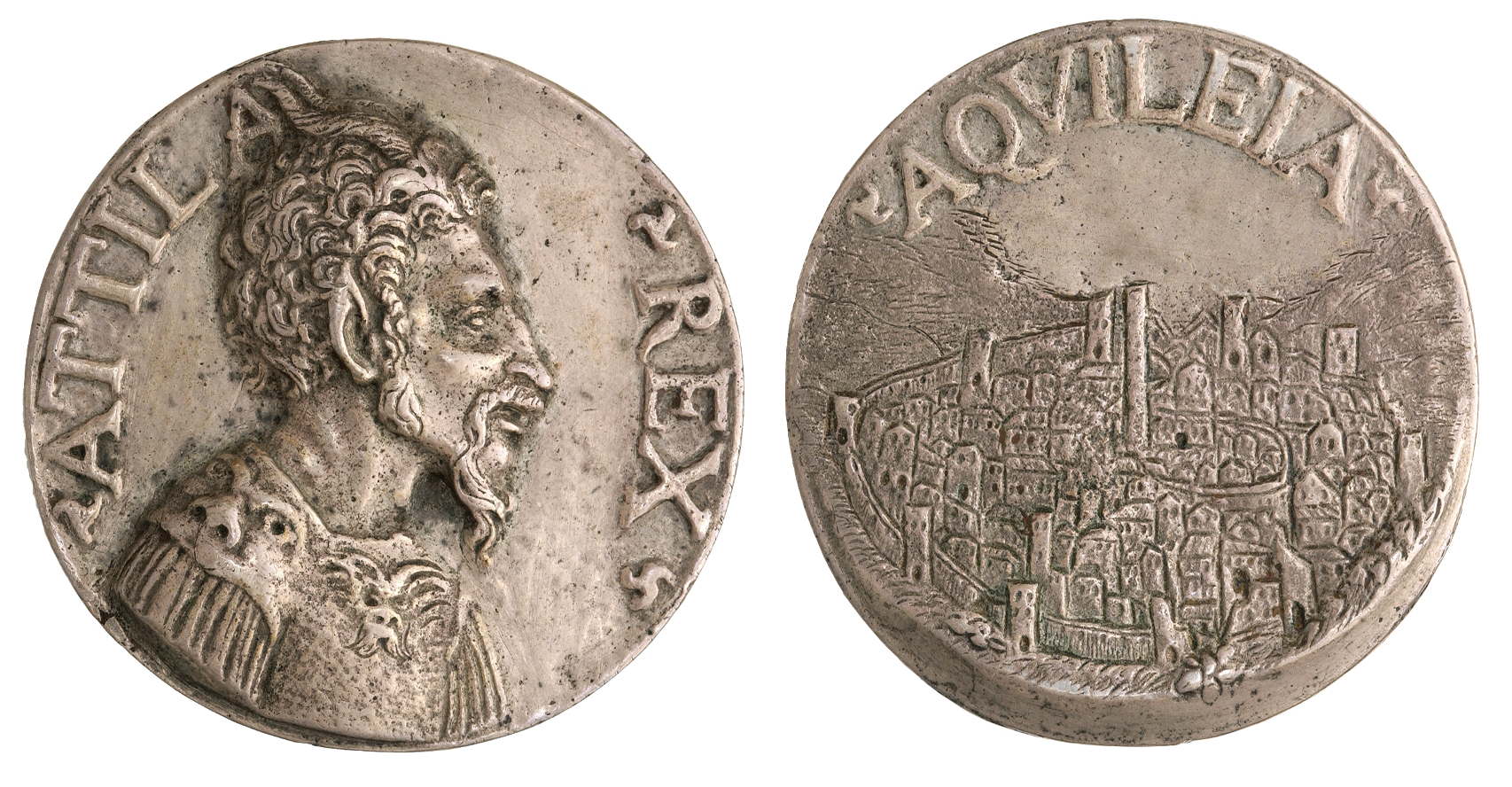
The first step in the process of becoming a talking head was an audition interview conducted over Zoom from my office. I received very specific instructions from the production company about what I should wear, how to position my head and body relative to my computer’s camera, and what I should not have in my background. I was also given a few advance questions about the topic (the circumstances surrounding Attila's death and burial) to give me at least some talking points to prepare for. Since I've been teaching in higher ed for more than two decades, I am generally comfortable in front of a crowd. But since this was my first foray into a possible television appearance, I have to admit I was a bit nervous. I guess I nailed it, because a couple days after, the production team invited me out to Hollywood to film the episode.
I am from southern California, so I was thrilled to have a chance to visit my old haunts on someone else's dime. Before my trip, the production team made all the travel arrangements and sent me a 19-page document full of questions about more than just Attila's death, but also about what we know about his early life, rise to prominence, his accomplishments and failures, and his impact and reception. I was admittedly quite impressed with the dossier, since some of the lines of inquiry engaged with some significant historiographical problems and possibilities. Still, some of the other questions reflected dated, borderline conspiratorial, sometimes nationalist ideas and legends.
Since I am a historian of Late Antiquity, I have certainly taught students about Attila and the Huns, and I have read a bit in the past on the various movements of peoples deemed "barbarians" and their consequences for the Roman empire. But I knew that to do justice to my television appearance, I would have to do some intense preparation. I also had to put together three 'fits—no stripes or patterns, only solid colors, sweaters and sport coats, and the like—take pictures, and send them to the producers.
Once I landed in LA, I stayed at a Hollywood hotel a couple of blocks south of the Walk of Fame. On the day of shooting, I was picked up and taken to a nearby studio and led to the changing room. I had to try on each of my outfits, have my picture taken by the wardrobe specialist, and then receive final approval for my choices. The room also had racks full of clothing of various colors and sizes, all of which were acceptable for the producers, just in case what I brought from home was inadequate. Some makeup ensured my face was camera-ready.
In my imagination, I thought the talking heads that appeared on the History Channel were filmed in their university offices with their bookshelves in the background, or in some beautiful campus library after hours. Turns out it's all smoke and mirrors: a green screen onto which the background will be superimposed later on. My stage was a solitary wooden chair, surrounded by lighting and sound equipment and facing two cameras.
With a microphone hidden cleverly in my shirt, the interview began, which entailed the producer reading through the 19 pages of questions, sometimes following up, sometimes asking me to answer again. The first few questions and answers were rough. I was second-guessing myself, trying to formulate the perfect answers in my head while simultaneously speaking them into existence. A reassuring word from my interlocutor to approach the process like a conversation helped tremendously and put me at ease. Still, I had an additional problem. For people who know me, they might describe me overall as a chipper, smiley person, but a grinning face does not translate well when talking about the Romans or the Huns slaughtering people. Several times, another producer politely but firmly reminded me to stop smiling. I had to be a serious historian.
A TV interview does not always lend itself to a nuanced discussion of scholarly debates. Still, I did my best to at least bring into the conversation some sense that not every historical problem is easily solved. But this approach could only go so far, and my interviewer frequently had to stop and remind me to keep in mind the very wide general audience this show was for. Apparently, I did well enough to be invited back (the next week!) to appear in the second episode on the "fall" of the Roman empire, a topic I have studied extensively and write about in my forthcoming book on the island of Cyprus.
So, why did I go through with this, especially with my sense of trepidation about being so heavily edited as to be misrepresented? For me, this was an opportunity for public engagement and for demonstrating, even in a small way, that scholars can and should speak to wider audiences. Since at least my name and institutional affiliation will appear on the screen, a quick Google search could lead someone to read more about my work and my values. In this day and age, when higher education is under assault and vilified as irrelevant or a bad investment, I hope to do my part to convince people otherwise.
We cannot wait things out in the ivory tower, while more nefarious forces are burning down the house. I have tried in my own ways to become a more public scholar through public outreach and educational programming in Chicago, especially with the Hellenic American community in the city, but also through other venues, such as publishing op-eds, appearing on podcasts, and writing blogposts. There is value in "putting ourselves out there," and the more we do, I hope the more we can become trusted as talking heads who actually know what they're talking about. We've read the things. We're the experts. Let's get out there and engage the public in the ways that we can, maybe even with a smile.
Public Humanities and a Global Antiquity
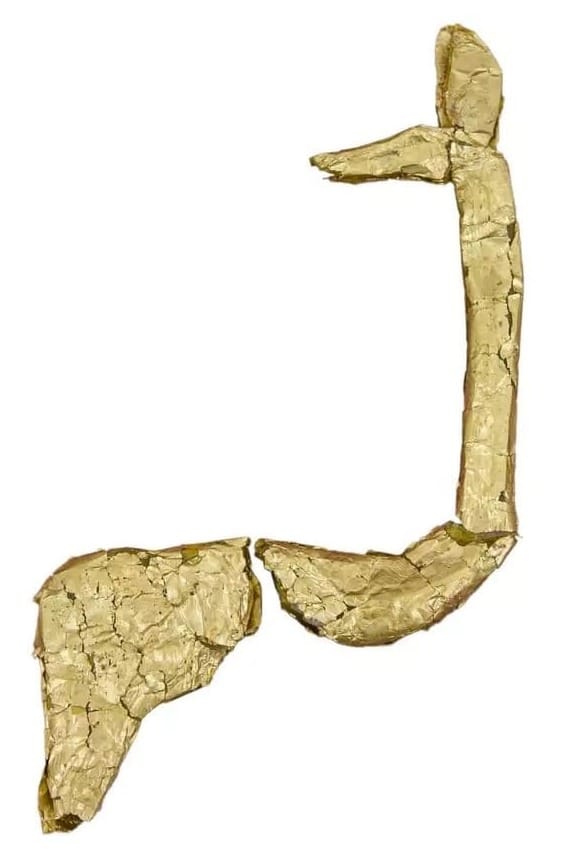
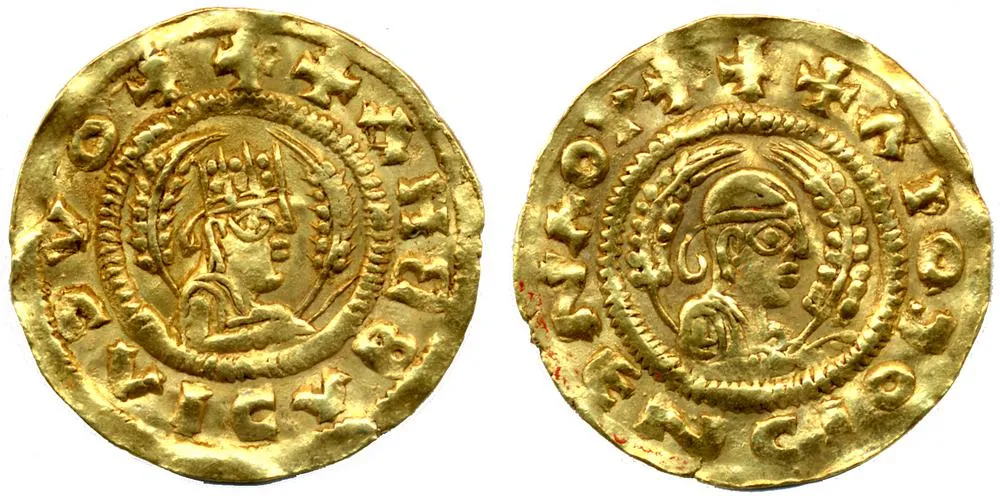
Classicist Sarah Derbew has a new article in AJP on "From Aksum to Athens." It explores literary understanding of Aksum (modern Ethiopia) via Greek & Ge'ez (ግእዝ, aka Classical Ethiopic): She "examine[s] various descriptions of the 6th-century ce Aksumite ruler Kaleb. The pairing of mediated Greek accounts with an unmediated Ge'ez perspective presents a cosmopolitan view of Aksum and, by extension, of antiquity." The article is a great example of the interdisciplinary field of Ancient African Studies.
Postcolonial theorist Edward Said perhaps articulated the value of humanism best when he said that “Humanism is the only—I would go so far as saying the final— resistance we have against the inhuman practices and injustices that disfigure human history" (“Orientalism 25 Years Later : Worldly Humanism v. the Empire-builders” in Counterpunch [August 4, 2003]). And now classicist Mario Teló has a new book looking at the ancient texts analyzed in Said's posthumously published final book, On Late Style. Telò's Edward Said and the Late Animal: Classics, Negative Dialectics, and the Limits of Humanism looks to Said as a model for classical reception and comparativism, but also asks pivotal questions:
[H]ow can classicists and other literary scholars respond to news and images from Gaza? Radically defamiliarizing texts of Apuleius, Oppian, Ovid, Sophocles, and Seneca and modern iterations in light of works discussed in On Late Style and others chosen for their urgent relevance, this book elevates a menagerie of animals—a donkey, an octopus, a dog, ants, a bull—each one emblematic of Said’s groundbreaking and widely influential notion of aesthetic lateness.
Digital Humanists Valeria Vitale and Gabriel Bodard also have a new, open access edited volume on Open Data in Ancient and Byzantine Studies. I (Sarah here!) really enjoyed the chapter from Charlotte Tupman and Richard Flower on "Connecting Late Antiquities : challenges and opportunities for prosopographical data." I think I speak for all of us when I say that we can't wait to see the Prosopography of the Later Roman Empire (PLRE) online.
Let's talk about some classics outreach. At Peopling the Past, they have a great Halloween Series going all month. There is a post on Circe in the Odyssey with myth expert Liv Albert and another with magic expert Daniel Ogden, who looks at the Odyssey in terms of Necromancy, Seers and the Underworld. Over at Religion for Breakfast, there is an instructive video by Andrew M. Henry on "What Does the Bible Say About Slavery?" and at the Ancient History Magazine podcast, Regius Professor of Greek at the University of Cambridge Tim Whitmarsh talks about "early Christianity, how the religion was embedded in Greco-Roman culture, and how the Roman Empire facilitated its spread."
In other publication news, we are stoked about Sitta von Reden's new book, Beyond the Silk Road: A New Economic History of the Ancient World from Eurasia to Africa (PUP 2026). And the new issue of Greek, Roman, and Byzantine Studies is out now. In his contribution, Kevin Solez sets us straight about the date of an ancient beer recipe in his article, "The Recipe for Beer in Codex Marcianus Graecus 299: A New Critical Text with Historical and Linguistic Commentary." The recipe from the famed alchemical treatise is associated with the fourth-century CE alchemist Zosimus of Panopolis, but may actually date to the reign of Heraclius (r. 610-641 CE). Grab some ζύθος and get reading.
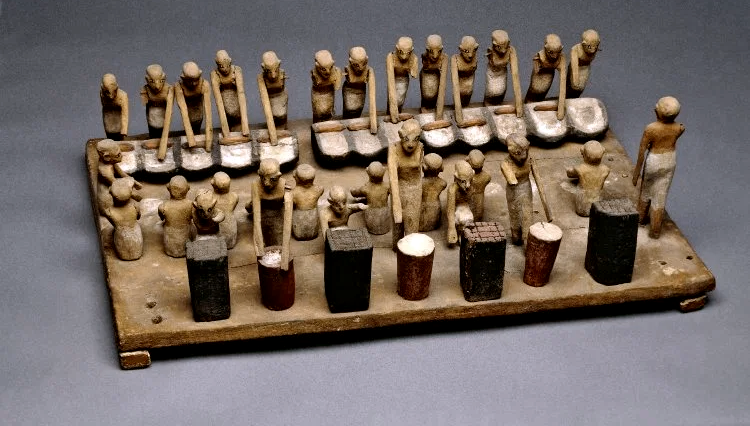
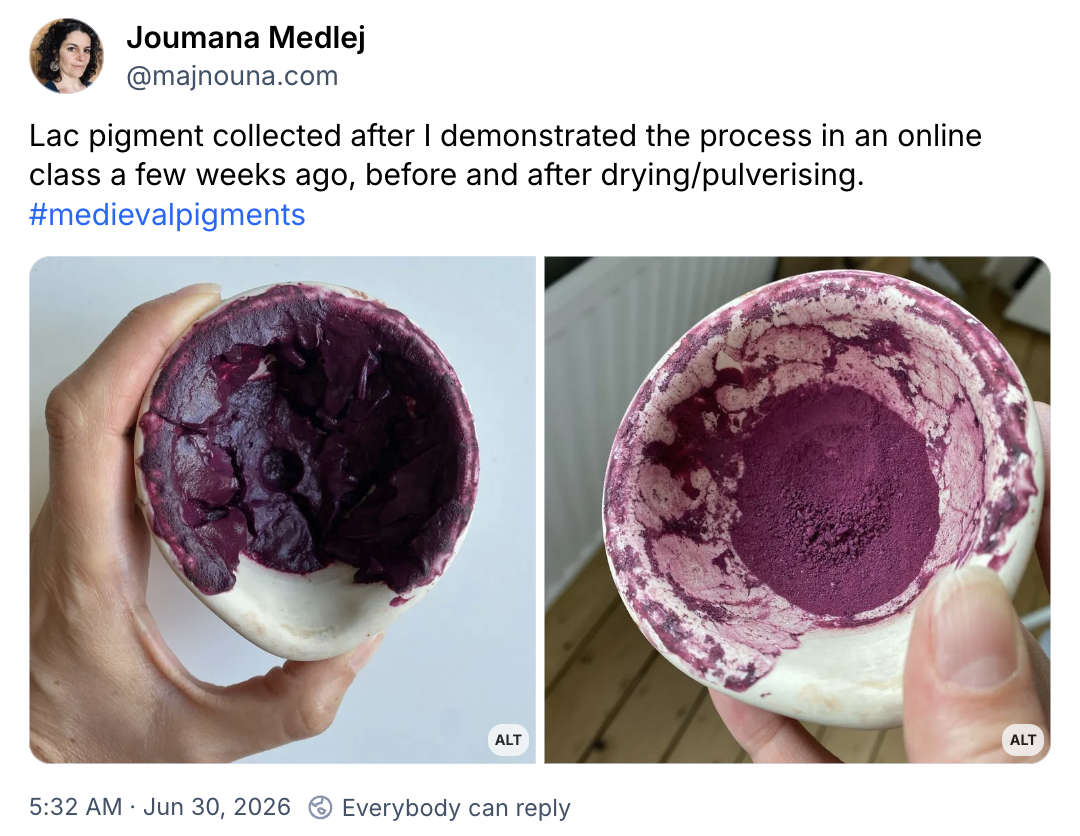
Over at the Princeton Geniza lab, they note some documents regarding the sale of medieval lac (Kerria lacca)—a red pigment traded from India to Yemen and Egypt. As they note, "One of the Geniza merchants who dealt in dyes and dyed cloth was known as al-Urjuwānī, 'the purple dealer.'" This was in reaction to artist and scholar Joumana Medlej posting her recreated version of the pigment on Bluesky.
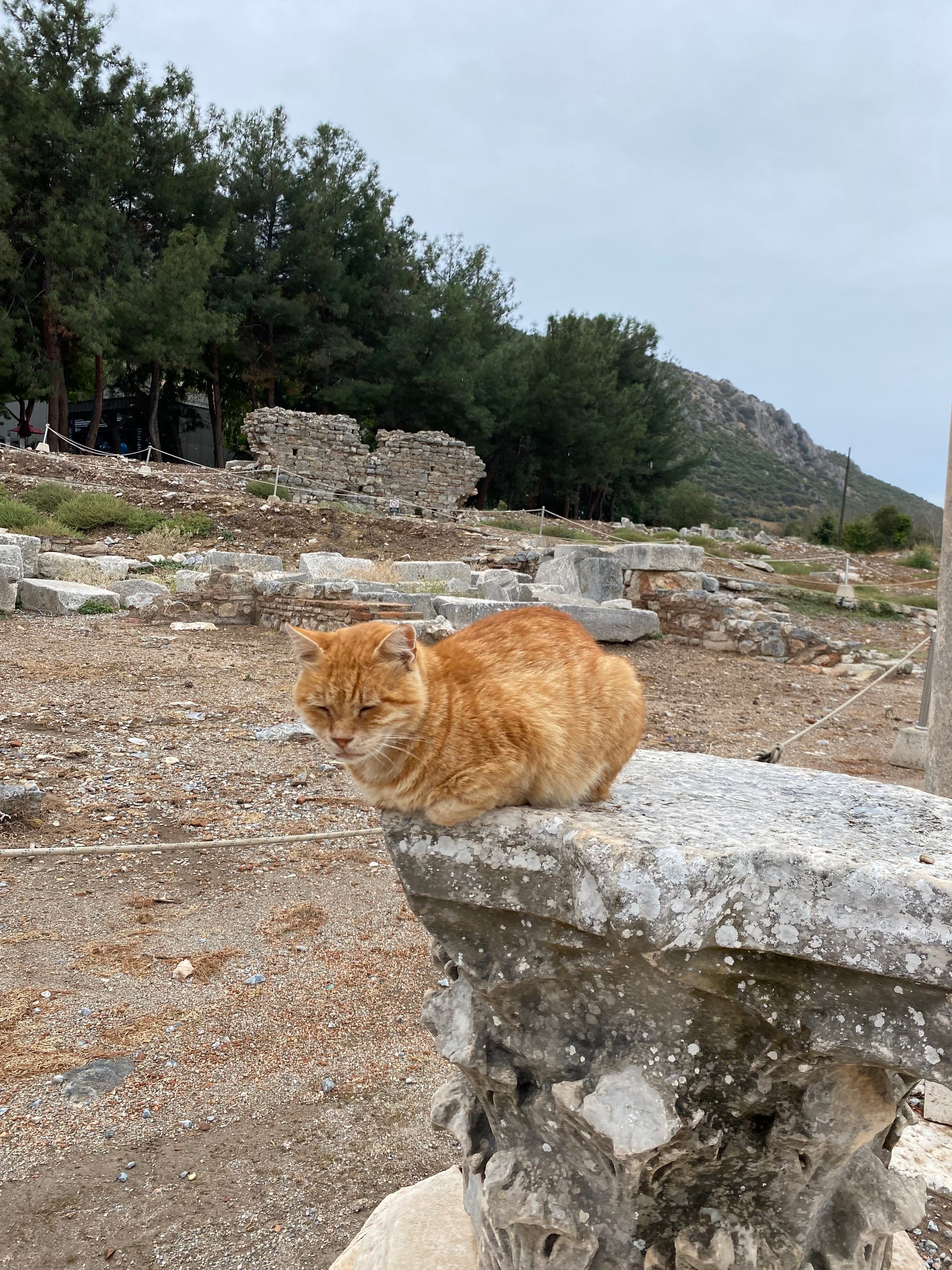
Stephanie just got back from her Turkish honeymoon and felt the need to share this photo she took of a gentleman making good use out of some spolia at Ephesus.
Recovering the histories of ancient and medieval plague is what Monica Green does best. And in a new American Scientist article, she discusses her work on Yersinia pestis alongside many misconceptions about the bacterium, particularly the idea that it only had an impact on past peoples: "Plague is not a thing of the past, and infections most definitely occur to this day." Congrats to medievalist Jonathan Hsy on the publication of his new book, Disabled Storytellers in the Global Middle Ages: Craft and Community in the Medieval World. And finally, at Live Science, reporter and bioarchaeologist Kristina Killgrove has a great article on the new Chinese pottery discovered in Great Zimbabwe. As PBS' Secrets of the Dead documentary on the find notes, "The discovery of Longquan celadon, along with glass beads from Southeast Asia, India and the Middle East, provides striking evidence that Great Zimbabwe was part of a vast international trade network."
In Memoriam: Patricia Easterling and Christopher Wickham
In Memoriam: Patricia Easterling by Mary Beard
This is of course a terribly sad moment for all of us who were Pat’s pupils, students and colleagues. For us it is tinged with very happy memories. Pat – and “Pat-n-John” – taught us a huge amount about the life of the mind, and about how to use the mind responsibly, for the good in the wider world. I used to think that Pat could just fix everything, and she did seem to be able to, with that wonderfully light touch of hers. (I suspect that not many people here know that, when I was having trouble with my driving test, she fixed up Tom to give me extra driving lessons, successfully as it turned out). It took me years to realise what a toll that apparently effortless care for us all must have taken on her.
A lot of effort goes into having a light touch.
I first met Pat when I was 17 when she interviewed me for admission to Newnham. I vividly remember, as I know others do, walking into her room in Kennedy Building at Newnham and going into a world that I had never seen before, but which welcomed me. “Come in” she, and it, said. I had never set eyes on such a garden view and certainly not on a revolving bookcase before. And I re-entered that room many times over the next few years, where I learnt about what it was to think about the literature and culture of the ancient world.
There are many people who can explain far better than I can how Pat changed the study of Sophocles and of Greek literature more generally, with such distinction. And they would find it a bit “trying” (to use one of Pat’s words) if I tried to do so. For most of us, the big thing she taught us was that ancient literature mattered, that it wasn’t just stuff you wrote essays about. She was tough, but she also seemed to have an infinite amount of time for us (which I now realise that she could not really have had). She gave us a sense that we mattered too.
As a colleague she taught similar lessons, by example: about how to be a morally responsible academic when irresponsibility often seemed to beckon. She took time. She was forgiving. She shared coffee or a glass of wine rather than firing off an email at seven o clock in the morning (I don’t think Pat ever “fired off” anything). She never let us forget that classics at schools and universities were integrally bound up; they split at their peril. She showed us that “service” wasn’t an optional extra that you happened to get cv points for: editing series, working with school exam boards, revising syllabuses, serving on university committees, were what we should be doing.
We will miss her. But she taught us, unforgettably, what it was to be a classicist in the 21st century. Her lesson will last. I hope we make sure that it gets passed on.


You can hear more from Beard on Easterling's legacy on BBC Radio 4.
In Memoriam: Christopher Wickham by Erica Buchberger
Chris Wickham (1950–2026) was a brilliant and wide-ranging scholar whose studies of medieval social and economic history have shaped the thinking of hundreds, if not thousands. But for those of us fortunate enough to know him, that wasn’t what made Chris Chris. It was the way he made everyone feel like they belonged. The generosity of meeting a junior scholar for coffee and treating them and their ideas seriously, the gentle correction on a written piece that improved both it and your confidence, the determined advocacy for someone in need, the encouraging wink across the room before you spoke to an intimidating crowd, the supportive ear listening to struggles both intellectual and personal, the kindness with which he spoke to someone he’d just met, the unassuming humility from such a towering intellectual – these were as much a mark of his greatness as his extraordinary, groundbreaking scholarship. They were also what he was proudest of. In our last conversation, on learning that I’d heard echoes of his voice in feedback I’d recently given a student, he said, “I am pleased it makes you sound like me! A bit at least.” Quintessential Chris: proud of his impact, humble enough to minimize it, and uncomfortable with a fuss. May we seek to carry forward not just his academic lessons but his model of kindness.
A PhD scholarship is being established in Chris Wickham's name at the University of Birmingham. For more information and to contribute, please go here.
New Ancient World Journals by @yaleclassicslib.bsky.social
Circe, de clásicos y modernos Vol. 30 No. 2 (2026) #openaccess
Classical Philology Vol. 121, No. 4 (2026) Passions, Politics, and the Language of Philosophy: Essays in Honor of Elizabeth Asmis
Greek and Roman Musical Studies Vol. 14, No. 2 (2026)
Greek, Roman, and Byzantine Studies Vol. 66 No. 3 (2026) #openaccess Kevin Solez "The Recipe for Beer in Codex Marcianus Graecus 299: A New Critical Text with Historical and Linguistic Commentary"
Humanitas Vol. 86 (2026) #openaccess
Illinois Classical Studies Vol. 51, No. 1 (2026) Classical Reception in the Midwest
Journal of Classics Teaching Vol. 27, No. 54 (2026) #openaccess
Pharos Vol. 26 (2024-2025)
Rosetta No. 31 (2026) #openaccess
Ancient Philosophy Today Vol. 8, No. 2 (2026)
International Journal of the Platonic Tradition Vol. 20, No. 2 (2026)
Journal of Indian Philosophy Vol. 54, No. 4 (2026) Anekāntavāda: Sources and Varieties
Journal of the History of Ideas Vol. 87, No. 4 (2026)
Journal of the History of Philosophy Vol. 64, No. 4 (2026) #openaccess NB Daniel Ferguson "Intellectualism in the Eudemian Ethics"
Oxford Studies in Ancient Philosophy Vol. 65 (2026) NB Mariska Leunissen "Maternal Love and Tragic Tropes in Aristotle’s Ethics"
Plato Journal Vol. 27 (2026) #openaccess
Revue des sciences philosophiques et théologiques Vol. 110, No. 3 (2026)
Arabian Archaeology and Epigraphy Vol. 37, No. 1 (2026)
Eurasian Studies Vol. 24, No. 1 (2026) Persia and Byzantium: Interactions Across the Centuries
Indo-Iranian Journal Vol. 69, No. 4 (2026)
Currents in Biblical Research Vol. 25, No. 1 (2026)
Early Christianity Vol. 17, No. 3 (2026) Pseudo-Solomon and Solomon Magus
Journal of Ancient Judaism Vol. 17, No. 3 (2026)
Journal of Biblical Literature Vol. 145, No. 2 (2026) NB William A. Johnson, Nicholas E. Wagner "Papyrus Bookrolls with Jewish and Christian Content"
Vetus Testamentum Vol. 76, Nos. 4-5 (2026) NB Jeremy Hutton, Reettakaisa Sofia Salo “'I Will Stand at My Watchpost' (Hab 2:1a): A Warning Regarding Generative Artificial Intelligence in Biblical Studies"
Zeitschrift für die neutestamentliche Wissenschaft Vol. 117, No. 2 (2026)
Byzantinische Zeitschrift Vol. 119, No. 3 (2026)
Early Medieval Europe Vol. 34, No. 4 (2026) Narratives in early medieval Europe
Medieval Feminist Forum Vol. 61, No. 2 (2026) #openaccess
Neulateinisches Jahrbuch Vol. 27 (2026)
Speculum Vol. 101, No. 4 (2026)
Cambridge Archaeological Journal Vol. 46, No. 4 (2026) #openaccess NB Krisztina Hoppál, et al. “Cross-Cultural Connections: Roman Material Reception and Adaptation in South and Southeast Asia”
Manuscript and Text Cultures (MTC) Vol. 3 No. 2 (2024) #openaccess
Lectures, Workshops, and Exhibitions
On Thursday, October 22, 2026, at 6:00 PM ET, Patricia Eunji Kim will discuss
"Ancient Queenship:Art, Power, and Presence" in-Person and online at The Institute of Fine Arts, 1 East 78th Street, New York, 10075. Watch the livestream of the event here. Ancient Queenship: Art, Power, and Presence is presented by the Cincinnati Art Museum, and will open to the public in 2027 at the Getty Villa and the Cincinnati Art Museum.
On Friday, October 23, 2026 at 10 pm EST = 7 pm PST (Saturday, October 24, 2026 at 10 am Beijing Time) there will be a lecture on "making Roman artifacts from scratch, understanding life in the Roman army by re-creating it, and much more." Join the the Guangqi International Center for Scholars at Shanghai Normal University and Emory University’s Program in Ancient Mediterranean Studies for Jordan Christopher’s upcoming virtual lecture on engaging students and teaching Classical Studies through re-enactment with a lecture on "Roman Re-enactment as Classical Pedagogy 沉浸式体验古罗马:作为古典学教学法的“历史重演” hosted by Jinyu Liu 刘津瑜. 北京时间Beijing Time 2026年10月24日周六上午10时. Zoom 链接:https://emory.zoom.us/j/94909205243 Zoom Meeting ID: 949 0920 5243.
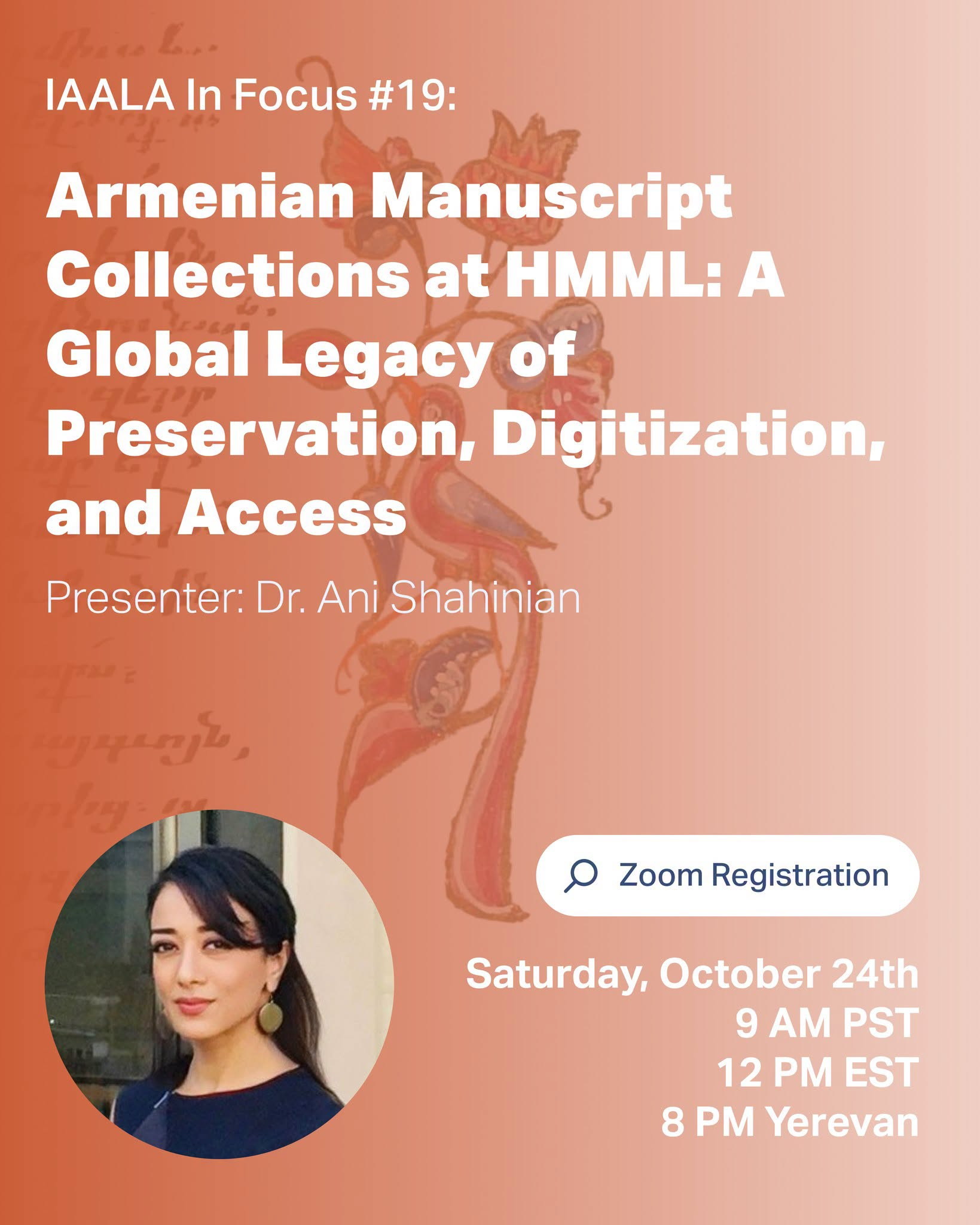
On October 24, 2026 at 11 am CT, Ani Shahinian, cataloger of Armenian manuscripts at HMML, is giving a free, virtual presentation at the International Association of Armenian Librarians & Archivists. The topic is "Armenian Manuscript Collections at HMML: A Global Legacy of Preservation, Digitization, and Access." Register for the online presentation here.
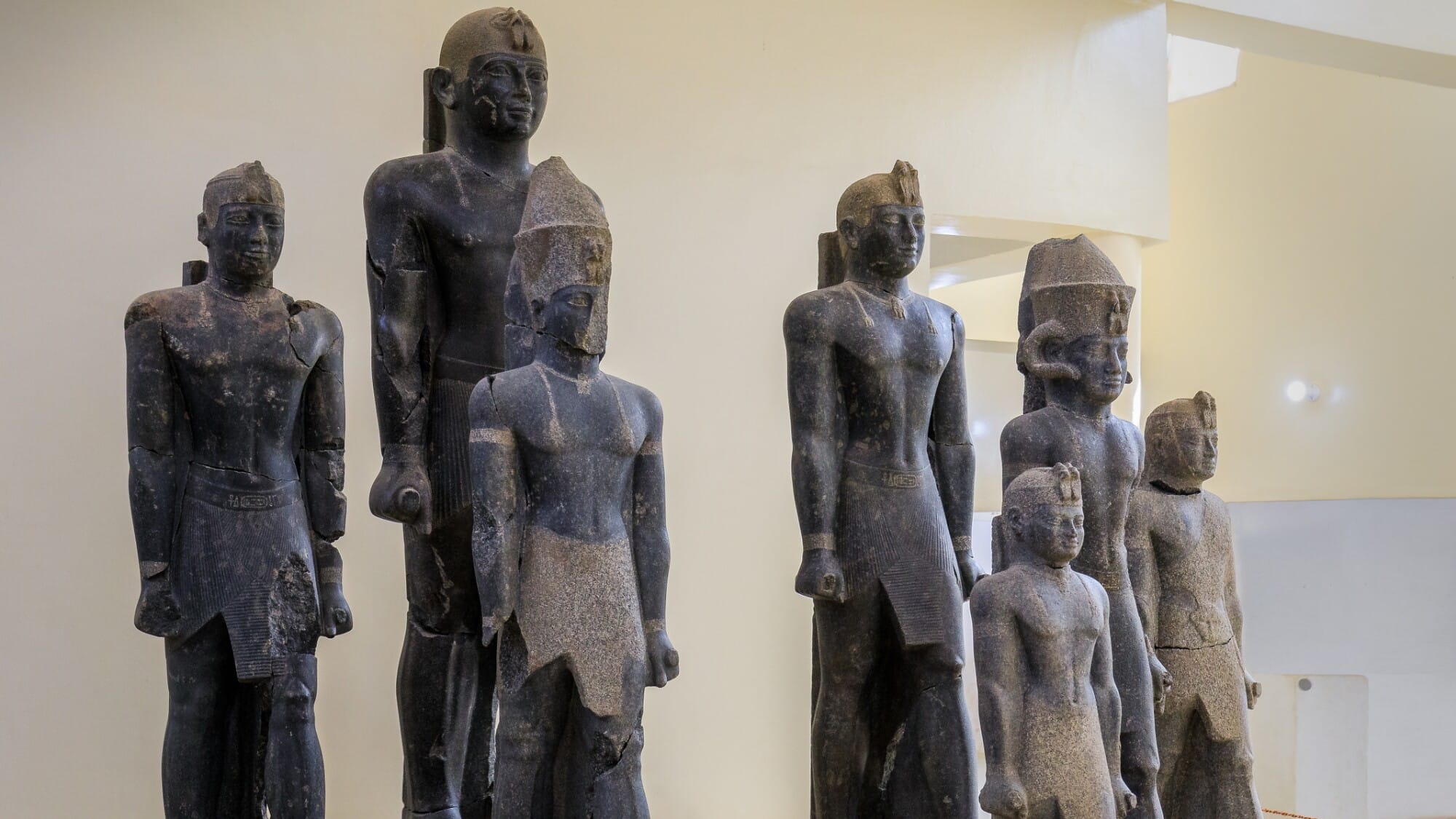
On Monday, October 26, 2026 at 12 pm PT, the Getty has a free online lecture from Kathryn Howley on "The Hidden Influence of Nubia in Ancient Egypt." This program complements the exhibition Sculpted Portraits from Ancient Egypt on view at the Getty Villa through November 9, 2026. You can register for the lunchtime talk here.
On Monday, November 2, 2026 at 6:00 p.m. EST at the Center for Hellenic Studies (3100 Whitehaven Street, Washington, DC 20008) and via Zoom, there will be a conversation on the video games Hades and Hades II. Join them as CHS Director Naomi Weiss moderates a chat with scholars Kate Cook and Alexander Vandewalle about "these hugely popular games’ approach to ancient myth and the reactions they’ve drawn from the media, gamers, and academics alike. From there, they will reflect on the study of the ancient world in video games: its past, present, and future." Go in person or sign up for the Zoom here.
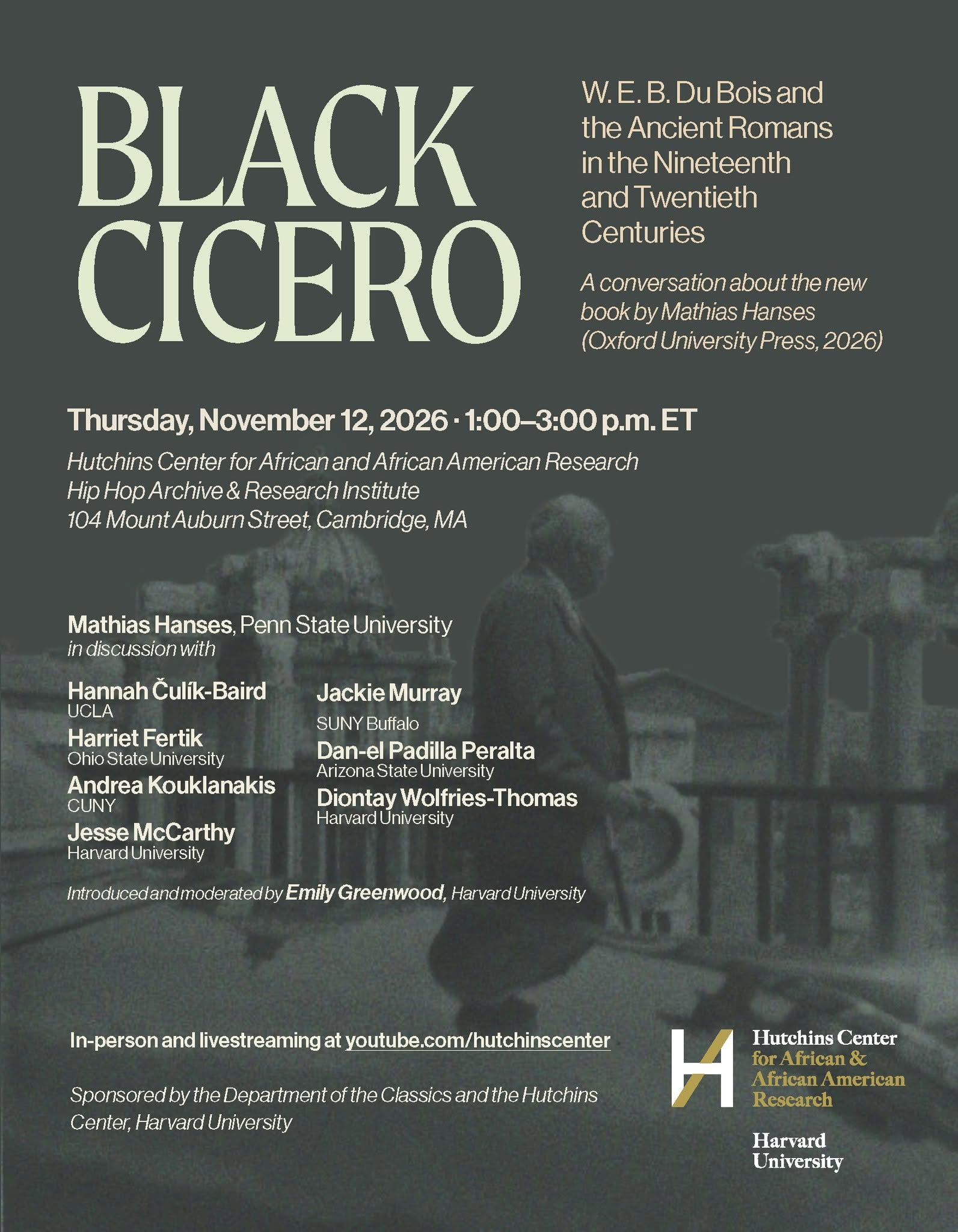
On November 12, 2026 at 1:00 pm ET, the Hutchins Center for African & African American Research at Harvard University will livestream a book discussion and launch for Black Cicero at the www.youtube.com/hutchinscenter. You can also attend in person at 104 Mount Auburn Street, 3R, Cambridge, MA 02138.
See you on November 5, 2026 for an issue dedicated to poet and Nobel Prize winner Anne Carson—but don't forget to vote!