Pasts Imperfect (11.5.26)

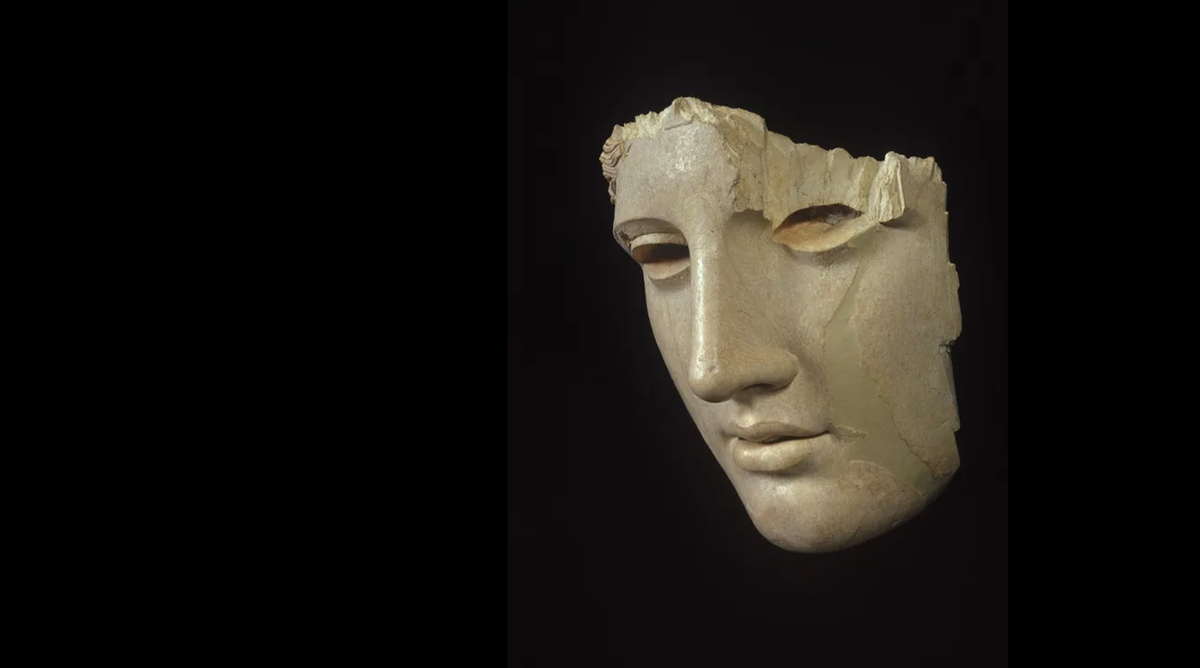
This week, classicist Del A Maticic discusses the work of poet, translator, and Nobel Prize winner Anne Carson alongside remarks on Carson's work by Martin W. Michalek, Ethan Ganesh Warren, and Vanessa Stovall (aka v ness). Then, celebrating Native American Heritage Month, retracing ancient psychoactive substances in Peruvian mummies, a newly opened Irish archaeological walking trail brings you to a lovely Gate to Hell, a Ugandan designer uses ancient textiles and secondhand clothing to combat fast fashion, medieval rabbits as luxury items in England before the Black Death, new ancient world journals, an exhibition on ancient magic, and much more. Let's get to it.
Under Construction with Anne Carson by Del A. Maticic, Martin W. Michalek, Ethan Ganesh Warren, and Vanessa Stovall aka v ness
Anne Carson is many things–poet, philologist, translator, and, most recently, Nobel Laureate. In this contribution to Pasts Imperfect, four of us reflect on our personal and intellectual encounters with her work.
Carson as Teacher by Del A. Maticic
It was 2015, and I had just begun my doctoral training in Classics at NYU. Having come in as a Latinist straight from a BA, I needed to brush up on my Greek, and my remedial Greek teacher was Anne Carson. For several years she had been a Distinguished Writer-in-Residence in the NYU Creative Writing Program. She would periodically teach an advanced Greek seminar to starry-eyed undergraduates. Because I wanted to sit in on that class, in which we would translate Sophocles’ Trachiniae, I was given her email address (mirabile dictu!) and advised to write a formal email explaining who I was and asking permission to audit the course. She responded, with more of a haiku than an email.
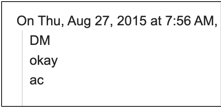
I came into the seminar room on the first day of our class and sat at her right hand, where I spent the semester. She was a soft, quiet teacher who conducted class in a manner not dissimilar to what I came to expect from teachers of Greek and Latin. We went around the room reading Sophocles and she would give feedback on our translations and comment on the texture of the Greek, striving to balance precision and creative flourish. Her pedagogical style was exemplified by our final project. At the end of the semester, our class worked on a creative group translation, which we performed at the departmental holiday party. I remember the more traditional Hellenists in the room watching with a shrug at the zaniness of the affair, but that moment stuck with me as something of an ideal.
In hindsight, she exhibited an intellectual gentleness that contrasted the frenetic energy of the city outside the window. During our entire semester together, a road crew was doing work on Washington Square Park East, the street right beneath our five-story window. Our teacher found this mildly annoying and mused aloud one day whether throwing down one of the marble statues lining the walls of the seminar room would alert the crew to the fact that intellectual labor was going on. I asked Carson whether she knew that there was an burial ground beneath the park and that it sits squarely on Lenape tribal lands. I cannot recall if she had known that or not, but in my faint memory, a ripple of consensus moved through the room that we would all get our just desserts one way or another.
Carson’s Untranslations by Martin W. Michalek
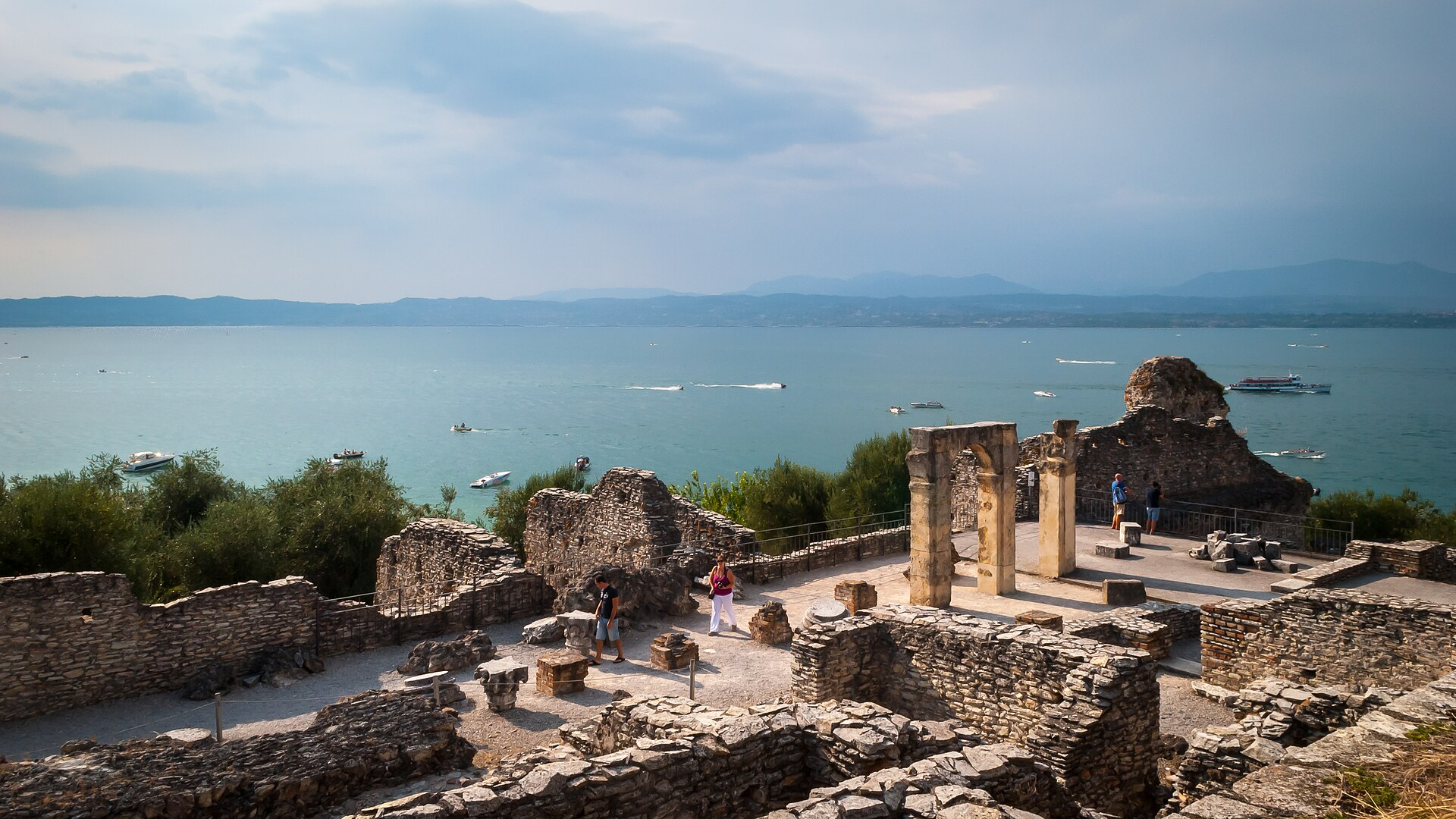
Whenever I teach Catullus, I always stop by his almost-island, venusta Sirmio, ("beautiful Sirmio"), described gleefully in Carmen 31. From there, class steers toward Alfred Lord Tennyson’s own sad visit to Lake Garda, modern-day Sirmione. For Tennyson, who recently lost his brother, sailing around the lake stirred up words from Carmen 101, a funeral dirge for his dead brother: frater ave atque vale (10), “brother, hail and farewell forever.” But that English scarcely captures the Latin. Such frustrations with translation are familiar in Classics, but it is precisely this untranslatability that gives meaning to Anne Carson’s 2010 book Nox (“Night”), a meditation on Catullus 101 born from the griefwork following the death of Carson’s brother Michael. The driving question of Nox asks why some poems resist translation and whether certain feelings never find expression in language.
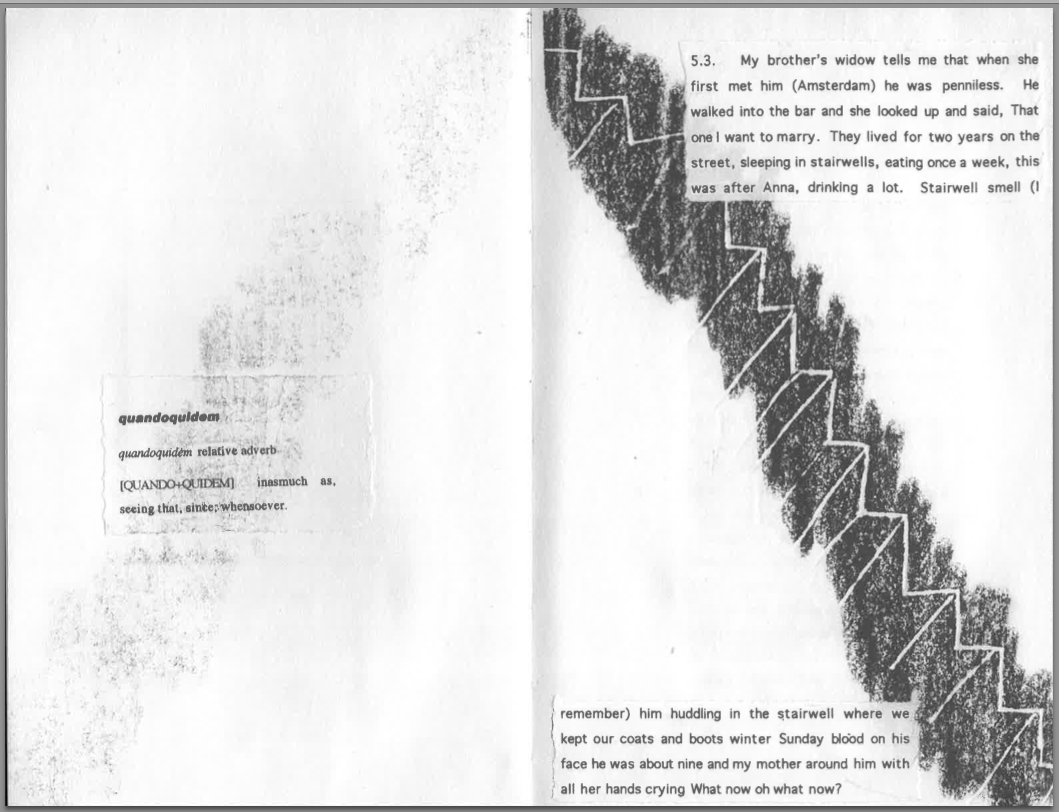
Untranslatability is a lexical gap. It gestures toward the Structuralist conviction that language depends on arbitrarily assigned signs bearing little to no relationship with the things they signify. Underpinning this system is our belief that the mind can find something in that system with a 1:1 relationship to a given brain impulse. Carson’s Nox prods untranslatability by asking what is lost in translation, not only from Latin into English but from formless thought into structured language. Tidy Latin dictionary entries appear on the verso of Nox, while messy scrapbooking dominates the recto. Carson herself shrugs at the notion that every feeling finds ideal expression in language; grief can exceed any language.
Carson shares that agnosticism with Catullus. In Carmen 101, he speaks “in vain” (nequiquam) to his brother’s mute ashes; as Carson translates, “and talk (why?) with mute ash." Catullus even stutters at one moment, caught off guard when he writes fortuna only to realize tu (“you”) is hiding in the word: Fortuna mihi tete abstulit ipsum, he writes, putting five variations of “you” into the line; Carson reduplicates, “Fortune tore you from me, you.”
In her work, Carson reveals—as the best translators do—something in the original not readily apparent, homing in on four seemingly meaningless words: nunc tamen interea haec, which Carson translates, “now still anyway this – [...]”. They add nothing semantically, consuming half an elegiac line with filler. Yet her rendering underscores the utility in their futility: they give the poet time to gather his stammering thoughts. They provide distance between mouth and mind, allowing him to proceed with burial rites: frater ave atque vale (“hello, brother, and farewell”). By the end of Nox, it is evident that none of Catullus’s words mean anything in isolation. Like the grief of her brother, who died alone, Nox argues that linguistic systems are like human relationships: each has meaning only within our greater network of connection.
Carson as Inspiration by Ethan Ganesh Warren
In the spring of 2016, my freshman year at the University of Rochester, I took a classical literature course in translation. I was weighing changing my chemistry major to a classics major, and this felt like a good entryway into the field. I had studied Latin throughout high school, and while it was a passion of mine, I (like many others) didn’t perceive it as a viable pathway of study. We read all the staples: Fagles’ Iliad and Lombardo’s Odyssey. I was enjoying the course well enough.
Towards the end of the semester, however, we started Anne Carson’s An Oresteia translation, and it felt like it blew everything else we had done out of the water. The evocative language of Carson, combined with her and Aeschylus’ own sharp wit, made for a unique reading experience that I simply could not put down. I was an 18-year old neophyte in the field, and had no idea who Anne Carson was. Thank god for my professor, Steven Rozenski, who at my first expression of admiration for her work, recommended both Autobiography of Red and If not, Winter.
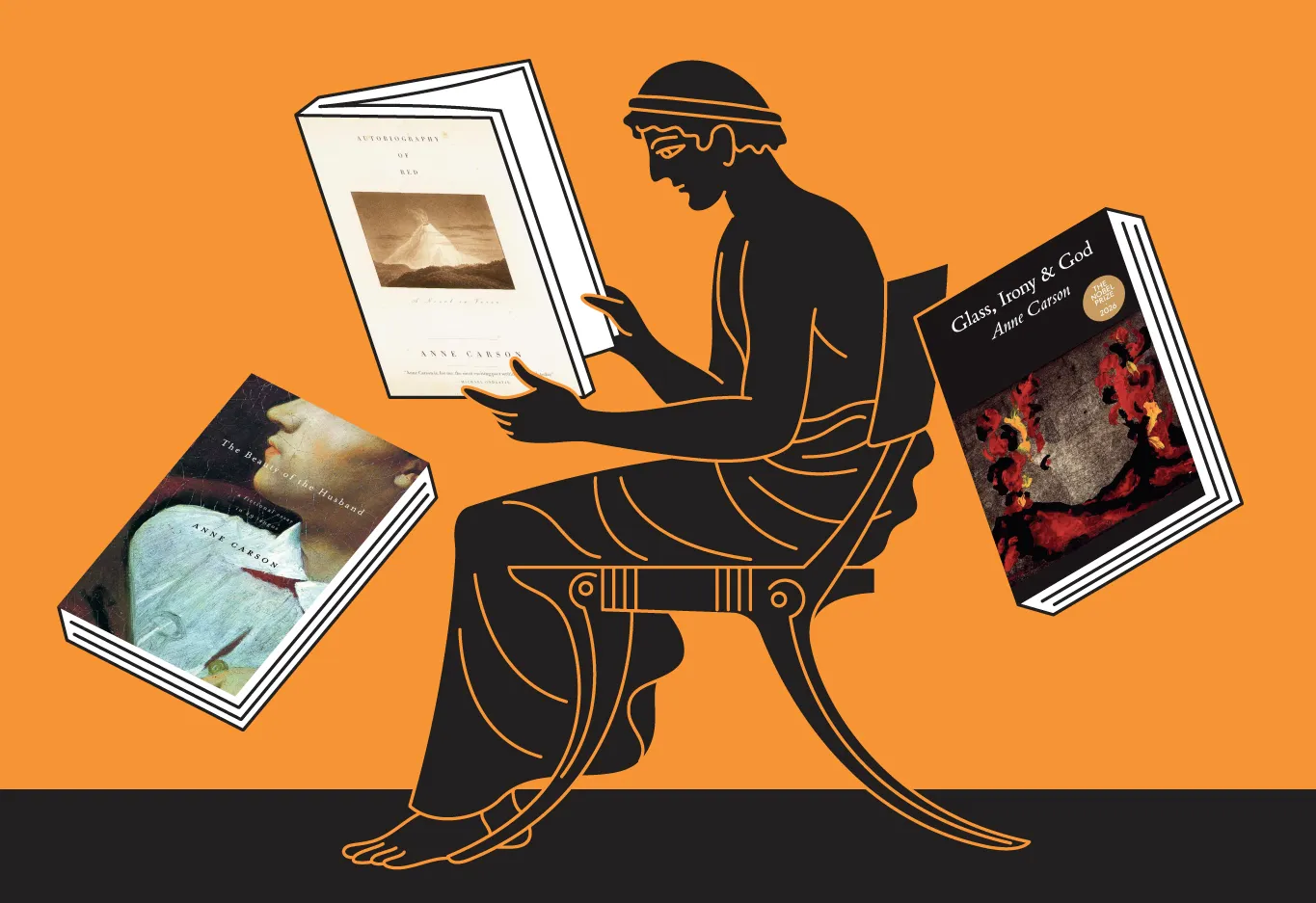
I devoured both works; the latter in particular fascinated me. I routinely shivered as I read her fragment translations, as if the poems themselves were washing over me like a cold shower. When I expressed these sentiments to Professor Rozenski, he encouraged me to study Greek so that I could fully appreciate both Carson’s works and the original Sappho.
That was over 10 years ago now. I’m currently finishing my doctorate in Classics, I teach full-time (though I love Sappho, I’m a Latinist at heart), I still talk to Professor Rozenski, and I still routinely re-read Carson’s works and recommend them to my students who are particularly interested in poetry. Though I’ve never met Anne Carson, she has inexorably changed the course of my life. I feel privileged to have had that happen to me.
Sapphic Transferred Traces in Anne Carson by Vanessa Stovall (aka v ness)
Anne Carson’s words first echoed around me in the evergreens of Olympia, WA. I was the teaching assistant for “Greece and Italy: An Artistic and Literary Odyssey” or GIALO, as we affectionately referred to it–a year-long program where we got to study abroad across Greece and in Florence, Italy for six weeks in the spring of 2015. A copy of Antigonick was passed around, which led me to If Not, Winter, and finally An Oresteia, which I later wrote my undergraduate thesis on. Her translations had such an odd intonation to the rhythms of her poetics that it made me yearn to understand Greek at its poetic level, and to feel more deeply those odd rhythms she was attempting to render.
It was through her translations first that I began to sense a rhythmical resonance between the lyrics of Sappho and the later tragic poets, to the extent that I now refer to all of them as the alternative cohort of Sappho’s “sons” (as opposed to say, the Roman elegists who more directly reference and copy her poetics). The tragic poets Aeschylus, Sophocles, Euripides, and Seneca all present fascinating allusions to the poet known as the 10th Muse, and the ways in which Carson comments across the writers and their styles (not just in her translations, but also her lovely essays) allows a subtly intricate framework for approaching these poets through an artistic eye rather than more common academic inquiry.
This framework is not a linear structure–more like dew dribbling down the iridescence of spiderwebs. From the dripping pain of Sappho 37 which she connects to the dripping grief in Aeschylus’ Agamemnon, to the fragmentation of Sophocles’ Antigone matching the fragmentation of Sappho’s very own corpus, to Euripides’ female choruses detailing the slipping syllables of nature that echo her earlier poetics. Carson composes translation for tragic male poets that bear noticeable imprints of Sapphic style.
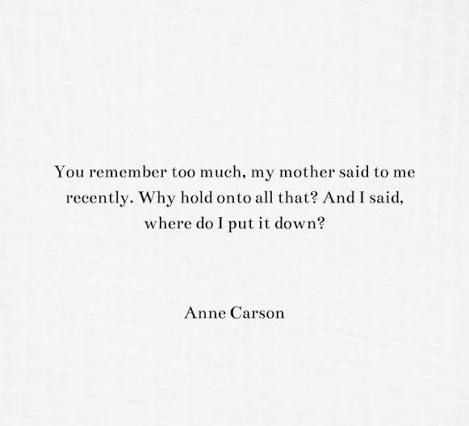
For more on Anne Carson, read all of her books. I (Sarah here) wish to note that one of the best dissertations that I have ever had the pleasure to read was written by translator and classicist Adrienne K. Ho Rose. Her "The perfect translation (once more / with feeling)" is an exploration of experimental retranslations of the Tang dynasty (618–907 CE) poetry by Wang Wei 王維 (699–759 CE), Li Bai 李白 (701–762 CE), and Du Fu 杜甫 (712–770 CE), Brandon Brown’s retranslations of poems 85 and 99 by Republican Roman poet Catullus (85–54 BCE), and Anne Carson’s “A Fragment of Ibykos Translated Six Ways” (5th c. BCE). Although I had read some of Carson's work, it was Prof. Ho Rose who taught me to know it.
Public Humanities and a Global Antiquity
November is Native American Heritage Month and there is a lot to celebrate. First and foremost, Native women like Sharice Davids (Ho-Chunk), Deb Haaland (Laguna Pueblo), and Peggy Flanagan (White Earth Nation) were victorious on Tuesday night. We'd also draw your attention to the special issue of Res Difficiles focused on "Indigenous Perspectives” that is co-edited by Ashley Lance and Tara Wells. Of particular note is Cassandra M. M. Casias's article on, Punic Silence: Recovering Mestizo Voices in Augustine’s Africa.
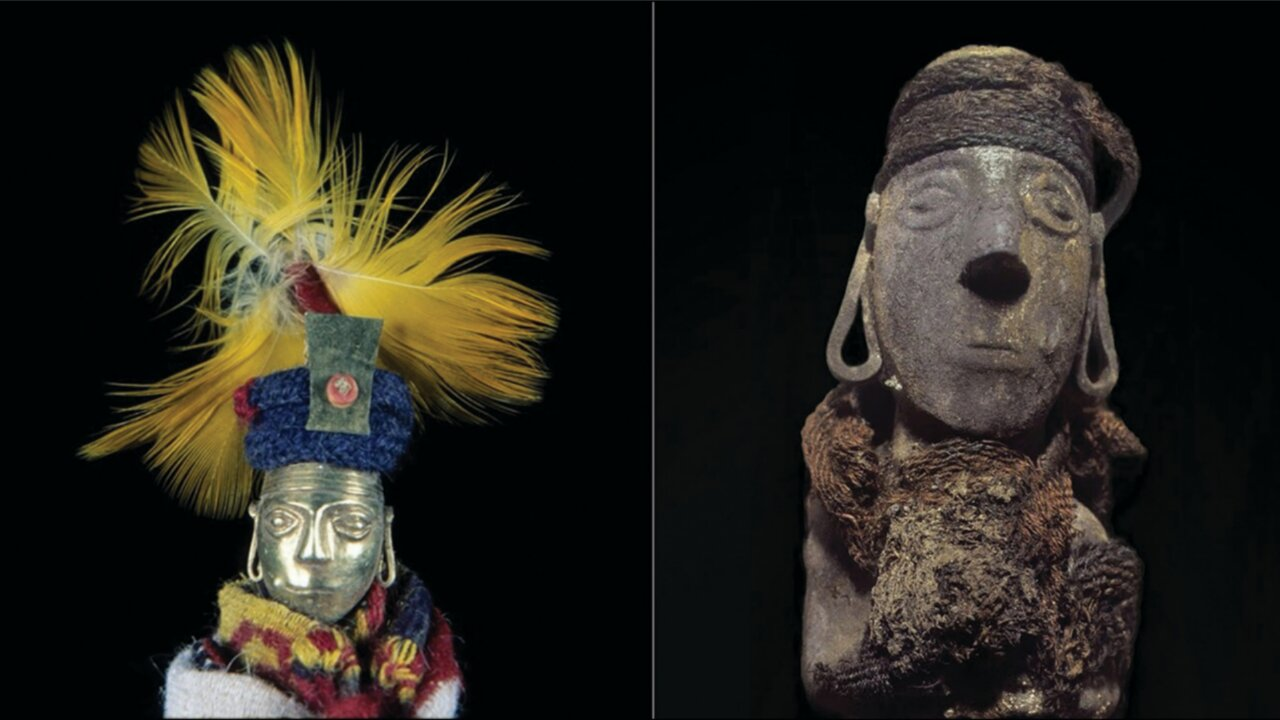
An international team of archaeologists has published a toxicological study of eight frozen mummies from volcanoes in Peru and Argentina (Inca Empire, late thirteenth century–1572 CE). Shedding light on psychoactive substances from the geography and time period, there is evidence of cocaine and benzoylecgonine in all hair samples of the human sacrifices, and various individuals show evidence of cocaethylene and harmine.
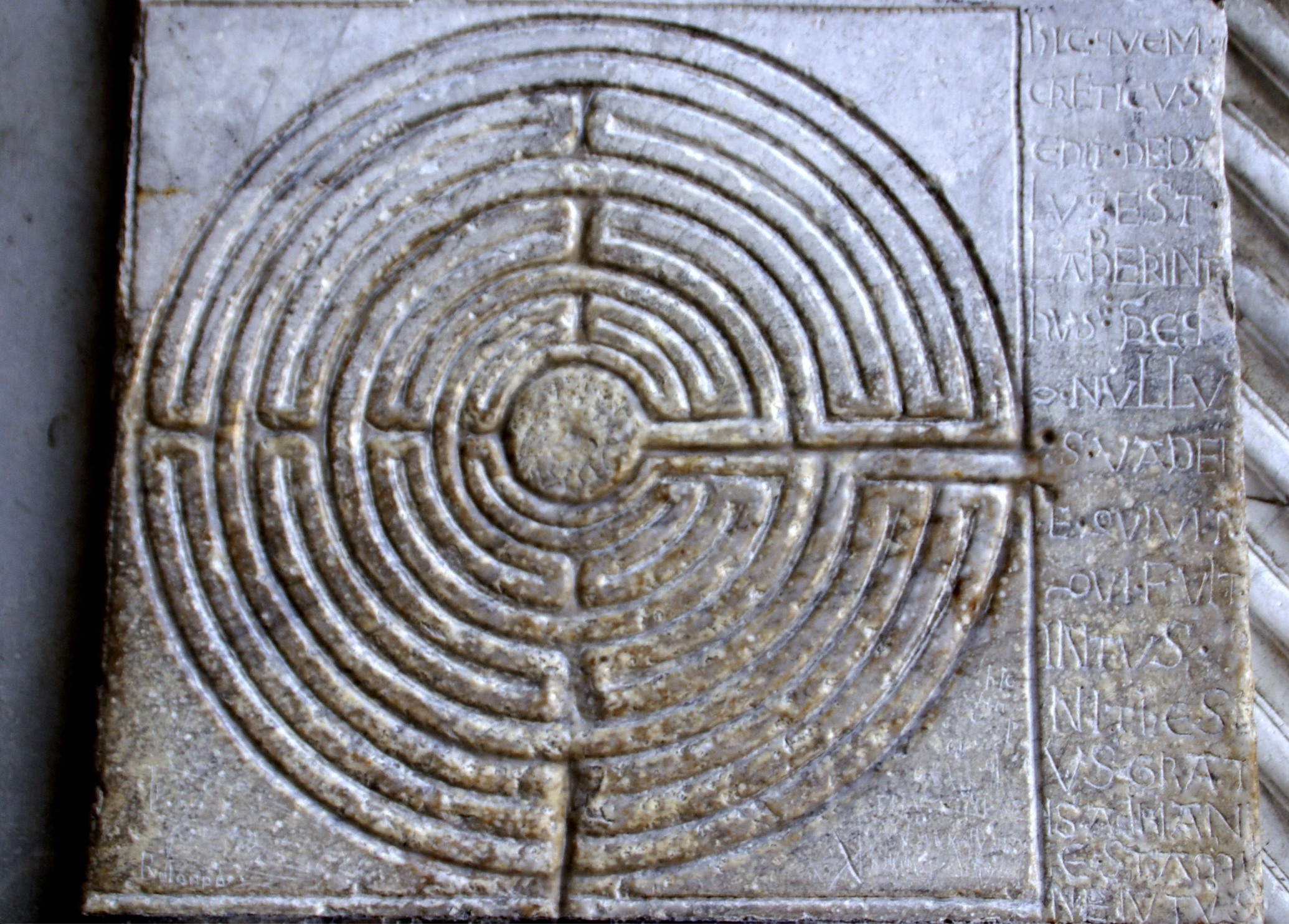
Yeah, it's no longer Halloween. But I (Stephanie) know that PI readers won't want to miss a story about THE GATE TO HELL! Otherwise known as Rathcroghan (meaning "the fort of Cruachan" in Irish), this 5,500-year-old mound is one of Europe's oldest unexcavated sites. Its claim to fame is a "passageway that extends deep into the earth and crosses the mythological veil into the Celtic Otherworld." If you find yourself in Ireland's County Roscommon, you can take the brand-new 13km (8-mile) Rathcroghan Archaeological Walking Trail to see how the Iron Age monuments were connected to one another.
It wouldn't be a Stephanie-curated public antiquities section without a textile shoutout. Godfrey Katende is a Ugandan designer combining olubugo (barkcloth, which is traditionally used in funerary rituals) and secondhand clothing to combat fast fashion.
While on a four-day ecology field course at the University of Virginia’s Anheuser-Busch Coastal Research Center, biology major Brooklyn Rolph found a six-inch stone spear point between 3,000 and 4,500 years old. The Virginia Department of Historic Resources now holds the artifact for further study. I (Stephanie) particularly like how Rolph's acrylics match the shape of the object.
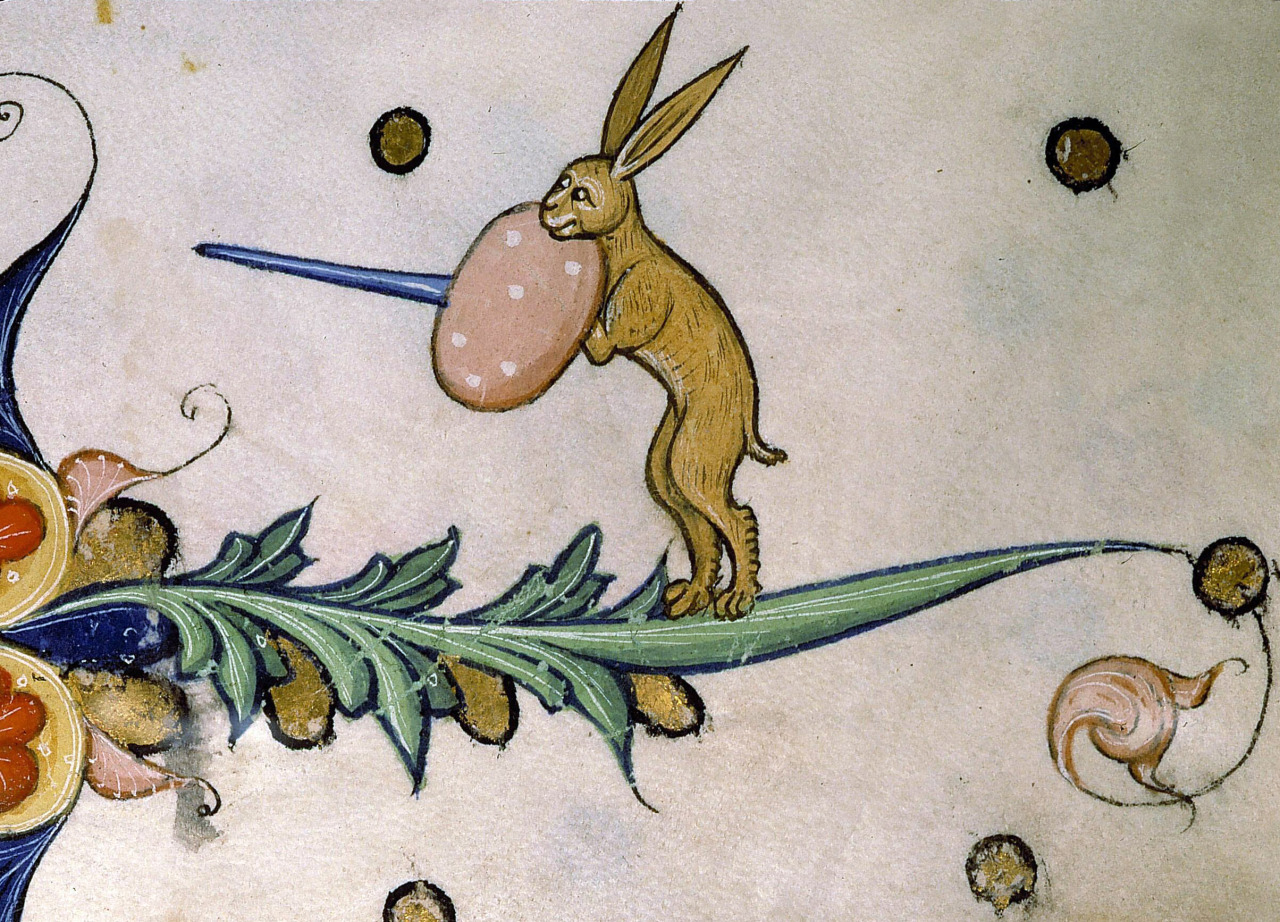
Finally, medievalist Alex Brown has a hoppin' article in The Conversation on rabbits as a "medieval royal luxury in England – until the Black Death made them commonplace." It seems like the right time to present you with a warrior rabbit from a medieval manuscript. 🐇
New Ancient World Journals by @yaleclassicslib.bsky.social
The Chronicle of Haemus Vol. 2 (2026) #openaccess
Classical Antiquity Vol. 45, No. 2 (2026)
Conimbriga Vol. 65 (2026) #openaccess
Digital Classics Online Vol. 12, No. 1 (2026) #openaccess
Istanbuler Mitteilungen Vol. 75 (2025) #openaccess
Journal of Late Antiquity Vol. 19, No. 2 (2026) #openaccess
Latomus Vol. 85 Nos. 1-2 (2026)
Mnemosyne Vol. 79, No. 6 (2026) Études de métrique, de poésie et de poétique offertes à Marc Dominicy
Studia Historica. Historia Antigua Vol. 44 (2026) #openaccess
History of Philosophy & Logical Analysis Vol. 29, No. 2 (2026)
Hypnos No. 57 (2026) #openaccess
Journal of Ancient Philosophy Vol. 20, No. 2 (2026)
Journal for the History of Astronomy Vol. 57, No. 4 (2026)
Philosophy & Rhetoric Vol. 59, No. 1 (2026)
Journal for the Study of Judaism Vol. 57, Nos. 4-5 (2026)
Journal of the Bible and Its Reception Vol. 13, No. 2 (2026) #openaccess
Nobis Musica Christus (NMC) No. 2 (2026) #openaccess L'Alethia de Claudius Marius Victorius (Part 2)
Patristica Nordica Annuaria Vol. 40 (2025) #openaccess
TC: A Journal of Biblical Textual Criticism Vol. 31 (2026)
Zeitschrift für Antikes Christentum = Journal of Ancient Christianity Vol 30, No. 1 (2026) #openaccess
Near Eastern Archaeology Vol. 89, No. 3 (2026)
Persica Antiqua Vol. 7, no. 12 (2027) #openaccess
Byzantine and Modern Greek Studies Vol. 50, No. 2 (2026)
Frühmittelalterliche Studien Vol. 60 (2026) #openaccess
The Mediaeval Journal Vol. 14, No. 1 (2026)
Manuscript Studies Vol. 11, No. 2 (2026) #openaccess
Archäologische Informationen Vol. 48 (2025) #openaccess
Zephyrvs Vol. 97 (2026) #openaccess
Exhibitions, Lectures, and Workshops
Over at ISAW-NYU, the current (and free) exhibition is "Cursed! The Power of Magic in the Ancient World." As they note, "From its integration into religious traditions in Mesopotamia and Egypt, to its marginal, often illicit status in Greece and Rome, magic played a central role in ancient societies. Cursed! examines the visualization and practice of magic between 2000 BCE and 300 CE in these communities, featuring rare objects in a variety of media–including sculpture in stone and bronze; decorated ceramics; amulets in semiprecious stones, gold, and silver; and papyrus scrolls. Taken together, these artifacts reveal a shared human desire: to influence the unseen forces shaping life and death." The exhibition is on now and goes until December 13, 2026.