Pasts Imperfect (7.16.26)

μοι ἔννεπε, μοῦσα, of this special Homer issue to prepare you to head to the theaters to see The Odyssey this week. Our resident Homer sage, Joel Christensen, discusses his new book, Why Odysseus?: Survivor, Scoundrel, (Anti)hero. Then, Yoandy Cabrera provides a list of Hispanic reimaginings of The Odyssey to check out, an engaging Homer discussion with Jackie Murray and Emily Wilson, the Tom Hollands collide on the Odyssey press circuit, a new study calculating the loss of medieval manuscripts, Tom Hiddleston and a few trusty classics professors take on Pompeii, saving Chaco Canyon, Mayan ruins reveal the name of an ancient astronomer and mathematician, global receptions of Homer from China to the Caribbean, a new open access book on The Iconography of ‘Otherness’ in Pre-Modern Visual Art, new ancient world journals, and much more. Let's get to it.
Welcome to the Odyssecene by Joel P. Christensen
The Odyssey is having something of a moment. “Moment” is an understatement: this is Odysseus’ world; we are just observing it. Only David Meadows—the legendary Rogue Classicist—is bold enough to track the pages, posts, and paeans rolling out daily about Homer’s epic and its eponymous hero. I myself have engaged in this madness by releasing not one (Oxford Critical Guide to Homer’s Odyssey) but two books (Why Odysseus?) in the past year on the topic (and, yes, many of Ruth’s criticisms of the former are mostly fair).
Despite many words written and read, I am not sure I can explain where the seismic impact of Nolan’s Odyssey came from, but it reaches back at least to the release of O Brother Where Art Thou? and Stanley Lombardo reciting his Odyssey on CNN. In retrospect, there’s a connective cultural tissue running through Margaret Atwood’s retelling in the Penelopiad, Emily Wilson’s translation, Madeline Miller’s Circe, Daniel Mendelsohn’s next translation, and The Return.
But there’s more than a throughline. The modern condition is bound up, bundled, and reflected back to us in the Odyssey and its receptions. It is rooted in the poem’s interest in identity, ambiguity, self-fashioning through narrative, its adventure, its reception of storytelling and myth, its responsiveness to allegory, and the inscrutability of its main characters (not just Odysseus, but Penelope especially). As I discussed with Flint Dibble, while the Iliad is far better represented in text and reception into the 20th century, the Odyssey eclipses it and this is in part due to the adaptable and often scurrilous nature of Odysseus himself.
We are not nearing the end of the Odyssecene—there is likely to be a movie based on Jorge Rivera-Herrans’ social media hit EPIC: The Musical and there are talks to expand the HCU (Homeric Cinematic Universe) to include The Silence of the Girls. How do we even begin to understand the shift from the reception of Troy two decades ago? Is it about the quality of the film? Has social media supercharged our collective agitation? Is it the shift in our awareness of politics and our polarization since?
A bunch of us gathered on Monday this week to discuss what we were looking for in Nolan’s Odyssey, but, in the end, I will probably focus on what the movie tells us about ourselves. While we wait to figure this out, here are three interconnected thoughts prompted by the moment.
- Meet the new monoculture: epic capital
The money changing hands in anticipation of Nolan’s movie and the production of material to explain, expand, or otherwise capitalize upon this film is astounding. Not only does it make me think about the continued relationship between epic and authority and a desire to affiliate with both that lurks on every side of the political spectrum, but it also makes me think about how little we talk generally about the material conditions of the production of the Odyssey. By this, I mean both the hidden and obscured labor of the free and enslaved people who created, preserved, and transmitted the text over time, but also the cultural capital that produced the performance and text of the Odyssey in general. I am writing this in the hope that others can help think through these relationships, but also to remind myself that the romantic notions of kunstsprache and oral traditions notwithstanding, the Odyssey has always had a relationship to physical and symbolic capital.
But there is also a belatedness or secondariness to the poem. It knows it is coming at the end of things. It ends falsely, leaving us uncomfortable, with the sense that the world after the poem will be incomprehensibly different.
I wonder if this is part of the reason we are drawn continually to its story.
Bear with me on this one: Just as we named the Anthropocene in recognition of our period as distinct, with a certain beginning and an impending end, the Odyssecene presupposes its own boundaries and end. For Odysseus and the Homeric Odyssey—both coming at the end of ages and marking transition to something beyond the words we possess today—anticipate a world where they no longer belong. This repeated returning to the story of return may be a reflex of our collective recognition that we, the ones between things, are also fundamentally agents of our own ending (in climate change, neofascism, and whatever it is that AI does to us).
- The gap between scholarship and public knowledge
Clearly, the Odyssey inspires a kind of wool-gathering and navel-gazing that invites one to reflect on a quarter century spent entranced by epic, engaged with it, and, to be fair, employed by it only to face a world in which everyone seems to be talking about a poem and a figure that sound alien to me. To be fair, my readings can be a bit idiosyncratic. But what is this poem people keep talking about?
What about that money? Despite the Odyssey looking like a billion-dollar business, where’s the investment in education to respond to it? Has there ever been a time when public interest in Homer is so pervasive but the academy is so ill-equipped to meet it? I find myself routinely unmoored by discussions in print and online where it is clear that the “facts” I hold to be true and many of the fundamental tenets of modern Homeric studies are not only unknown to the general public, but also unfamiliar to well-informed academics in the humanities and in classics themselves.
This is not meant as an indictment of our field and specialization like other recent attacks coming from inside the house. Mine is a lament for the combination of the collapse of international research in the humanities as we know it and the hard work left for those who remain. Who will be there teach the kids excited by Nolan’s movie Greek in 10 years?
How do we extend our work to educate and argue outside of our specialty? How do we do this when academia is collapsing and our expertise is at existential risk How do we do these things while still holding true to the ethical commitments of studying the past critically and ensuring space for the understudied and the new?
- What non-scholarship produces
What I have written so far sounds bleak, but it is influenced in part by the contrast between these feelings and the joy of having spent now over half of my life studying Homer. It isn’t just that the Iliad was there for me after 9/11 and the War on Terror or that the Odyssey has been by my side as I became a parent, lost my father, and moved steadily towards Odysseus’ likely age at his homecoming. It is also because my life has been enriched by the work. Look again at the video of us talking about Nolan’s Odyssey. One of the reasons I am excited about the movie is that I get to watch it with a dozen friends and then talk to them about it. My communion with Homerists and our cabal of weirdos has produced some of the most important friendships in my life.
So, my third and final thought today is that whatever might come, is how much more we in the academy still can learn from how others engage with Homer. WE must remember that poetry and song are meant to be heard and understood with other people. What can we learn from Nolan and others? That audiences want wonder, joy, they seem to thrive on debate, and they need to make sense of the poem in their own terms. There’s a whole world engaging with Homer out there, and we can learn from what’s happening.
I’ll close with a few quick examples, Odyssey-related things to check out instead of, alongside, or in addition to the movie:
Margaret Atwood’s Penelopiad: This retelling does more to reconsider Homer’s story than 100 years of scholarship.
Laura Jenkison-Brown’s You Are Odysseus: We all secretly want to be him. This amazing intervention let’s you work through the story on your own.
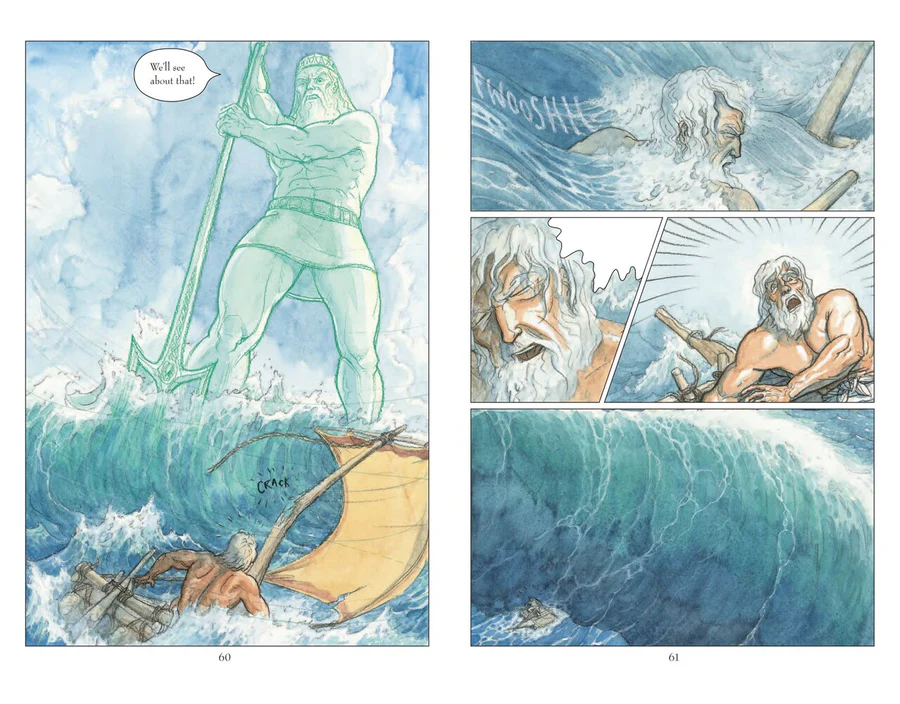
Liv Albert’s Odyssey: I usually suggest Gareth Hinds’ graphic novel to people who want to start out with the epic; Liv’s recent book is beautifully illustrated and the story is well told.
EPIC: The Musical. While I celebrate the entire catalog, it doesn’t get any better than “Love In Paradise”, which is a really subtle reading of Odysseus’ mind at the beginning of Odyssey 5.
Joe Goodkin’s Odyssey: Not only is Joe a great guy, but he happens to be a good musician too. His interpretation of the poem into American blues-folk will make even the most cynical (me) rethink Odysseus.
Erica Stevenson’s The Odyssey Effect: How Homer’s Epic Poem Shaped the World is a great introduction to the Odyssey’s place in the world written by an author dedicated to public outreach.
The Odyssey Project: Learn about how this project used the Odyssey in performance with incarcerated youth and is releasing a documentary to support racial justice in California. Donate.
10 Hispanic Reimaginings of The Odyssey to Check Out by Yoandy Cabrera (Rockford University)
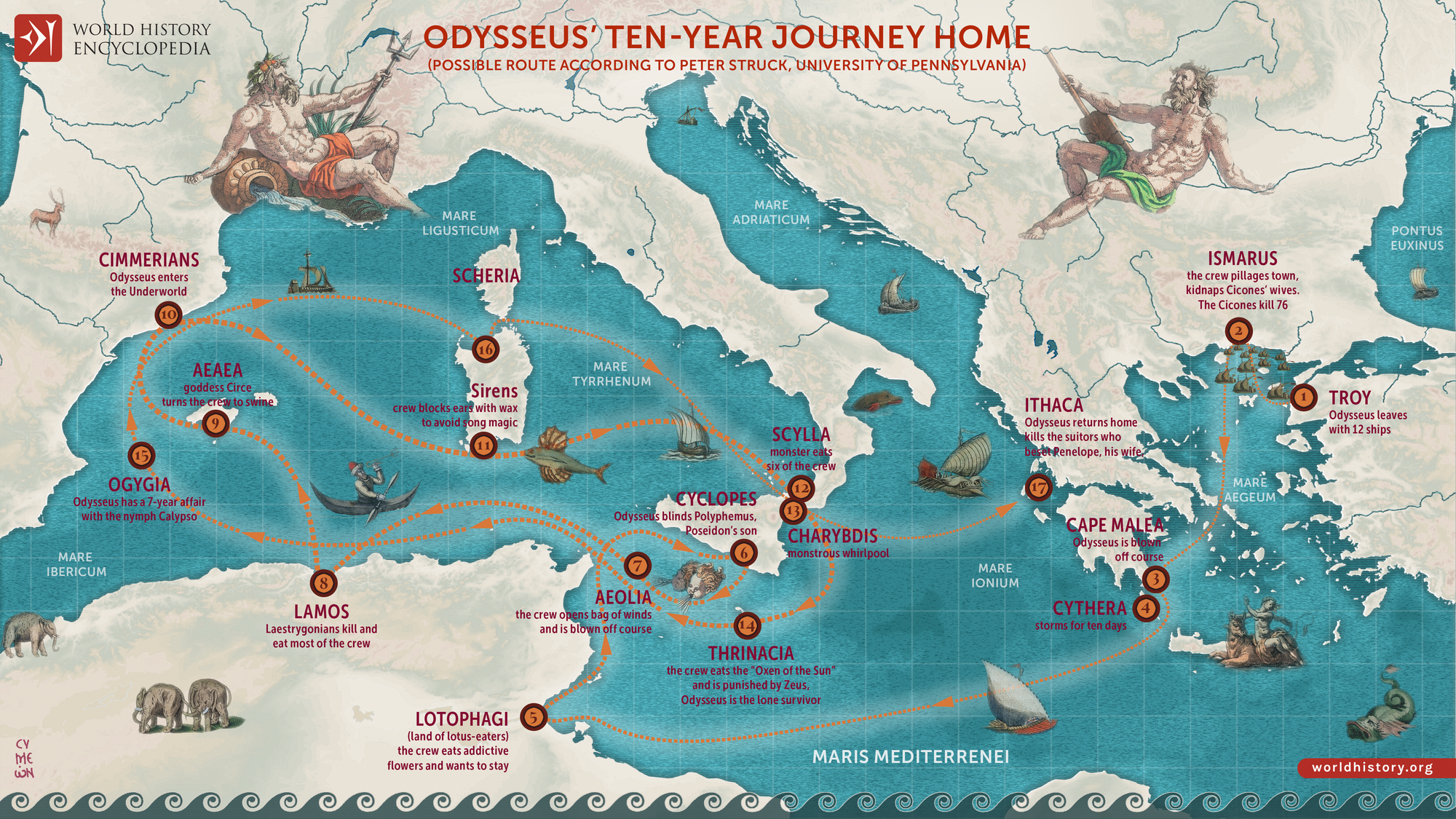
- La Circe (“The Circe,” 1624, poetry) by Lope de Vega. Circe's episode proved especially compelling to Spanish Golden Age authors. Lope's poem also recounts the destruction of Troy and Odysseus's encounters with the Lotus-Eaters, the Laestrygonians, and the Underworld.
- El mayor encanto, amor (“Love, the Greatest Enchantment,” 1637, theater) by Calderón de la Barca. This Baroque Spanish comedia, also based on Circe's episode, uses the magical setting, the palace, and the natural world (all central elements of seventeenth-century Spanish theater) to connect mythological themes with contemporary ideas.
- La Odilea (1960s, novel) by Francisco Chofre. This is a parodic rewriting of the Homeric poem set in the Cuban countryside, using popular rural speech, colloquial language, and local expressions.
- Viajes de Penélope (1980, poetry, first edition) / Penelope's Journeys (2011, English edition) by Juana Rosa Pita. One of the most distinctive aspects of Pita's reinterpretation is her decision to tell the story from Penelope's perspective rather than Odysseus's, a very extended practice in modern times. She portrays Penelope as a demiurgic figure who, through the intertwined acts of writing and weaving, intervenes in and ultimately shapes Odysseus's journey. Two other poetry collections that revisit the myth from Odysseus's perspective are El problema de Ulises (“The Problem of Ulysses,” 2015) by Andrés Reynaldo and Odiseo ante su rostro (“Odysseus Before His Face,” 2017) by Emilio de Armas.
- Hemos llegado a Ilión (“We Have Reached Ilion,” 1992, poetry) by Magali Alabau. In her mythological poetry, Alabau inverts the patriarchal heroic tradition. Instead of the conventional male hero returning from Troy to Greece, she presents a migrant female subject who, after many years in the United States, returns to Cuba-as-Ilion. In this 1992 book-length poem, the mythic reversal is expressed through both the feminine voice and the motif of the doppelgänger, recalling her earlier collection Electra, Clytemnestra. By reimagining the Homeric nostos, Alabau transforms the epic hero into a Cuban émigré returning from the "American Greece" of the developed world to the intimacy and harsh, ordinary reality of Cuba, figured as the prison-island Ilion.
- Odiseo y Penélope (“Odysseus and Penelope,” 2006, theater) by Mario Vargas Llosa. The Peruvian Nobel Prize–winning author wrote this theatrical adaptation of Homer's epic, focusing on an intimate, private dialogue between Odysseus and Penelope. As Odysseus recounts his journeys and adventures, Penelope also assumes the roles of Circe and Calypso, among others, bringing the women of his travels to life through their conversation.
- Kassandra (written in 2008 and premiered in 2010, theater) by Sergio Blanco. In this monologue, written in the broken English of an immigrant who lives and works on the streets, Blanco retells the Trojan war and its consequences through the voice of a transgender character who breaks the limits between masculine and feminine, war and love, violence and sex. Blanco depicts an enduring Cassandra, who traverses from the Trojan era to the contemporary period and alternates between roles as a war captive and concubine in antiquity to a marginalized sex worker in the present. Speaking from a liminal standpoint as a foreigner, an undocumented migrant, and a non-binary individual, Blanco's Cassandra encompasses geographical, linguistic, and cultural liminalities, challenging the conventional notion of the "epic hero."
- La Odisea (“The Odyssey,” 2012, theater) by Rafael Álvarez (known as “El Brujo”). La Odisea, adapted by El Brujo ("The Sorcerer"), premiered at the 2012 International Classical Theatre Festival of Mérida, Spain. Like the ancient aoidos and rhapsode, the actor-playwright recounts some of the epic's most significant episodes, blending oral storytelling with theatrical performance.
- Odisea (“The Odyssey,” 2016, theater) by Alberto Conejero. Written in a dynamic, contemporary style, this theatrical adaptation was created by Conejero for the educational initiative “Proyecto Homero.” By breaking the theatrical illusion from the opening scene, the play allows its characters to move fluidly between the ancient and the modern worlds, constantly shifting perspectives between the classical text and its contemporary reinterpretation.
- Berta Isla (2017, novel) by Javier Marías. In this spy novel, the protagonist, Berta, can be read as a modern Penelope, waiting for her husband as he undertakes an undisclosed mission. In this sense, the novel reimagines the Odyssey from the feminine perspective (that of enduring waiting, uncertainty, and absence). Marías encourages readers to draw parallels with the Homeric epic through explicit allusions and carefully crafted correspondences.
As a final note, it is worth highlighting the publication of Laura Mestre's Spanish translation of the Odyssey by Amor Vincit Publishing House in Colombia in 2026, accompanied by an introductory study by Elina Miranda Cancela. Mestre's translation of the Homeric epics is the first known complete Spanish translation by a woman, marking a significant milestone in the history of Homeric reception in the Spanish-speaking world.
Public Humanities and Global Antiquity
οἴμοι! It could take you ten years just to wade through all of the Odyssey content right now, but we have tried to curate a few worthwhile media contributions. We enjoyed Hellenistic poetry expert Jackie Murray's podcast conversation with Emily Wilson, there's an Iowa interview with Celsiana Warwick on the relevance of Homer in the modern world, and important remarks on Zendaya's premiere earrings—which have inspired reflection on the ethics of wearing antiquities.

Did we mention that Tom Holland met Tom Holland?
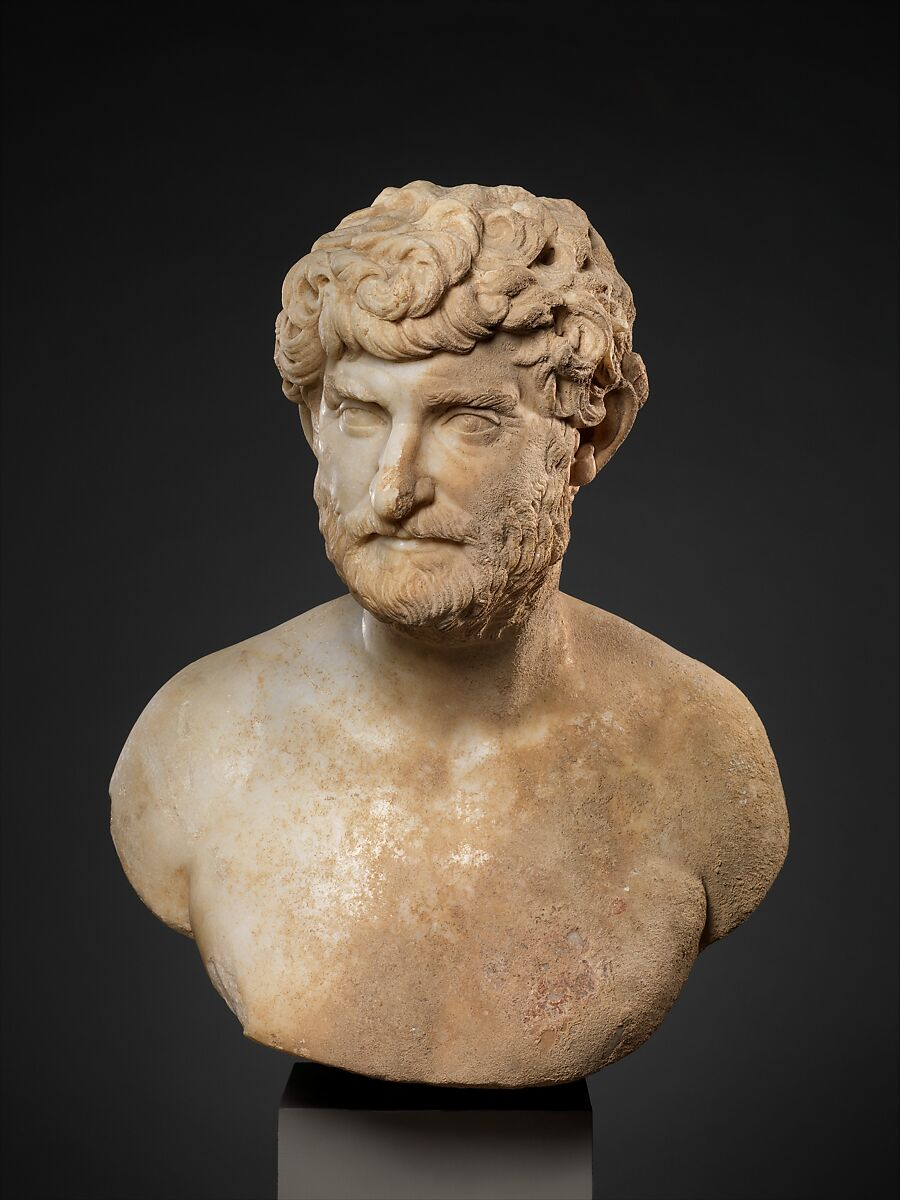
Over at Hyperallergic, art crime badass Erin Thompson has an important essay on "Why The Met Returned a Roman Bust."
The sculpture had been purchased from Phoenix Ancient Art, a gallery purporting to follow “the antiquities trade’s most vigorous and stringent procedures of due diligence.” The gallery touted the effort it put into finding evidence that its artifacts had left their countries of origin long before the enactment of export bans. Equipped with these good provenances, or ownership histories, Phoenix boasted that its antiquities could be “collected in full compliance with all legal and ethical rules.”
Reader, they did not. Also note that J.A. Baird and Adnan Almohamad have an important article in Antiquity on "Looted communities: the local contexts of illicit excavations at Dura-Europos in Syria."
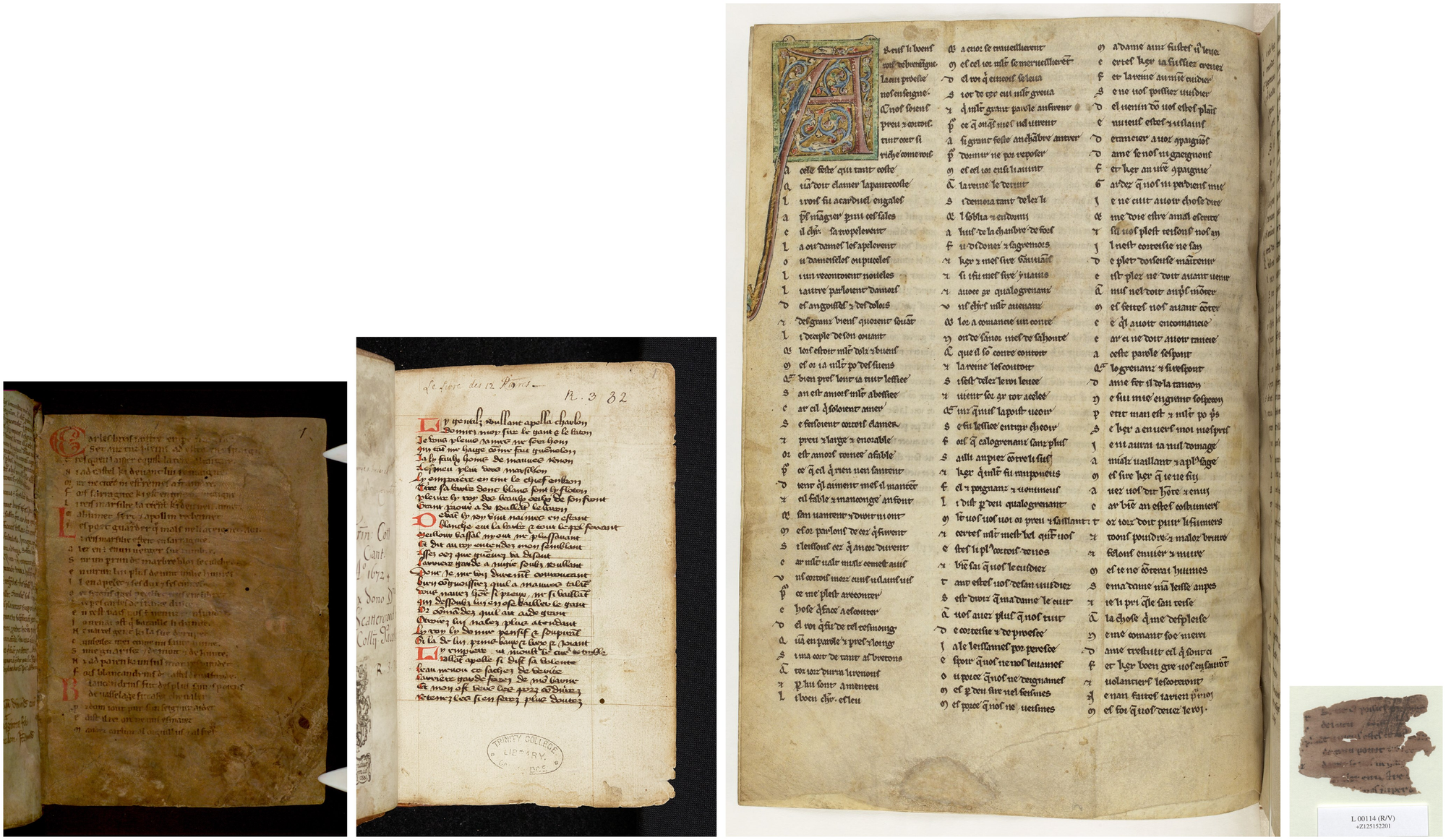
How do we calculate absence? A new study, "On the transmission of texts: Written cultures as complex systems," in PNAS by Jean-Baptiste Camps , Julien Randon-Furling, Ulysse Godreau studies the writing and transmission of 2,000 manuscripts "of medieval chivalric texts, that originated mostly in the years 1150–1350" from about 1100 to 1600 CE. They found that a text is most vulnerable right in the years directly after it is written. "Further, this approach provides broad trends estimates suggesting that up to 60% of texts and more than 95% of manuscripts may have been lost."
And outside of the Middle Ages? In Bluesky comments to me (Sarah here!), historian of science Scott b. Weingart noted that earlier studies on the subject of calculating loss also need to be considered, particularly "The selective Transmission of Historical Documents: The Case of the Parish Cahiers of 1789," which looks at the probability rates and reasons for survival for about 40,000 cahiers de doléances ("ledgers of complaints" compiled across France in 1789). As they note, the documents that get transmitted are not a random sample; the transmission is influenced by everything from urbanization to social bias.
For Greco-Roman antiquity, ancient historian and demographer Walter Scheidel pointed me to Reviel Netz's Scale, space and canon in ancient literary culture (Cambridge University Press, 2020), who notes that "it is more likely than not (more than 50 percent probable) that there were between 30,000 and 40,000 authors in antiquity" and that there were perhaps around "10 to 15 million papyrus rolls at the peak" with "a survival ratio, for literary papyri in the Nile Valley, of about 1:1,000." (Although more sturdy, inscriptions only have a 1% survival rate.) The most popular work to preserve on papyrus? The Iliad, with around 20% of all papyrus rolls at their peak. Quite the bestseller.
Most of us know that Tom Hiddleston was a classics major at Cambridge. But he also has a new show called Pompeii: Out of Time with Tom Hiddleston, which features some familiar, brilliant faces. Steve Tuck and Caitie Barrett make an appearance. The new three-part docudrama premieres July 23, 2026 on Disney+ and National Geographic at 8 & 9pm.
Homeric reception is not owned by the Anglophones. Homer is global. There is Sher-shiueh Li's “Translating” Homer and his epics in late imperial China: Christian missionaries’ perspectives," Barbara Graziosi's and Emily Greenwood's wonderful Homer in the Twentieth Century: Between World Literature and the Western Canon, and Rosa Andújar's "Philological Reception and the Repeating Odyssey in the Caribbean: Francisco Chofre's La Odilea," just to name a few. You might also want to listen to Saint Lucian poet, painter, and playwright Derek Walcott read the beginning of his novel, Omeros.
The Iconography of ‘Otherness’ in Pre-Modern Visual Art: A Cross-Cultural Approach, edited by Martin Bentz and Patrick Zeidler, is out now, open access (free). The book looks at "images of ‘others’ stemming from different pre-modern societies (prior to 1800 CE) around the globe..." to compare the role of ‘otherness’ and the use of ‘othering’ as a pictorial strategy in various historical contexts. The volume includes case studies from Bronze and Iron Age Near East and Egypt, Late Bronze Age and Archaic-Classical Greece, pre-Roman Italy, Medieval and Early Modern Europe as well as pre-modern South Asia."
The current administration has made it a point to scale back necessary protections on millions of acres of federal and native lands. And now they are coming for Chaco Canyon (New Mexico)—an incredible site of the ancestral Pueblo people dating to 850-1250 CE. News outlet KOAT in New Mexico is reporting that the "Bureau of land Management on Wednesday released a new environmental assessment for Chaco Canyon that signals the agency’s preferred option is to reopen more than 336,000 acres around the sacred landscape to mineral leasing and mining." The public comment period only goes until July 29, 2026. You can submit your comments here.
We got a name reveal! Who: a mysterious, previously unknown astronomer. When: between 400 BCE and 900 CE. Where: San Bartolo-Xultun, a Maya archaeological site on the border of Guatemala and Mexico. How: epigraphic analyses of mural symbols, denoting a mathmatical-astronomical formula. So what is it?! "Sak Tahn Waax," which translates to "white-chested fox." Guatemalan cultural minister Luis Mendez says it's the only work of its kind attributed to a mathematician from the peak of Mesoamerican civilization.
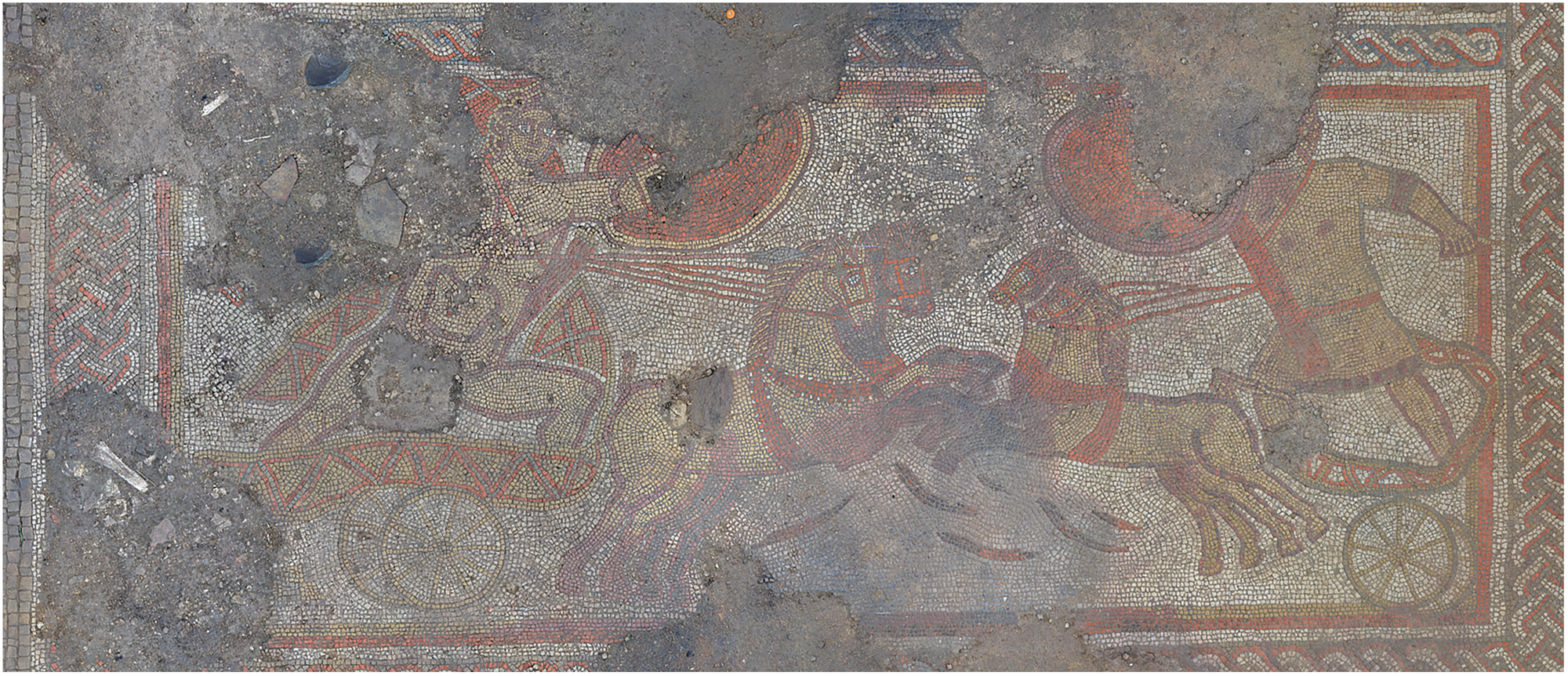
In other publication news, Levi Roach has a new review of Tim Whitmarsh's Rome’s Age of Revolution: Augustus, Empire and the Making of Christianity in the Literary Review; Stephanie McCarter has a splendid new parallel text translation of Catullus out now; Celsiana Warwick's anticipated Gendered Voices in the Iliad: Lament and Heroic Glory is out in the UK; and there is a cool new article in Britannia on the newly discovered Ketton Mosaic, which illustrates the duel between Achilles and Hector—but the authors argue it is pulled from Aeschylus and not Homer's Iliad.
Finally? A plea from the Exeter University and College Union to "condemn the announcement by the University of Exeter of a sweeping programme of job cuts that places well over 500 staff - 14% of all academic staff - at risk of compulsory redundancy in the run-up to Christmas." Sign the petition here.
New Ancient World Journals by @yaleclassicslib.bsky.social
Arctos: Acta Philologica Fennica Vol. 59 (2025) #openaccess
Argos Vol. 1 No. 55 (2026) #openaccess
Bulletin of the Institute of Classical Studies Vol. 61, No. 1 (2026)
The Cambridge Classical Journal Vol. 71 (2025) #openaccess
Classical Antiquity Vol. 45, No. 1 (2026)
Classical Philology Vol. 121, No. 3 (2026)
Erga-Logoi Vol. 14, No. 1 (2026) #openaccess
Essays in Long Late Antiquity Vol. 1, No. 1 (2026) #openaccess\
Gaia Vol. 29 (2026) #openaccess Le choix d’Achille — Nouveautés sur la Grèce archaïque
Giornale Italiano di Filologia Vol. 77, No. 1 (2026)
Greek, Roman, and Byzantine Studies Vol. 66 No. 2 (2026)#openaccess NB Kevin Feeney "Abusing Your Rulers: Performance and Protest in a Constantinopolitan Circus Dialogue"
Hermes Vol. 154, No. 2 (2026)
Hesperia Vol. 95, No. 2 (2026)
Historia Vol. 75, No. 3 (2026)
Lexis Vol. 44 (n.s.), No. 1 (2026) #openaccess
Mediterranea Vol. 11 (2026) #openaccess
Mnemosyne Vol. 79, No. 4 (2026)
PHASIS No. 28 (2025) #openaccess
Rivista di Filologia e di Istruzione Classica Vol. 153, No. 2 (2025)
Romanitas: Revista de Estudos Grecolatinos Vol. 27 (2026) #openaccess s Entre romanos e “bárbaros”: negociação, continuidade e ruptura na Antiguidade Tardia
SAEG ( Seminari Avanzati di Epigrafia Greca) Papers Vol. 1 (2025) #openaccess
Skenè. Journal of Theatre and Drama Studies Vol. 12 No. 1 (2026) #openaccess What About Medea’s Children? Euripidean Issues and Contemporary Transformations
Teiresias Journal Online Vol. 5 No. 1 (2026) #openaccess
Τεκμήρια Vol. 20 (2026) #openaccess
Würzburger Jahrbücher für die Altertumswissenschaft [N.F.] Vol. 47 (2023) #openaccess
Aleph Vol. 24, Nos. 1-2 (2024) Professor Harry Austryn Wolfson Commemoration
Apeiron Vol. 59, No. 3 (2026) NB Peter Flegel "Plato and Ancient Egypt: An Undercounted Nexus Between Two Intellectual Traditions"
Conatus: Journal of Philosophy Vol. 11 No. 1 (2026) #openaccess Anthropology and Gender - Ancient & Medieval Philosophical Perspectives in Context
Early Science and Medicine Vol. 31, No. 2 (2026) NB Susan Mattern "Habitual Vomiting in Classical Antiquity"
History of Philosophy Quarterly Vol. 43, No. 1 (2026)
Journal of the History of Philosophy Vol. 64, No. 3 (2026) #openaccess Dedicated to the Memory of Dr. Djalal Khaleghi Motlagh
Journal of World Philosophies Vol. 11, No. 1 (2026) #openaccess
Noctua Vol. 13, No. 1 (2026) #openaccess Topografia dell’inedito: forme e percorsi della filosofia nel Medioevo
Perspectives on Science Vol. 34, No. 2 (2026) Infinities of Different Kinds: A Medieval Exploration
Augustinian Studies Vol. 57, No. 1 (2026) NB Seung Heon Sheen "Tasting Numbers: Mathematical Hermeneutics in Augustine’s De musica"
Cahiers d’études du religieux. Recherches interdisciplinaires Vol. 28 (2026) #openacces La compétition religieuse dans l'Antiquité tardive
Currents in Biblical Research Vol. 24, No. 3 (2026) NB Michael B. Evanson "The Rulers of This Age (1 Cor. 2.6–8): A Review of Current Research"
Early Christianity Vol. 17, No. 2 (2026) Water in Early Christianity: Uses, Rituals, Symbolism
Journal for the Study of Judaism Vol. 57, No. 3 (2026) NB Ariel Feldman & Faina Feldman "Moses, a Scroll, and the Ark of the Covenant: New Light on Two Paintings from Dura-Europos Synagogue"
Journal of Biblical Literature Vol. 45, No. 2 (2026) NB William A. Johnson & Nicholas E. Wagner "Papyrus Bookrolls with Jewish and Christian Content"
The Journal of Religion Vol. 106, No. 3 (2026)
Novum Testamentum Vol. 68, No. 3 (2026)
Numen Vol. 73, No. 4 (2026)
Revue d'Etudes Augustiniennes et Patristiques Vol. 71, No. 2 (2026)
Textus Vol. 35, No. 1 (2026)
Vetus Testamentum Vol. 76, No. 3 (2026)
Ancient Iranian Studies Vol. 5, No. 15 (2026) #openaccess
Aramaic Studies Vol. 24, No. 1 (2026)
Indo-Iranian Journal Vol. 69, No. 3 (2026) NB : Lambert Schmithausen "Some Remarks concerning 'Mind-Only'"
Iranian Studies Vol. 59 , No. 2 (2026)
ISIMU Vol. 28 (2025) #openaccess Voces ex deserto. La península de Arabia en la Antigüedad "
Journal of Cuneiform Studies Vol. 78 (2026)
Persica Antiqua Vol. 6, No. 11 (2026) #openaccess
Revue d'assyriologie et d'archéologie orientale Vol. 119 (2025)
Rivista di Studi Fenici Vol. 53 (2025) #openaccess NB Carlo Giuranna "«Some Say Phoenicians Were not the First to Make This Discovery»: The “Anti-Phoenician Theory” about the Origin of Writing"
De Medio Aevo Vol. 15 No. 2 (2026) #openaccess Una Edad Media cromática
Digital Philology Vol. 15, No. 1 (2026) #openaccess Race and Identity in Later Medieval Western Europe
Early Medieval Europe Vol. 34, No. 3 (2026)
Médiévales Vol. 90 (2026) #openaccess Élites municipales et religion civique
Mélanges de l’École française de Rome - Moyen Âge, Vol. 137, No. 2 (2026) #openaccess
Das Mittelalter Vol. 31, No. 1 (2026) Mittelalterentwürfe in moderner Fantasy
Speculum Vol. 101, No. 3 (2026) NB Sarah McNamer "Child’s Play and the Provenance of the Bodley Alexander"
Viator Vol. 56, No. 2 (2026) Trust, Reputation, and Expertise: The Boni Homines in Medieval Society
Acta Archaeologica Vol. 96, No. 2 (2025)
Acta Archaeologica Academiae Scientiarum Hungaricae Vol. 77, No. 1 (2026)
Arheologia=Археологія No. 2 (2026) #openaccess
Journal of Urban Archaeology Vol. 13, No. 1 (2026) Lost Towns and Cities. Rediscovering Urban Sites through Archival and Legacy Data
Lucentum No. 46 (2026) #openaccess
Oxford Journal of Archaeology Vol. 45, No. 3 (2026)
The Bodleian Library Record Vol. 38, Nos.1-2 (2025)