Pasts Imperfect (5.14.26)


This week, medievalist Matthew Vernon discusses Beowulf, Blackness, and the film Sinners (2025). Then, the ACLS, AHA, and MLA win the day for NEH grantees; dendrochronology and medieval Japanese aurorae; using pitch to examine where Roman boats were repaired; open access books on Serving the Christian State in Late Antiquity and Synchronizing the Body in Ancient Medicine and Philosophy; rebuilding the Ziggurat of Ur; a new cartoon introduces kids to medieval Islamic scholars; new ancient world journals; celebrating Nubian Month at Chicago's Institute for the Study of Ancient Cultures; and much more.
Sinners, Beowulf, and Blackness by Matthew Vernon
The movie Sinners (2025), directed by Ryan Coogler and set in the 1932 Mississippi Delta, is to the margins of what would attract the professional attention of a medievalist. The plot revolves around twin brothers Smoke and Stack who have returned home after a life of crime to build a juke joint. The brothers recruit a young man named Sammy (nicknamed Preacher Boy), who has transporting musical ability to play at the joint’s opening. He attracts the attention of three vampires, led by Remmick, who is centuries old and from Ireland. Remmick wishes to capture Sammy and exploit his talents to reunite with his ancestors; as an undead man, another character explains, Remmick’s soul is unable to cross over, and so he is trapped between states longing for connection to the spiritual plane.
In many ways, this vampire story is standard fare for a horror movie. The film’s central piece, however, contains a peculiar detail that opens it up for a medieval-inflected reading, or at least to a set of questions about how to engage with the adjacency of a medieval past to race. I intentionally use the term “transporting” to describe Sammy’s performance to underscore the magical nature of his ability which collapses time and space. As he sings, the camera moves fluidly through the assembled revelers as they dance to his singing. Amongst the contemporary attendees appear dancers from different times and traditions, from Chinese opera to 90s American hip hop to traditional Zaouli dance. At the end of the scene, the camera follows embers rising to the rafters. They alight upon the roof and burn down the juke joint. The dancers continue, oblivious to the sudden destruction. Their joy is laid bare, visible to the vampires who appear in the frame. The vision this film presents, its energy and dynamism in the frame feels new.
Academy Award winner Michael B. Jordan in the movie Sinners (2025).
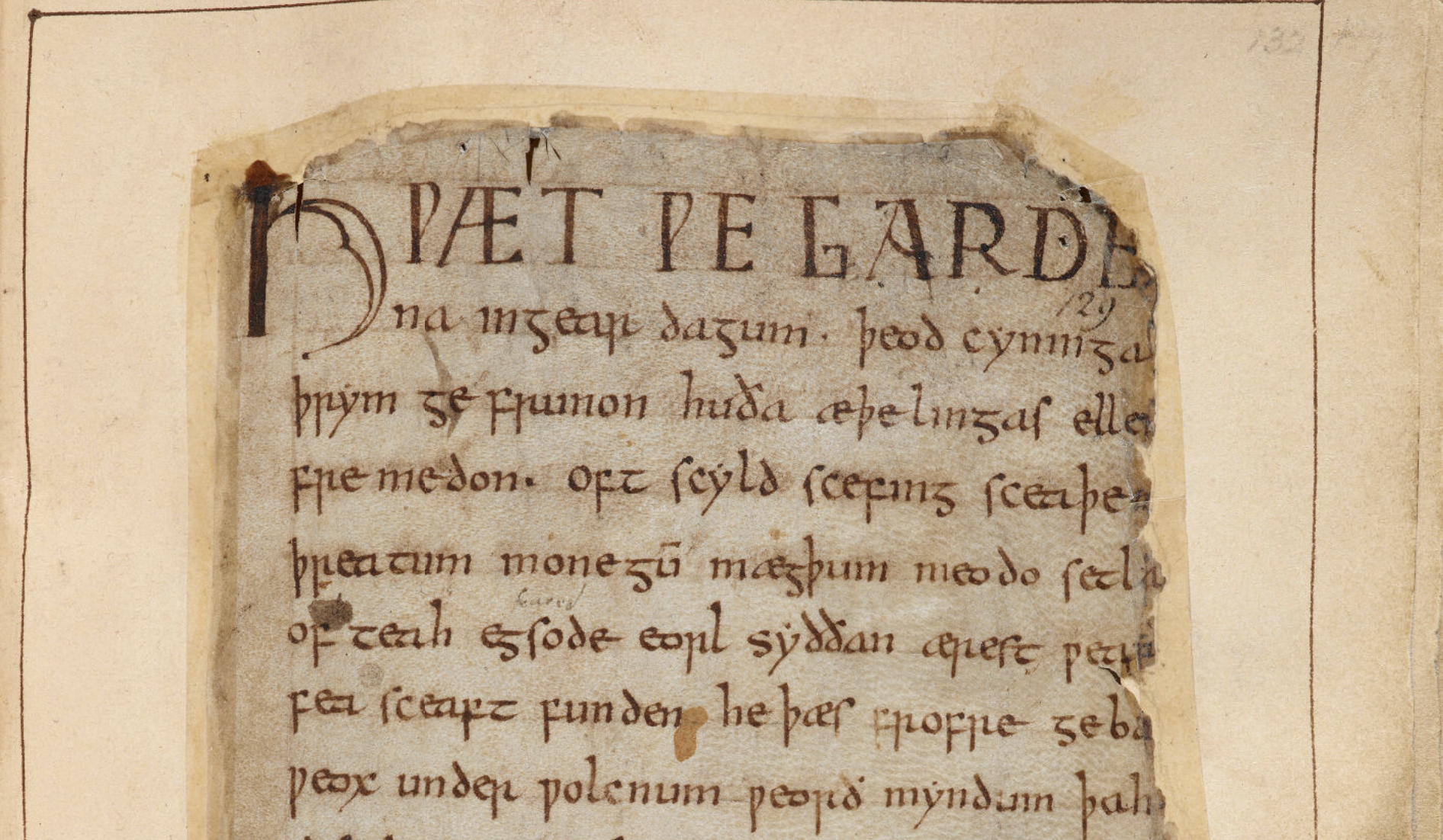
What does this have to do with medieval studies? The moment of the juke joint burning echoes the Old English poem Beowulf: in particular the famous passage in which the majestic hall Heorot’s burning is similarly foreshadowed in the midst of the hall’s construction and celebrations within it:
It soon came to pass
Swiftly among men, as it was soon ready,
The greatest of halls; he gave it the name “Heorot”
He who ruled widely with his words.
He remembered his boast; he gave out rings,
Treasure at table. The hall towered
High and horn-gabled – it awaited hostile fires,
The surge of war; the time was not yet at hand
When the sword-hate of sworn in-laws
Should arise after ruthless violence.
A bold demon who waited in darkness
Wretchedly suffered all the while
For every day he heard the joyful din
Loud in the hall, with the harp’s sound,
The clear song of the scop.[1]
The short-lived juke joint in Sinners resonates with Heorot’s demise coming in the midst of celebration. I use "resonance" here in the literary theoretical sense that Wai Chee Dimock used the word in her “A Theory of Resonance.”[2] In that article she asks what it means to read synchronically, outside a temporality “deadening some words and quickening others.”[3] Her idea of revivifying the old through new usage not only has a particular relevance with respect to these two stories about revenants. More broadly it can be used to think about how to read between medieval and modern sources as an anti-racist practice. By reading through resonance, we can conjecture new solidarities across time.
Reading across Beowulf into Sinners provokes a host of enlivening questions for both works. Above all is the ambiguity of what it means to be a sinner. As it is depicted within Coogler’s film, sinning is a complicated action that revolves around the moral status of the outsider. At the fringes of this system is Remmick, who alludes to being victim of Christianity’s subjugating powers, which positions him between Christian and pre-Christian worlds (perhaps a medieval Christian world, but that is unclear).
Echoing Remmick’s liminality is Sammy’s uncertain status within his local and religious communities. The movie is predominantly told as a flashback, framed by Sammy’s decision to either forgo his blues-playing lifestyle and rejoin his church or to abandon town and church and pursue his music career. Joining the vampire and the blues play’s different depictions of outsiderdom are the twin brothers, who have lived violent lives, but whose attempts to return to their Mississippi Delta home are framed as a means to leave crime behind. Chinese American members of the Delta community are also forced into a moral quandary of whether or not to abandon the juke joint to attend to the potential threat to their family. Far from anyone being wholly criticized for their implication in any moral choices, each of these people are depicted as negotiating a complicated network of social entanglements and forces.
Reading Beowulf through Sinners reminds us of the 1000-year old poem’s boldness that similarly speaks to a complex evaluation of various forms of transgression. The poem exists at a religious crossroads, containing hints of non-Christian traditions. Faced with the demonic Grendel, a creature that evokes a host of biblical horrors but defies the religious telos they have been celebrating, several of the terrorized Geats turn to pagan rituals in vain hopes that such rites could resolve the threat. Ultimately, the Geats turn to Beowulf, who keeps in delicate balance a secular assuredness of his own strength and a Christian humility. The poem is deeply concerned with how novel social arrangements emerge in times of terror.
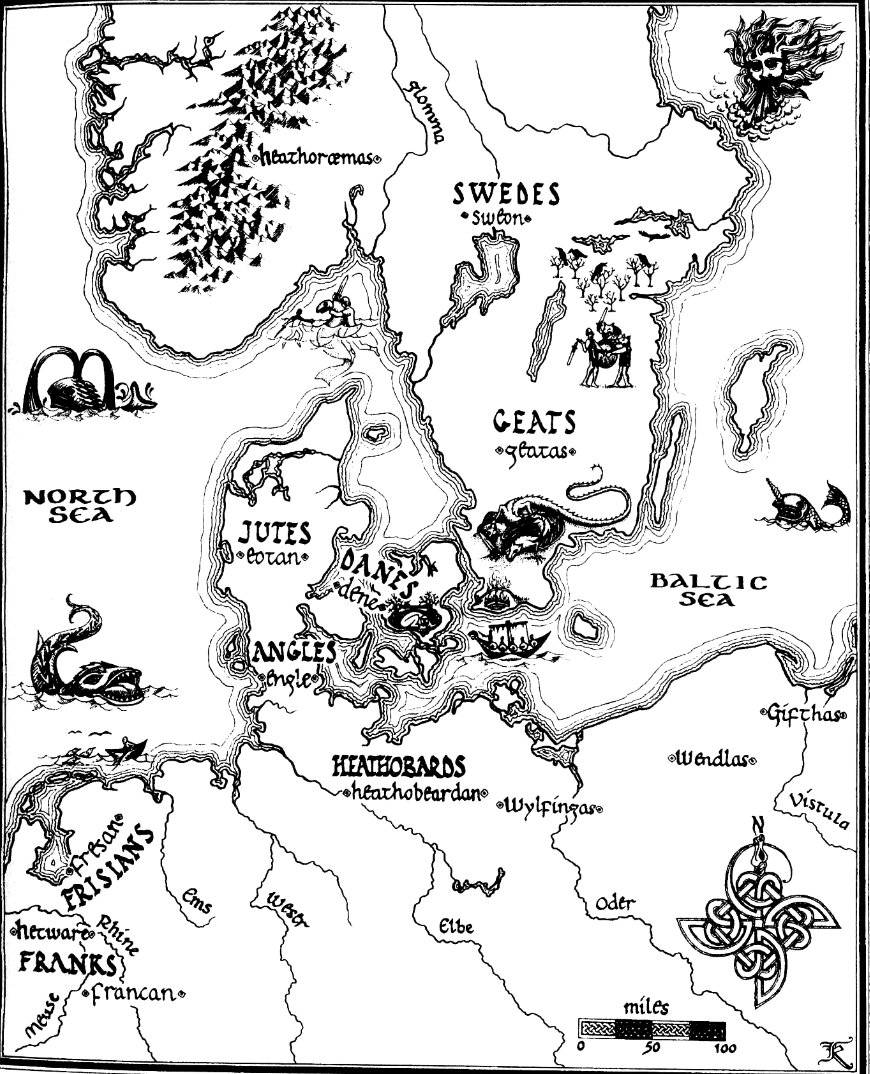
Undergirding the moral questions of what it means to sin in Beowulf is the broader syncretic literary, historical, and religious world the poem offers: like Sigmund the dragon-slayer and King Hygelac. The poem clearly articulates the expansiveness of the literary tradition Beowulf is part of, one that beggars the term Old English as fully descriptive of the poem’s situatedness. Similarly, Sinners reminds its viewers of the overlapping and tightly connected cultural traditions that have shaped what we call African American history: the film highlights Asian and African American cultural exchange as well as the continuity of ancient African practices into the modern era. The upshot of these moments is to highlight the utopic possibility held within just remembering solidarities and survivals that enable great art to be made and communities to thrive.
Why does this comparison matter? There are many public debates about who gets to claim the Middle Ages; too often the argument is reduced to the medieval being the exclusive province of white, masculine, militaristic imaginings. Think anything from Game of Thrones to largescale war on the part of the West inflicted upon the Middle East as a “crusade.” I offer this bit of criticism as part of a practice to continually rethink approaches to anti-racist engagements with the Middle Ages. As debates about who gets to claim the Middle Ages continue and transform in the face of ever-changing political realities, so too must the means by which medievalists articulate the complex engagements with and demands from the contemporary world. As the alt-right makes absolutizing claims about race, a rejoinder might be to not only show the intricacies of the medieval world’s cultural make-up but also the power within putting the past and present into intimate connection.
[1] Beowulf trans. R. M. Liuzza (Peterborough: Broadview, 2012), ll.76-90.
[2] Wai Chee Dimock, “A Theory of Resonance” PMLA 112.5 (Oct. 1997): 1060-1071.
[3] Dimock 1997: 1061.
Note also that the AAIHS Sinners Movie Syllabus by Jemar Tisby & Keisha N. Blain can be found here.
Side Note: Classics at the Met Gala by Aimee Hinds Scott
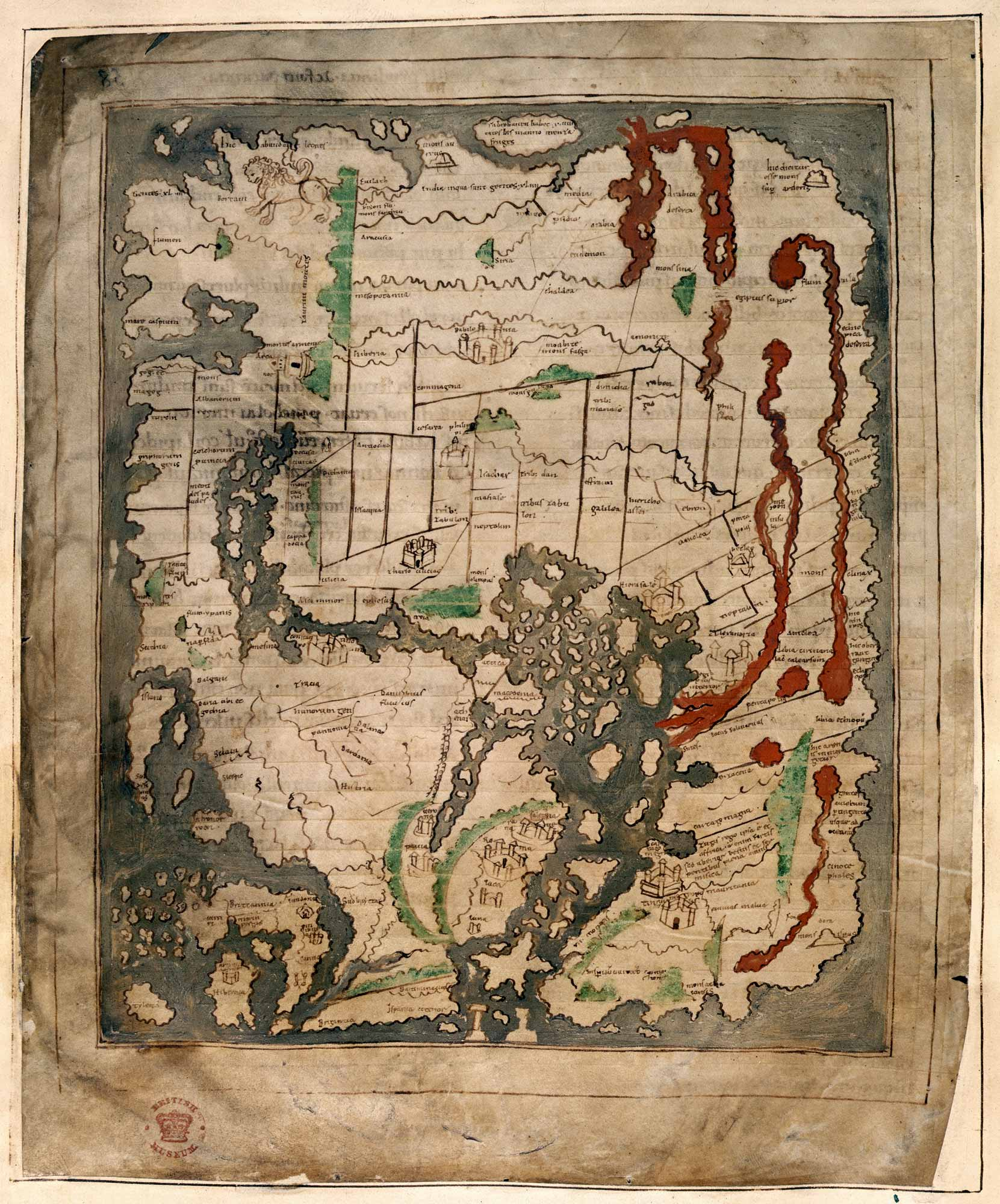
Celebrating the theme of ‘Fashion is Art’ at the Met Gala last week were a handful of classically-inspired looks ranging from Kris Jenner’s Dolce and Gabbana robe to Heidi Klum going full Roman statue in Mike Marino. With highlights including Anne Hathaway’s The Odyssey method dressing in an illustrated Michael Kors Collection gown based on Keats’ ‘Ode on a Grecian Urn’ and Chase Infiniti’s slinky Thom Browne, featuring a gorgeous interpretation of a polychromatic Venus de Milo: they remind us of the power of fashion in promoting popular ideas about antiquity.
 Tom & Lorenzo
Public Humanities and a Global Antiquity
In a huge win for the ACLS, the American Historical Association (AHA), the Modern Language Association of America (MLA), and the Author's Guild, US District Judge Colleen McMahon last week "ruled that the mass termination by the National Endowment for the Humanities (NEH) of more than 1,400 grants to support scholars, research institutions, and humanities organizations was 'unlawful, unconstitutional, ultra vires, and without legal effect.'" In the 143-page decision, McMahon granted the March 7, 2026, motion for a summary judgment on all counts in favor of the plaintiffs. The judgment makes a strong case for supporting federations of scholarly organizations that work to protect members collectively. It also underscores the implicit and explicit bias of the choices made by ChatGPT and DOGE in cutting these federal grants.
How do we write the history of solar cycles and medieval astronomical events? At Smithsonian Magazine, correspondent Margherita Bassi reports on a new study in the Proceedings of the Japan Academy, Series B, which looks at the astronomical observations of Japanese poet Fujiwara no Teika in 13th century Japan and compares them with high-precision carbon-14 analysis of the tree rings of asunaro trees growing in northern Japan.
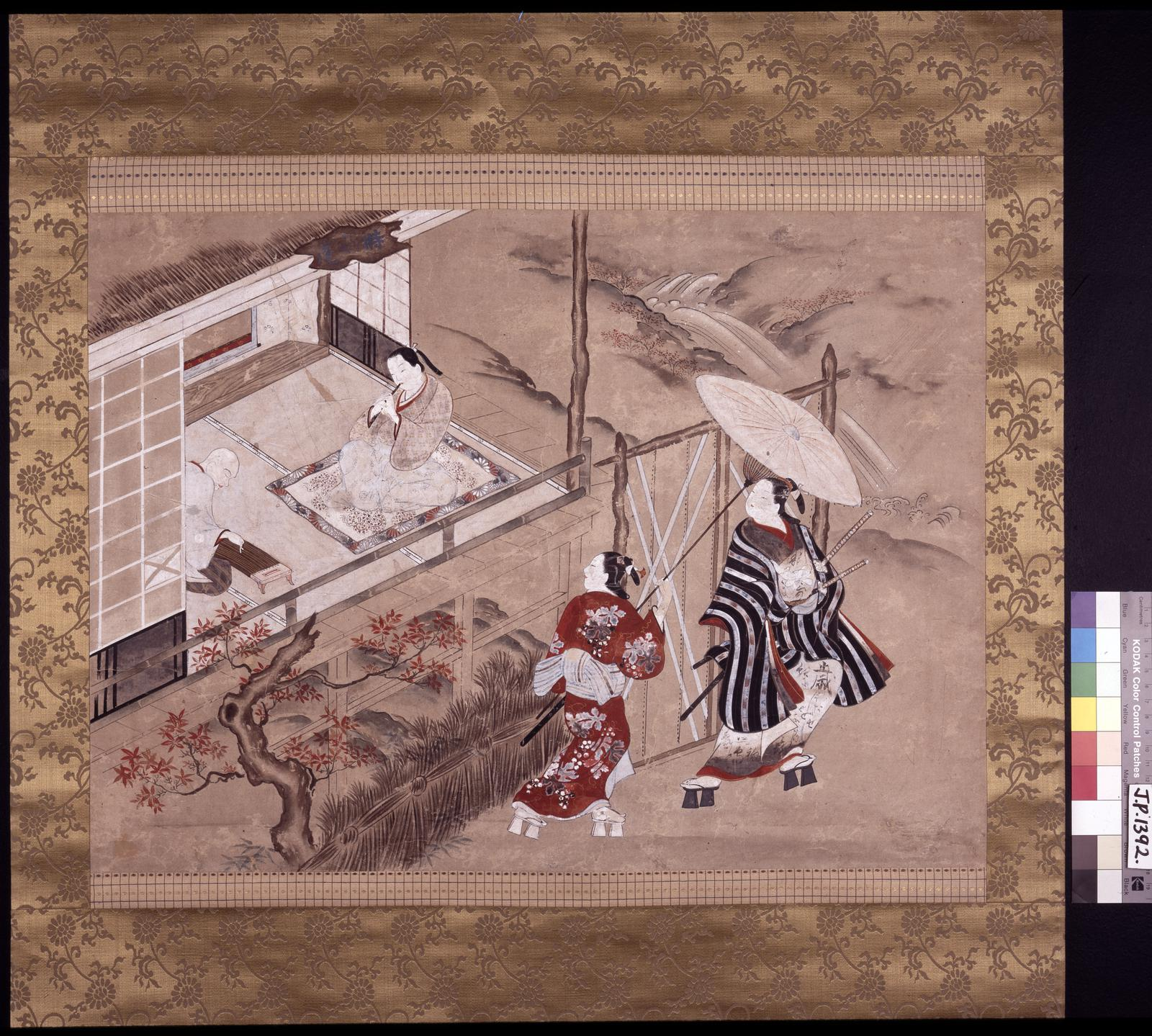
Researchers at Strasbourg University have recently analyzed plant taxa present in pollen, found in the pitch of an ancient Roman shipwreck off the coast of Croatia. If you, like me (Stephanie), had to frantically Google what pitch even was (a mixture of pine tar and beeswax!), you may be shocked to learn that archaeometrists can find out where the ship had gone for repairs over two millennia ago. Greek shipbuilders would melt beeswax into pine tar to make it easier to apply to the hulls of ships before sending them all around the Mediterranean – evidence that still exists today.
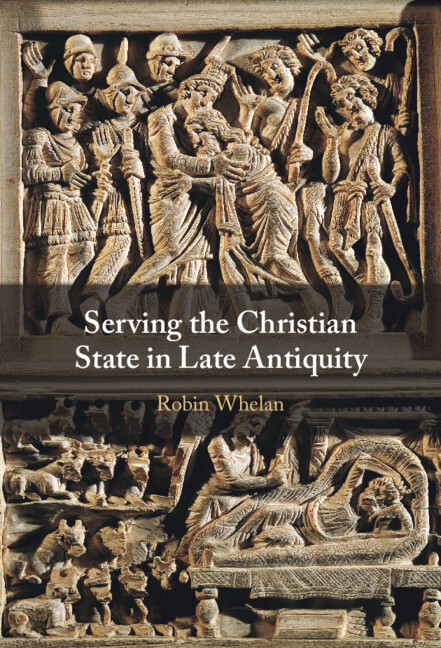
Late Antiquity specialist Robin Whelan has a new, open access book out with Cambridge University Press. Serving the Christian State in Late Antiquity asks: "How did the state become Christian in late antiquity?" To Whelan, we need to look more closely at "those who served the state as courtiers, bureaucrats, and governors."
Also just out in open access is the latest in a series of publications from the Einstein Center Chronoi: Synchronizing the Body in Ancient Medicine and Philosophy, edited by Giouli Korobili , Kassandra J. Miller and Philip J. van der Eijk. The contributions explore the ways in which ancient philosophers and doctors understood the interaction of temporal patterns in the body and the cosmos. In a new podcast episode from New Books in Medieval History, D. Vance Smith discusses his new book, Atlas’s Bones: The African Foundations of Europe (U Chicago Press, 2025). Even Fulgentius gets a shout out!


At Reuters, they report on the rebuilding work on the ancient Ziggurat of Ur. The project is using local materials and traditional methods to try and recreate Sumerian engineering. The temple began under Ur-Nammu (2112-2094 BCE) and is being restored to save it from increased climate erosion.
I (Sarah here!) love this Vogue piece on the the Progetto Donna (“Women’s Project”) at Al Ciliegio—a restaurant on property confiscated by Sicilian authorities from the mafia—in Salemi, an hour from Palermo, Sicily. As they note, "Here, migrant women from North Africa cook alongside women from Sicily, sharing recipes and learning Italian along the way." The project uses agriturismo to empower migrant women.
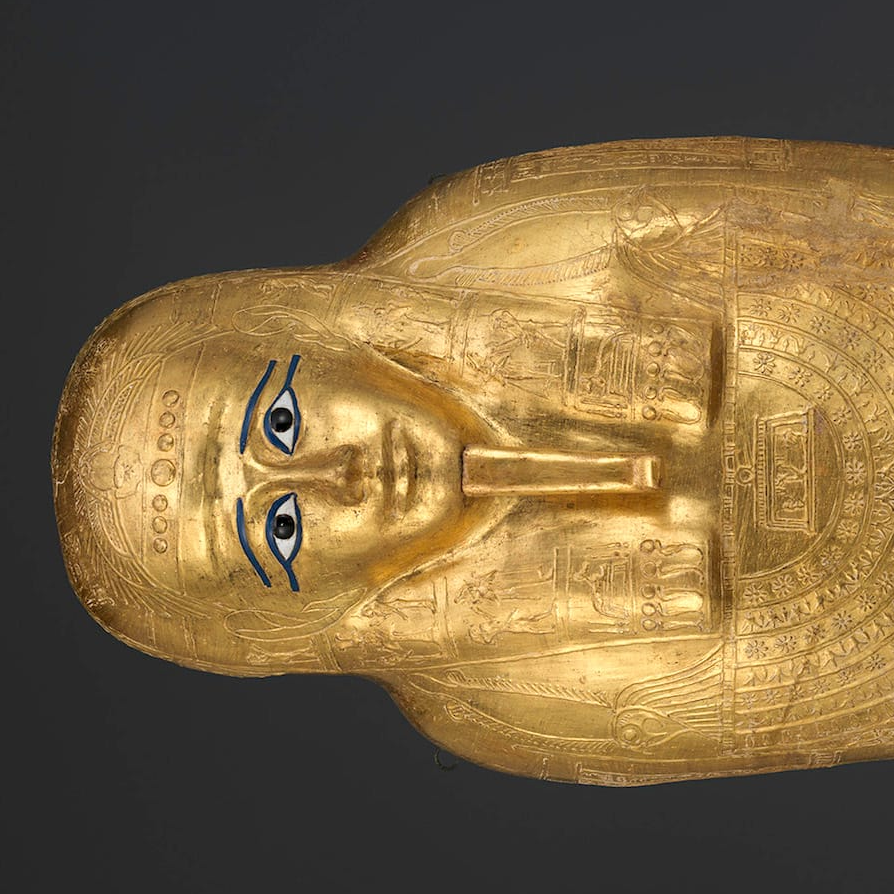
Check out Ariel Sabar's new article for the Atlantic, "The Mystery of the Golden Coffin," which follows the Met's shady acquisition of the gilded coffin of Nedjemankh for $4 million in 2017.
A new animated feature, Time Hoppers: The Silk Road, is teaching kids about Islamic scholars and providing more representation in animation for Muslim children, reports The Guardian. The film highlights a number of medieval Islamic scientists and thinkers:
Among them are Al-Khwarizmi, considered the “father of algebra”, Ibn al-Haytham, a pioneer who explored the camera obscura, and Mansa Musa, ruler of the Malian empire who is thought to have been the wealthiest man who ever lived. The film also highlights figures such as Maryam al-Astrulabi, a 10th-century Syrian woman who developed the astrolabe astronomical instrument.
Time Hoppers: The Silk Road is out now on Apple TV.
New Ancient World Journals by @yaleclassicslib.bsky.social
Acta Instituti Romani Finlandiae Vol. 54 (2026) #openaccess Egypt in Roman eyes: Approaches to ancient material culture
Argos No. 54 (2025) #openaccess
Classical Journal Vol. 121, No. 4 (2026)
Digital Classics Online Vol. 12, No. 2 (2026) #openaccess Nomina Omina: Ancient Greek and Latin Proper Names in the Age of Artificial Intelligence
Les Études Classiques Vol. 93, Nos. 1-4 (2025)
Hypnos No. 56 (2026) #openaccess NB Nestor-Luis Cordero, "Borges y los dos Platones"
Journal of Ancient History and Archaeology Vol. 13 No. 1 (2026) #openaccess
Mnemosyne Vol. 79, No. 3 (2026) NB: Konstantine Panegyres, "Hestiaea of Alexandria: The Work of a Hellenistic Scholar Reconsidered"
New Classicists No. 14 (2026) #openaccess Human and Non-Human Animal Relationships in Antiquity II
Studies in Late Antiquity Vol. 10, No. 2 (2026) Paradoxography and Late Antique Knowledge Production
thersites Vol. 21 (2026) #openaccess
Yearbook of Ancient Greek Epic Online Vol. 10, No. 1 (2026) The Cypria
Apeiron Vol. 9, No. 2 (2026)
Epoché Vol. 30, No. 2 (2026) NB Jason Dockstader "Pyrrhonian Metaethics"
Journal of the History of Ideas Vol. 87, No. 2 (2026) NB Lea Cantor & Jonathan Egid "An Ethiopian Lucretius? Giusto da Urbino and the Origins of the Ḥatäta Zärʾa Yaʿɘqob Controversy"
Revue de philosophie ancienne Vol. 43, No. 2 (2025) Henri Maldiney et la philosophie grecque
Historical Interactions of Religious Cultures (HIReC) Vol. 3, No, 1 (2026) Interaction, Entanglement, and Co-production between Judaism, Christianity, and Islam
Journal of Early Christian Studies Vol. 34, No. 2 (2026) NB Isaac T. Soon “The Devil as Perdix: The Origin and Development of the Satanic Partridge in Early Christianity”
Zeitschrift für die neutestamentliche Wissenschaft Vol. 117, No. 1 (2026)Brent Nongbri "A Papyrus Codex of the Pauline Corpus from Oxyrhynchus"
Ancient Near Eastern Studies Vol. 62 (2025)
Bulletin de liaison de la céramique égyptienne Vol. 34 (2026) #openaccess
ENiM: Une revue d’égyptologie sur internet Vol. 19 (2026) #openaccess
Iran and the Caucasus Vol. 30, No. 2 (2026)
IRAQ Vol. 87 (2025) #openaccess
Studia Orientalia Electronica Vol. 14, No. 1 (2026) #openaccess
Archives d'histoire doctrinale et littéraire du Moyen Âge Vol. 92, No. 1 (2025)
Byzantine and Modern Greek Studies Vol. 50, No. 1 (2026)
Journal of the Australian Early Medieval Association Vol. 21, No. 1 (2026)
Medieval Ecocriticisms Vol. 6, No. 1 (2026)
Medieval Feminist Forum Vol. 61 No. 1 (2026) New Critical Approaches to Medieval Consent
Archaeometry Vol. 68, No S2 (2026) #openaccess New approaches to the archaeology of biodiversity
Archäologischer Anzeiger 2. Halbband (2025) #openaccess
Forum Kritische Archäologie No. 15 (2026) #openaccess Orienting Archaeology towards Peace
Internet Archaeology No. 73 (2026) #openaccess Wellbeing and Archaeology
Workshops, Exhibitions, and Lectures
May is Nubian Month at the Chicago's Institute for the Study of Ancient Cultures, which will feature a series of hybrid lectures among other events. And if you are in Chicago this summer, check out the exhibition (through August 16th): "A Bestiary of Ancient Nubia." The catalog, edited by Marc Maliot, can be downloaded here.
On May 22, 2026 at 12-1 BST, Mostafa Minawi will discuss "The Global Geopolitics of Holy Spaces from Ottoman Jerusalem to the Red Sea Basin." As the EES notes, "Minawi will discuss how Ethiopian and Ottoman imperialism on the African Red Sea Coast was reflected in the inter-imperial competition for holy real estate in Jerusalem. He will trace how some of the holiest sites for Christians became global battlegrounds for imperial influence, reflecting European, Ottoman, and Ethiopian geopolitics from the tip of the Horn of Africa through Bab el-Mandab, to the island of Suakin." You can register here.

.jpg)