Pasts Imperfect (6.18.26)


This week, classicist Erika Valdivieso discusses new directions in Latin American classical reception, Virgil, and her new book, Empire’s Companion: Virgilian Epics from Colonial Iberoamerica. Then, ancient Cypriot pigeons, what film costumes convey about views of the ancient "other", a new game board from an early medieval Moroccan hammam, a documentary takes you into the ancient capital of the Shu Kingdom, a podcast on Hypatia of Alexandria, Timeō the new Odyssey buckets bearing popcorn, remembering Rosamond McKitterick, new ancient world journals, Juneteenth celebrations, and much more.
Exploring the History of Iberoamerica
PI co-founder and editor Stephanie Wong (digitally) sits down with classicist Erika Valdivieso to discuss Latin American classical reception, the impact of libraries, staying curious, and exploring more of the history of Iberoamerica.
How did you find your way to Latin American classical reception?
I was trying to decide whether to go to graduate school when I attended a series of lectures David Mattingly was giving at the University of Michigan (Go Blue!) on postcolonial approaches to Roman imperialism. Almost in passing, he mentioned a body of research on how Spanish conquistadors had used the Romans as a paradigm through which to understand the Inca empire and the creation of a Spanish colony in South America. That intrigued me because, while I was trained as a classicist, I am also a Peruvian American with strong interests in colonial literature and history. Just hearing that this area of scholarship existed opened up a whole series of questions that I wanted to explore. How was an Indigenous person like a Roman? What sources shaped a Spaniard’s imagination of ancient Rome? What role did Latin play in the discourse of the Americas? I was fortunate to find my way to Brown, where the Classics department supported my unconventional interests and the fellows at the John Carter Brown Library, a research library dedicated to the study of the early Americas on Brown’s campus, welcomed my questions as I tried to find my bearings in the history and culture of Iberoamerica.
Who are the poets you study? What led them to write epic poems in and about Latin America?
Empire’s Companion is about four poets. Two were Jesuit priests, while the other two were bureaucrats. They cover a broad geography: Brazil, Guatemala, Mexico. Two were active in the second half of the sixteenth-century, both Europeans by birth. Two were eighteenth-century authors, both born in early modern Mexico. Educated men in colonial Latin America avidly consumed ancient poetry. Some even went so far as to compose their own Latin epics in the style of the Aeneid, which they had all read in school. These colonial epics are a part of the new imaginaries that underpinned Spanish and Portuguese rule in the Americas. As such, these texts engage with key issues for new colonial societies: the conquest of Indigenous peoples and the appropriation of their history, the emergence of new ways of imagining the globe, and the shifting power dynamics between America and Europe.
What are the most important questions you didn’t have room to answer in Empire’s Companion?
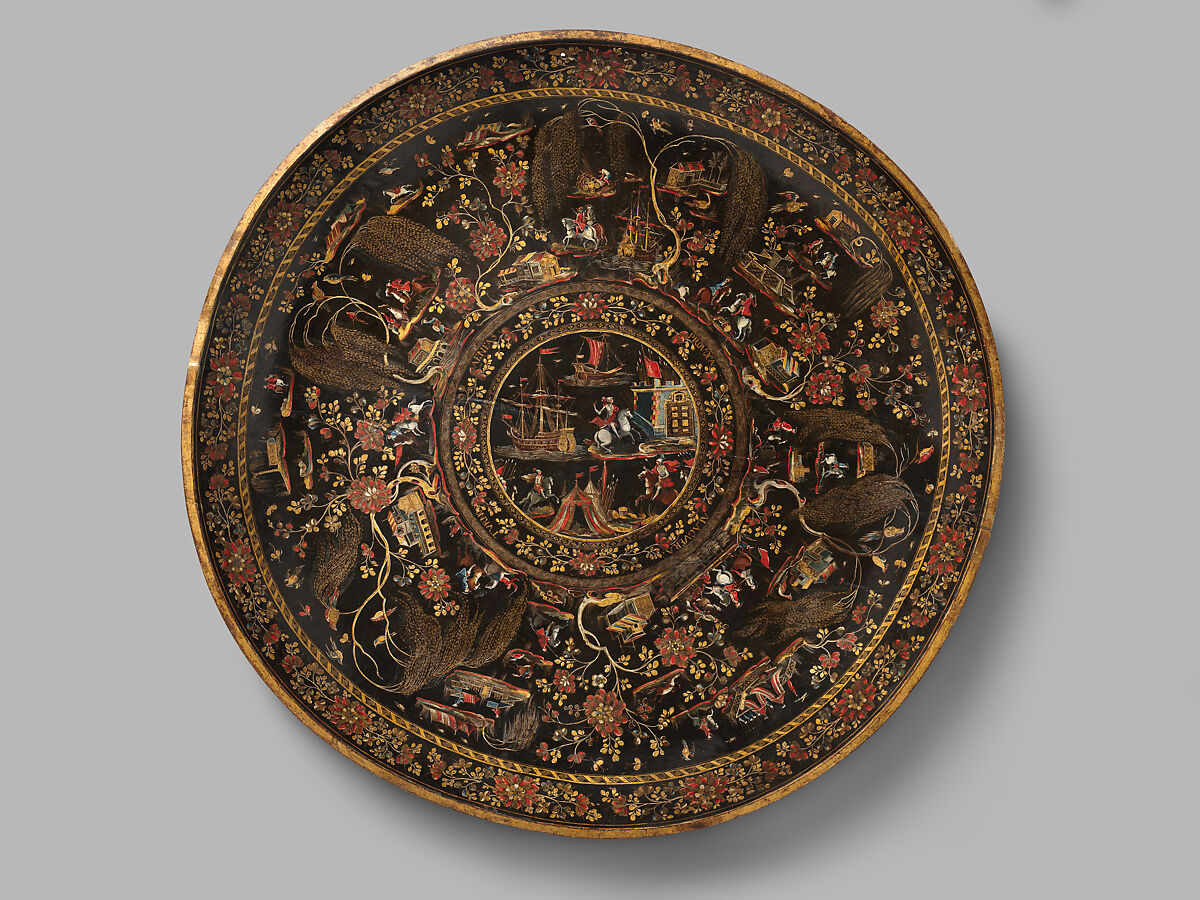
Access to a Latin education in Iberoamerica was the preserve of elite men of “pure” European descent. Consequently, I haven’t been able to find any Latin epics from the region that weren’t written by members of this group. But the reception of the Aeneid goes beyond my book’s focus on Latin epics. That’s why I was so excited when a friend sent me a picture of a large lacquerware tray from eighteenth-century Mexico on display in the Metropolitan Museum of Art. This object (it’s called a batea) depicts scenes from Aeneid 9 in the middle and is the handiwork of an Indigenous artist, José Manuel de la Cerda, commissioned by the vicereine of New Spain, María Josefa de Acuña y Prado. The batea invites us to think about that larger reception history of the Aeneid and about other interpretations of the epic that might have circulated outside the circle of bureaucrats and priests studied in Empire’s Companion.
Do you have a story from your research that you’d like to share? Perhaps a chance encounter in the archive? An adventure kickstarted by a research question you had?
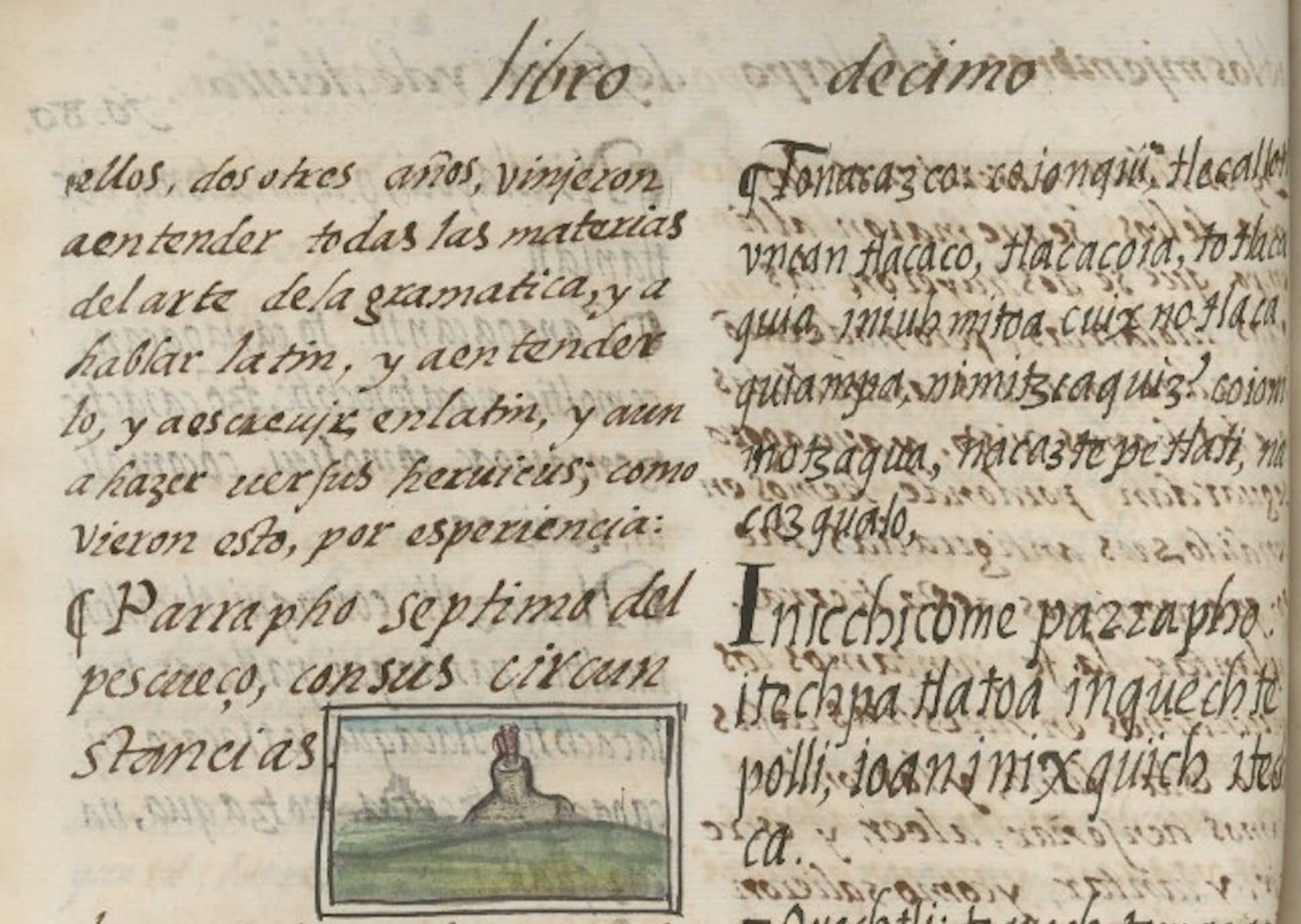
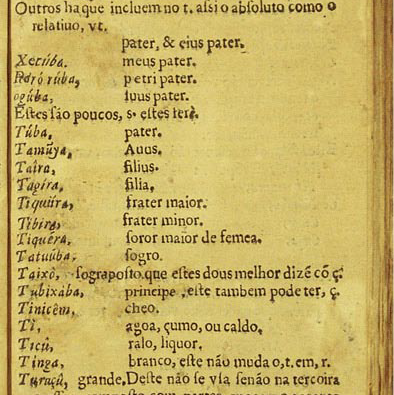
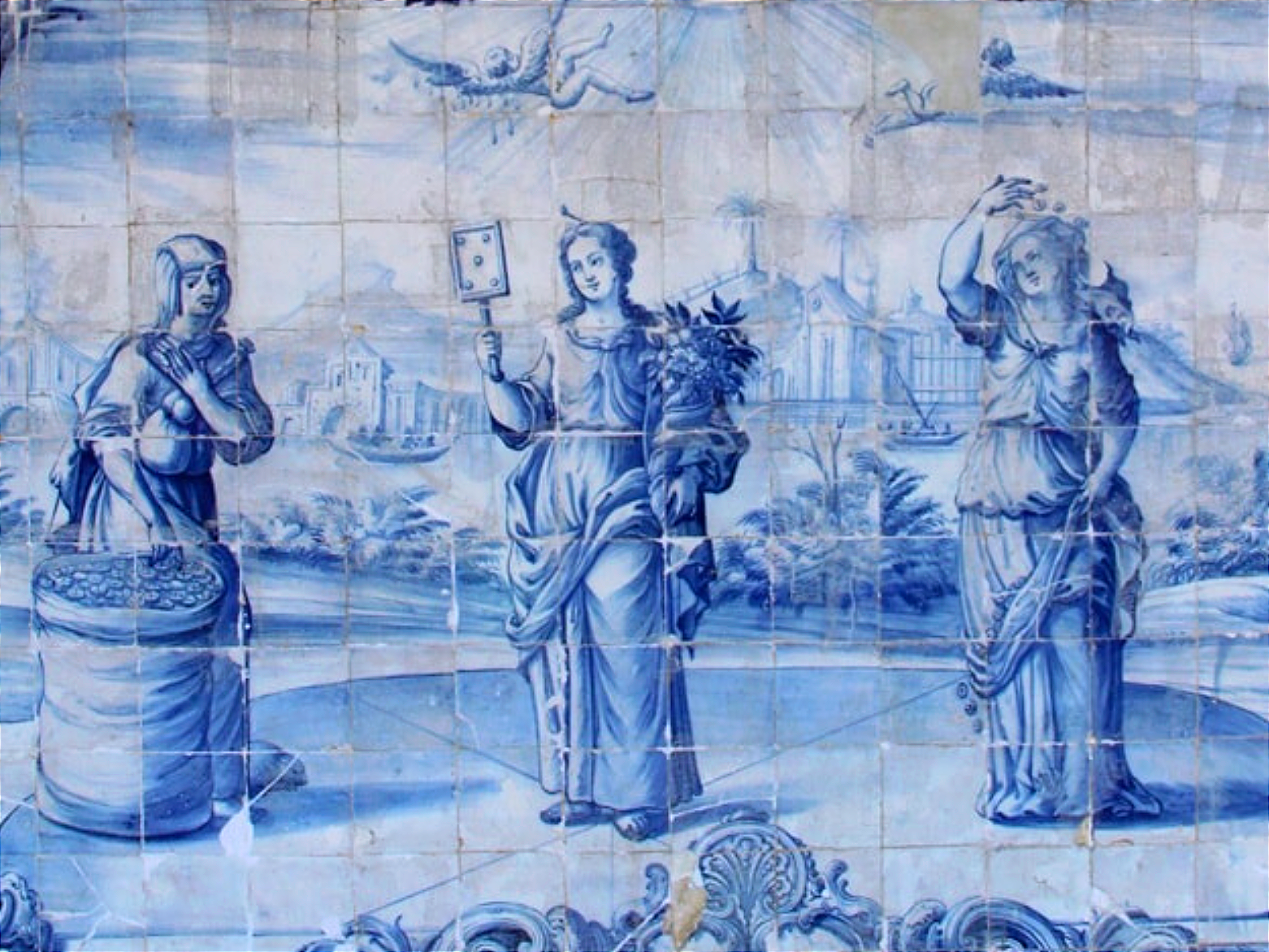
I was in São Paulo, Brazil to do research on the first epic ever written in the Americas, José de Anchieta’s De gestis Mendi de Saa (“On the Deeds of Mem de Sá”), which was printed in Coimbra in 1563. In the historic city center stands the Pátio do Colégio, which commemorates the site where the Jesuits founded the city in 1544. They have an important archive of Anchieta’s papers, but I also took a peek into the chapel next door, which is named after him (the Igreja São José de Anchieta). The chapel is a pared-back space, mostly painted white, but with scenes of Anchieta’s life depicted in a modernist update of the traditional azulejos (tiles).
The version of his life depicted on the walls – of a peaceful saint, writing devotional poetry to the Virgin Mary, translating the tenets of his faith into Tupi, the indigenous language of the Brazilian coast – did not sit easily with the Anchieta I knew, who wrote such beautiful Latin hexameters about waging war against heretics and cannibals. I turned a corner and found myself in a room with the saint’s bones, now the object of veneration for the faithful. That was an amazing moment. How often will a classicist see the mortal remains of an author she studies? But it was also profoundly unsettling as I took in these competing narratives about who Anchieta was, what he believed, and what his relationship was to the Indigenous people of Brazil. I think that moment in the Pátio was a turning point for my work. It helped me see why De gestis and the other epics in this book matter: they provide crucial pieces of evidence for the stories we want to tell about the early Americas and its peoples.
What does the field of classical reception in Latin America look like to you in ten years? In 20?
There are so many things I look forward to seeing happen in this subfield. Most of all, I want there to be strong networks that connect scholars based in the US to their peers in Latin America. Working in another language and in another academic culture has its challenges, but increased dialogue between classicists in São Paulo and in New York, or between LA and Mexico City, can only be a good thing. I wish there were more room for collaboration and more time to build equitable partnerships between institutions. In countries where there are no classics departments, for example, I can see how international collaborations might support research on local archives or even train librarians to catalogue Greek and Latin books and manuscripts preserved in national collections.
One other dream is to see more translations and editions of the texts I study, and of materials from later periods, so that they are accessible to students and easier to integrate into high school and college curricula. It’s particularly important for these materials to be available in the languages of the regions where they were made: one of the epics in Empire’s Companion, for example, has never been translated into Spanish.
What advice would you give someone who is trying to find their research interest?
Stay curious! Go to talks, even if they have nothing to do with your area. I wouldn’t have found my way to my own research questions if I hadn’t been in the room when someone asked about other examples of postcolonial approaches to Roman empire. And I certainly wouldn’t have known how to work at the intersection of multiple fields if it hadn’t been for the John Carter Brown Library, where fellows lectured on such diverse topics: astronomy in Spanish America, contraband in the Atlantic beef trade, community organizing among enslaved Africans and their descendants in Newport, the first operas performed in the newly independent Haiti. These are not topics that I work on, but they helped me understand how academics formed questions and examined evidence in other disciplines. I encourage my students to see lectures as a chance to learn how to be sociable: what are some effective strategies to communicate an argument to an audience? how does one ask helpful, generous questions? Most importantly, I ask them to pay attention to what they like. It’s possible to listen to a paper on a completely unrelated field and have a moment of resonance with the presentation. What is it about this work that you find exciting? How might this central question be approached in your own field?
In Memoriam: Rosamond McKitterick by Levi Roach
In Rosamond McKitterick (1949–2026), we have lost one of our foremost specialists on late antique and early medieval Europe. Although partially raised and educated in Australia, Rosamond always identified with Cambridge, where she had spent many of her formative childhood years. It was here that she would end up making her career, commencing doctoral study in 1971 and eventually retiring as Professor of Medieval History in 2016. Rosamond’s published work ranged widely, from the transformation of the Roman world through to the reception of Gibbon. She will be particularly remembered for her pioneering studies of the Carolingian Franks (her first and abiding scholarly love). Rosamond was fiercely devoted to her students, many of whom have gone on to glittering academic careers. But Rosamond’s influence stretched well beyond her own (informal) school: through her tireless work on multiple editorial boards, she helped transform the article and book drafts of a whole generation of scholars. Rosamond’s standards were exacting and her knowledge profound, but her comments were always helpful and constructive. In an academic world in which excellence and learning are easy to find, Rosamond stood out by combining these with deep kindness and humanity. Her loss shall be keenly felt.
Public Humanities and a Global Antiquity
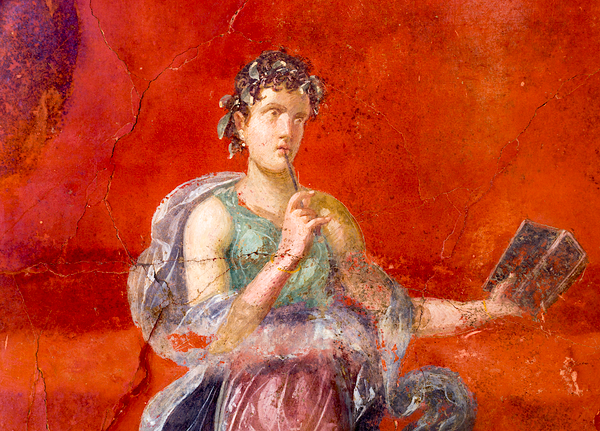
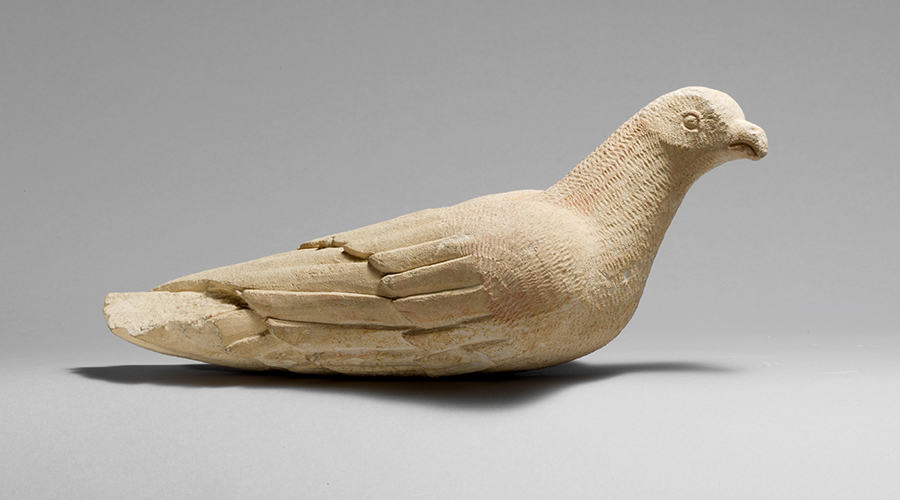
Not a fan of Columbus, but we do enjoy a good Columba. A new study in Antiquity looks at a "large assemblage of avian bones excavated from Late Bronze Age contexts at Hala Sultan Tekke on Cyprus" in order to better understand the history and domestication of the common pigeon. The study tracks the paths to domestication and found that pigeons on Cyprus were semi-domesticated by 1400 BCE, likely bred on site, and eaten during rituals feasts. As Apicius suggested, just add some pepper, coriander, shallots, and some mint to that squab!
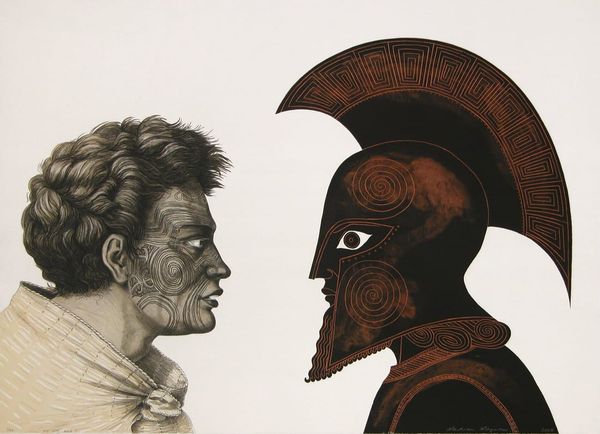
Classical reception expert Lisa Maurice has an interesting article in the latest issue of Classical Receptions Journal on "Costuming the other on screen." From The 300 Spartans (1962) to 300 (2006) to Alexander (2004) to Barbarians (2020–22): "costuming is exploited to manipulate audience attitudes towards these peoples, who are presented as a foreign ‘other’, but with a marked contrast between them." In antiquity and in modern film, the use of color and costumes can say a lot about constructions of "civility."
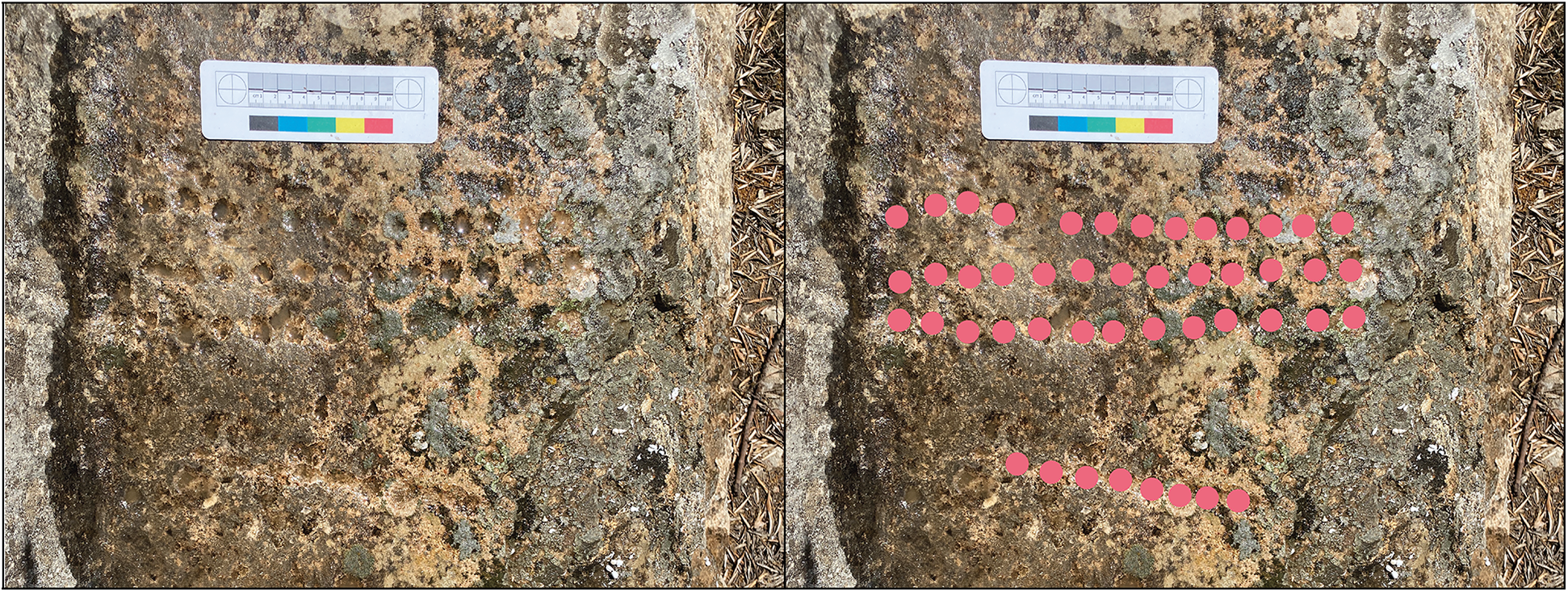
Games at the bathhouse? 🎲 Yes, please. Medieval Arabic literature had a lot of games, but there is not much archaeological evidence to support these texts. A new article by Tim Penn, Corisande Fenwick and Hassan Limane looks at the late eighth/ninth century CE medieval hammam of Walīla (Roman Volubilis) in Morocco. As they argue: "The board’s design suggests it was used for playing tāb/sig, making it the earliest known evidence of this game in North Africa. This case study sheds light on how games intersected with communal life and public spaces in early medieval North Africa."
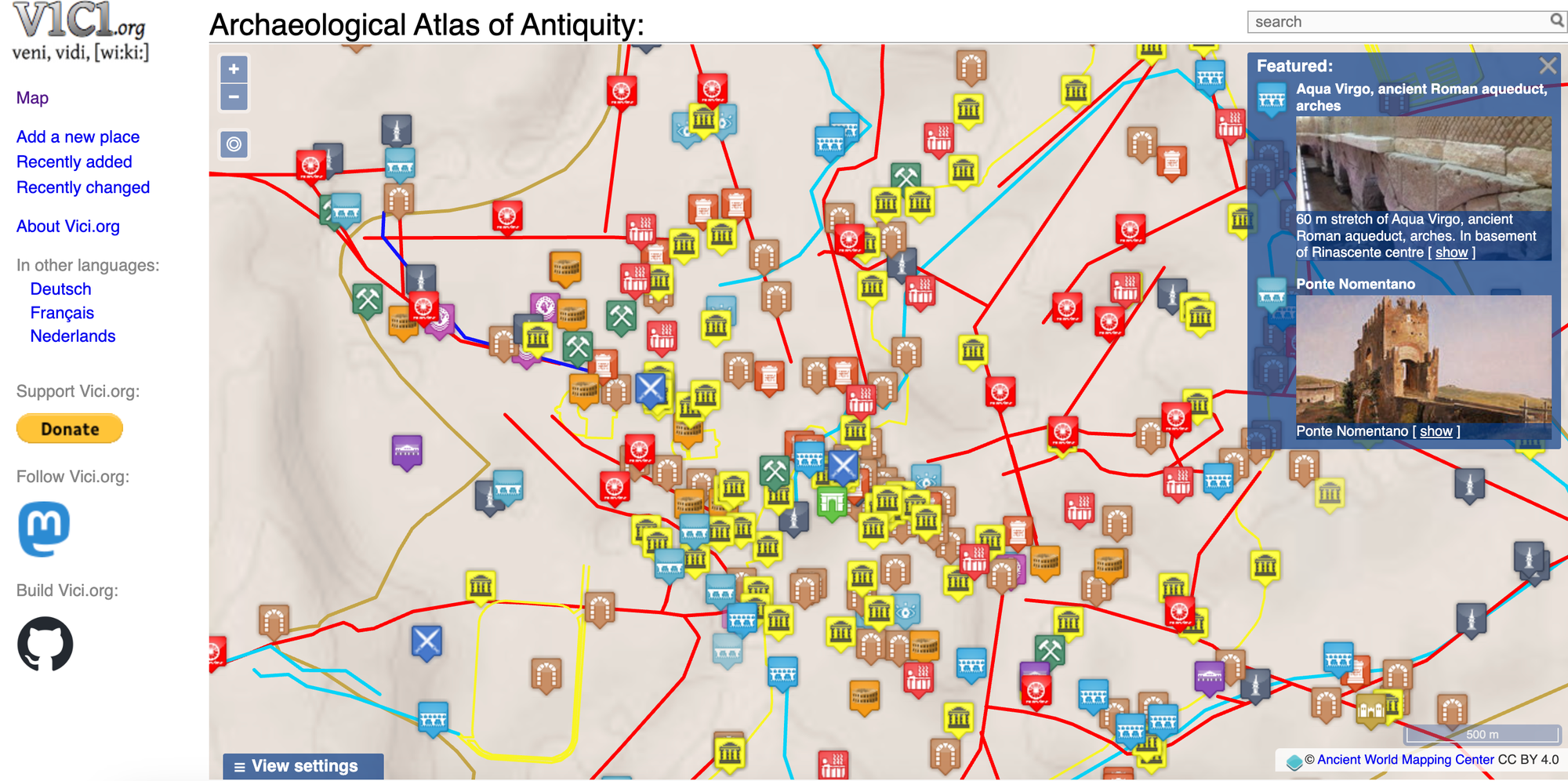
Over at the Pleiades blog, they have an update on the integration between the gazetteer and Vici.org—the archaeological atlas of antiquity. As of this week, "5,327 unique Pleiades place resources now display inbound Vici.org links in their sidebars...Conversely, there are a total of 1,560 place resources in Pleiades that already have "related" references to Vici.org place entries." Please feel free to check entries and contribute your own expertise!
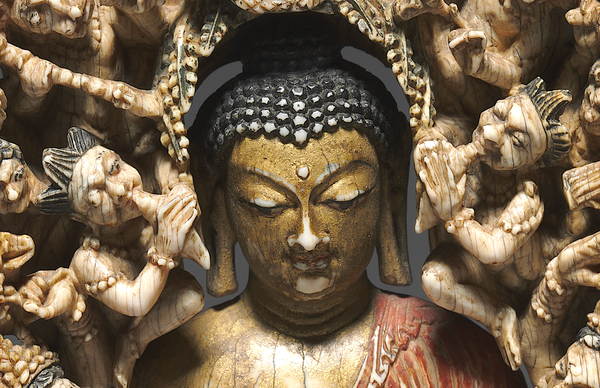
Recent excavations at the Bronze Age site of Sanxingdui (三星堆) have lead researchers to think that it was the ancient capital of the Shu kingdom. The PBS episode looks at the "city zones, possible palace foundations, and six large sacrificial pits filled with valuable objects." Many of the objects are roughly contemporaneous with the reign of pharaoh Tutankhamun (ca. 1332 – 1323 BCE).
The new issue of Classical Antiquity is open access and Virgil-heavy. Katie Dennis and Erika Valdivieso have an important article on "Beyond Absence: Slavery and the Georgics," but there are also key contributions from Dennis and Philip Thibodeau discussing the Georgics, Matthew Leigh on bees and slavery, Tom Geue on unfree work in the Moretum, Steven Gonzalez on labor in Columella, Valdivieso discussing "Virgil in the Cane Fields of Brazil" and then Dan-el Padilla Peralta with a splendid response to the special issue.
A number of new, open access journal issues and books are ready to be taken (probably on a Kindle) to the beach. First, there is Digital Applications in Archaeology and Cultural Heritage, which already has its September issue out. Then, there is a new edited volume on numismatics called, Denarii Beyond the Empire: Political and Cultural Perspectives on Roman Silver Coins in Barbaricum, which "explores the remarkable history of the Roman denarius, a coin that dominated the ancient world for over four centuries, as seen from outside the frontiers of the Empire — from Scotland to India, and from Ukraine to Sweden." And finally, Egyptologist Nadine Moeller has a new Cambridge Elements book that looks at Urban Life and Form in Ancient Egypt. It is free to read until June 24, 2026.
At the You're Dead to Me pod, Greg Jenner is joined in fifth century CE Egypt by Edith Hall and comedian Olga Koch to discuss the life, philosophy, and death of mathematician Hypatia of Alexandria.

Look, we are not above a food gimmick. And the new Odyssey popcorn buckets are going to be bought by a lot of classicists. Including us. 'I believe that it was Virgil who said, 'Timeo Danaos et maizia inflata ferentes'
Take our money. Also, the movie is out the night of July 16.
New Ancient World Journals by @yaleclassicslib.bsky.social
Arethusa Vol. 59, No. 2 (2026) #openaccess
Circe de clásicos y modernos Vol. 30 No. 1 (2026) #openaccess
Ephemerides Theologicae Lovanienses Vol. 101, No. 3 (2025) A Cry for Help: New Perspectives on Healing and Disease in the Ancient Mediterranean World
Frankfurter elektronische Rundschau zur Altertumskunde No. 58 (2026) #openaccess
Gerión Vol. 44 No. 1 (2026) #openaccess
International Journal of the Classical Tradition Vol. 33, No. 2 (2026) Classical Reception 2.0. Digital Antiquities and the Future of the Past
Latomus Vol. 84,No. 4 (2025) NB Bruce Ware Allen "Vespasian and the Wrath of Agrippina"
Lingue antiche e moderne Vol. 14 (2025) #openaccess
Mouseion Vol. 21, No. 2 (2024)
Ordia Prima Vol. 4 (2026) #openaccess La tradición textual del Satyricon
Philological Encounters Vol. 11 Nos. 1-2 (2026) The Critical Edition in the Infrastructure of Philology
Revue archéologique Vol. 80, No. 1 (2026)
Römische Mitteilungen Vol. 131 (2025) #openaccess
Trends in Classics Vol. 18, No. 1 (2026) NB Maria Marcinkowska-Rosół "The Mind and Its Objects: Conceptualizations of Intentionality in Homer and in the Sanskrit Epics"
Umanistica Digitale No. 23 (2026) #openaccess Digital Latin. Computational Infrastructures for Research on Latin Language and Literature
Ancient Philosophy Today Vol. 8, No. 1 (2026) Hebrew Commentaries on Aristotle’s Logical and Theoretical Works
Journal of Ancient Philosophy Vol. 20 No. 1 (2026)
Journal of Buddhist Philosophy Vol. 8 (2026)
Prometheus: Journal of Philosophy Vol. 18 No. 50 (2026) #openaccess (Re)ler o Manual de Epicteto hoje
The Review of Metaphysics Vol. 79, No. 4 (2026)
Church History Vol. 94, No. 4 (2025)
Dead Sea Discoveries Vol. 33, No. 2 (2026)
History of Religions Vol. 65, No. 4 (2026)
International Journal of Divination and Prognostication Vol. 7 No. 1 (2026)
Journal for the Study of the Old Testament Vol. 50, No. 5 (2026) Society for Old Testament Study: Book List 2026
The Journal of Ecclesiastical History Vol. 77, No. 2 (2026)
Nobis Musica Christus Vol. 1 (2026) #openaccess l'Alethia de Claudius Marius Victorius
Revue de l'histoire des religions Vol. 243, No. 2 (2026) L’efficacité du rite dans les mondes anciens : questionnements
Studies in Church History Vol. 62 (2026) Church and the Military
Vox Patrum Vol. 98 (2026) #openaccess Spirituality of the East
Anatolia Antiqua Vol. 32 (2024) Inhabiting Anatolia Vol. 33 (2025) #openaccess
Ägypten und Levante Vol. 34 (2025)
Journal of the Canadian Society for Coptic Studies Vol. 16 (2024)
Near Eastern Archaeology Vol. 89, No. 2 (2026)
Zeitschrift für Ägyptische Sprache und Altertumskunde Vol. 153, No. 1 (2026)
Studies in Iconography Vol. 47, No. 1 (2026)
Acta Praehistorica et Archaeologica Vol. 57 (2025) #openaccess
Antiquity Vol. 100, No. 411 (2026)
Archäologische Informationen Vol. 48 (2025) #openaccess
Bericht der Römisch-Germanischen Kommission Vol. 104 (2023) #openaccess
Digital Scholarship in the Humanities Vol. 41, No. 2 (2026)
History of Humanities Vol, 11, No. 1 (2026)
The Vatican Library Review Vol. 5, No. 1 (2026)
Workshops, Exhibitions, and Lectures
On Thursday, June 18, 2026, 11 AM – 12 PM EDT, the Smithsonian Center for Folklife and Cultural Heritage is hosting "What a Dream Can Do: Celebrating Ten Years of the National Museum of African American History and Culture." The new collection, What a Dream Can Do: Building a Collection, Preserving a Legacy, the NMAAHC’s first full-size collection book, will be out this fall. You can attend in person in D.C. or watch online live. And on Friday (Juneteenth), there will be several activities in D.C. in person and hundreds of others across the country. Here in Iowa, there is a huge festival on Saturday in Cedar Rapids at the African American Museum of Iowa.