Pasts Imperfect (4.30.26)

This week, high school classicist Max J. Foa discusses how field schools and local museums can reshape the ways that we see the people of the past and the present. Then, remembering Averil Cameron and Annetta Alexandridis, the director of Pompeii announces that the site is jumping on the shady AI bandwagon, sexual harassment in Classics, Indigenous peoples help botanists identify a new (to them) palm in the Colombian Amazon, a souvenir cup from Hadrian's Wall, pseudo-Arabic (or pseudo-kufic) inscriptions on medieval churches in Greece, A Bestiary of Ancient Nubia goes on display, new ancient world journals, and much more.
Beyond the Classroom: Archaeology, Classics, and Experiential Learning by Max J. Foa
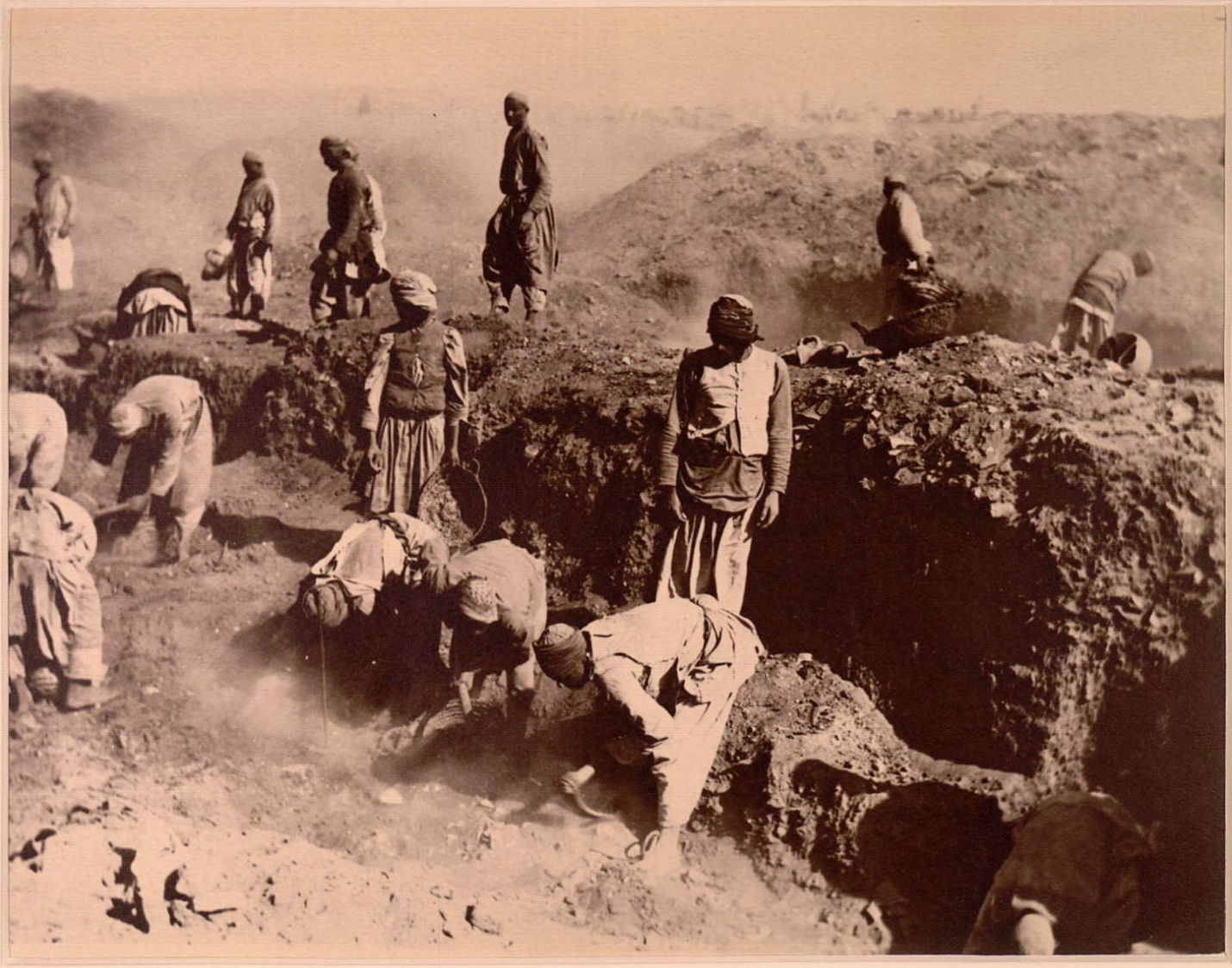
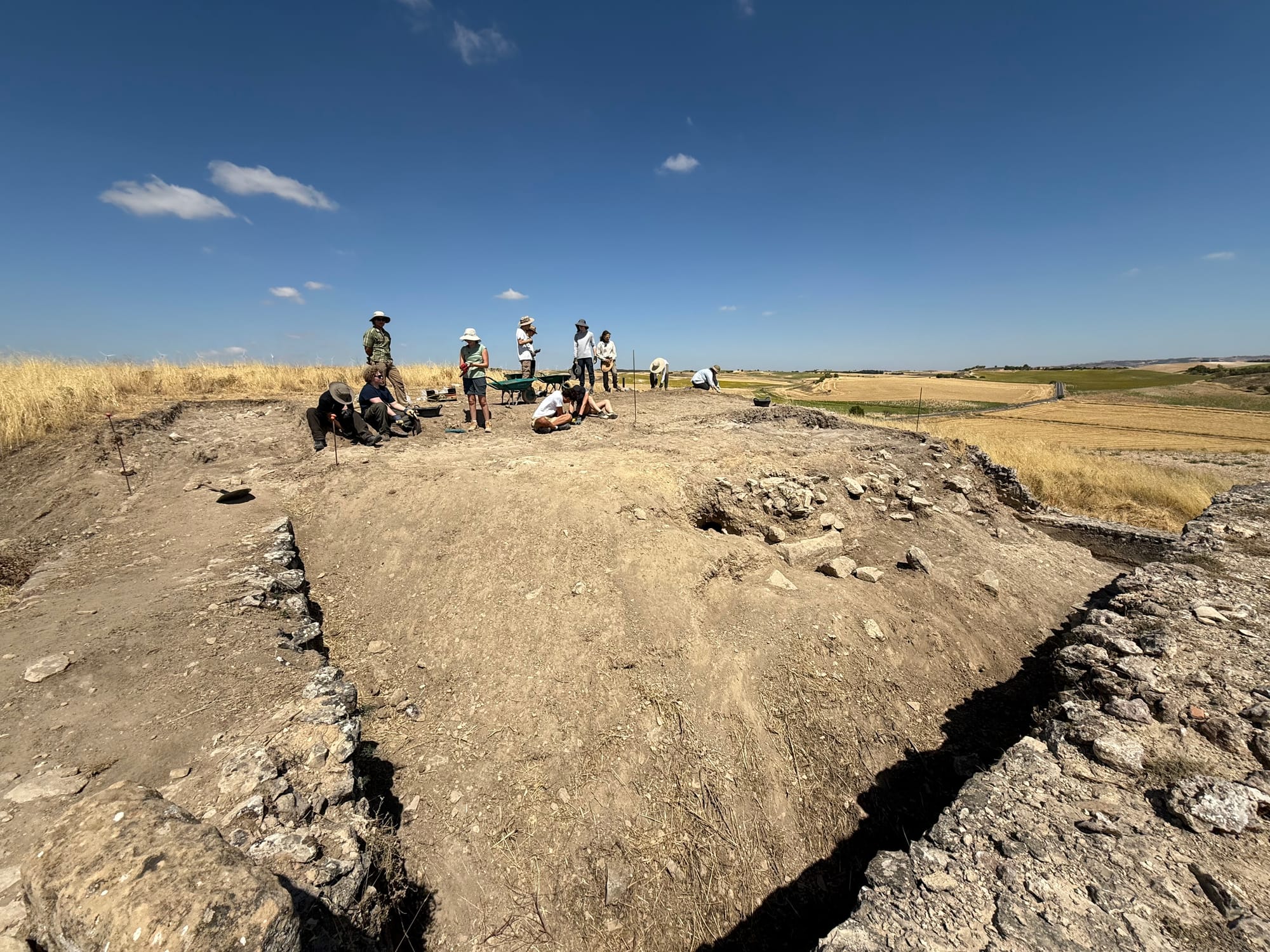
The summer that I turned seventeen, I traveled to central Spain with a dozen other teenagers to excavate a Roman fortress through a program called Archaeospain. Until that point, nearly all of my contact with the ancient world had been literary. Any artifacts that I had seen were firmly locked behind museum glass. The literary focus of my classes and research had led me to the erroneous assumption that archaeology was an auxiliary practice in the study of the ancient world; an imperfect tool used to gain insights in the absence of more credible sources. My high school experiences with archaeology in Spain broadened my approach to antiquity and gave me greater appreciation for the work done by archaeologists.
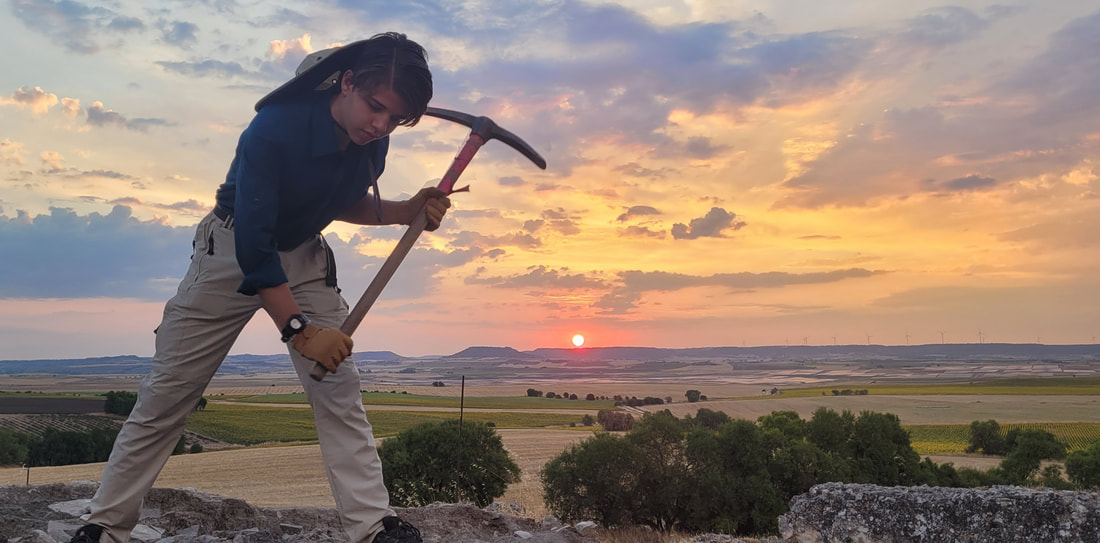
Over the course of three weeks, our team recovered a number of small discoveries from the Spanish soil. While none of them may have reshaped the field of Classics in any dramatic way, they did transform how I understood the lived experiences of Romans. In the preceding school year, my Latin class read from the elite and dramatic speeches of Cicero. The year before that we plucked passages from Julius Caesar. Consequently, it was easy for me to imagine that the relevant details of antiquity were reducible to high-level politics and orations.
The summer after those classes ended, I excavated a small room identified as a kitchen. It contained a fire pit, metallic implements, and a broken amphora. The ordinary nature of this room and its contents were an important reminder to me that most Romans were occupied not by political intrigue, but by cooking for their families. Day-to-day sustenance was much more of a focus than rhetoric. This seemingly obvious fact was something that I had understood before on an intellectual level, but the experiential learning acquired from actually engaging with the everyday material culture of the ancient Romans transformed my connection to the past. Touching the things that they touched and standing where they stood, humanized them in a way no book ever could. I have no idea who used that kitchen, but past or present, we all have to eat.
Another takeaway from my Spanish field school is that archaeology is a lot of work. This is something I understood conceptually, but actually making the intense effort of digging, dusting, transporting, washing, and categorizing artifacts gave me a new appreciation for the labor done by archaeologists to unearth the material culture that later becomes, say, Fig. 3 in a journal article. Beyond my fellow students and the professional archaeologists mentoring us, working on a dig revealed to me the other, more invisible workers who make these digs possible. Our group had a cook who, through hearty meals and break-time sandwiches, was as much a part of the success of our excavation as any of us. Just as with the ancient Romans, we rarely think of the daily lives of workers that facilitate archaeological discoveries. The focus is too often on the object rather than the effort that allows for archaeology to exist.
My cognizance of the less visible factors which enabled this hands-on approach to antiquity extended to another part of my trip to Spain: our visits to the many local archaeological museums that dot the Spanish countryside. As a New Yorker, I have often marveled at the objects displayed within the Greek and Roman Art gallery in the Metropolitan Museum of Art. The space hosts dozens of dramatic and evocative statues, in ways similar to my visit to the Louvre in Paris. Spanish archaeological museums instead led me to realize how the ways in which museums present their collections influence our view of the ancient world. The Met and Louvre, as art museums, designed their impressive collections to present elite artistic culture. In fact, the layout of the gallery at the Met is fashioned to imitate an upper-class Roman villa, much like the Getty Villa in Malibu. While they do have smaller artifacts such as pots and figurines, even these are presented in the context of a grand narrative of art history.
Spanish museums offered me an alternate view of Roman material culture. Instead of focusing on famous artists or luxury goods, they present artifacts much more indicative of everyday life, underscoring the quotidian over the fantastical. Furthermore, these local museums placed their artifacts within the context of the nearby sites in which they were found in order to consider their function and purpose. Although neither approach is inherently superior to the other, exposure to archaeological methods gave me a broader view of Roman life and the ways in which museums themselves shape my reception of ancient objects. They also inform our personal definitions of historic “value” in society.
Experiential learning allows for the study of antiquity in ways unavailable to us in the classroom. It also takes us beyond the largely elite ancient world conjured by texts. There is so much nuance in the field of classical philology, but not all understandings of the past can be pulled from a book. Leaving the lecture hall to participate in fieldwork was a profoundly transformative experience that I think all young scholars should seek out. Field schools offer insight into how knowledge is obtained, but they also encourage us to appreciate the essential people, local museums, and everyday actions that continue to shape our worlds—in antiquity and today.
In Memoriam: Averil Cameron by Charlotte Roueché
In every generation we are tempted to think that we are the trailblazers, and underestimate what we owe to those who preceded us. But Averil Cameron – who died, aged 86, on April 7th – was someone who not only achieved a great deal herself, but also remained aware of the importance of clearing paths for others. You only need to read the autobiography, Transitions, which she published in 2024, to realise many ways in which she opened doors for women scholars, facing down challenges which we can now only vaguely imagine. She was similarly intolerant of disciplinary barriers, setting new standards for working across literature, history and theology to gain a clearer view of the Late Antique and Byzantine periods. Many people who never knew her will in fact be indebted to her achievements and her insights; those of us who did know her have lost a loving and supportive friend.
We would also like to note the passing of Cornell University art historian Annetta Alexandridis. The Cornell Chronicle notes that "Alexandridis was an associate director of the long-running Harvard-Cornell Exploration of Ancient Sardis, Türkiye. She studied the city’s Roman funerary culture and was conducting a survey of all its cemeteries in collaboration with Susanne Ebbinghaus... Alexandridis was knowledgeable across several disciplines, said Iftikhar Dadi, the John H. Burris Professor of History of Art and chair of the Department of History of Art (A&S). “She was deeply committed to social justice in both academia and the broader society,” Dadi said. “Her vibrant and uplifting presence, her genuine enthusiasm for supporting colleagues and students, and her love for scholarship were truly infectious.” sit tibi terra levis.
Public History and a Global Antiquity
Archaeological illustrators are highly trained professionals who have been drawing sites and depicting material culture for centuries. However, in disappointing comments this week, Pompeii site director Gabriel Zuchtriegel announced that "Pompeii Archaeological Park, in collaboration with the University of Padua, have used artificial intelligence to digitally reconstruct the face and final moments of a man killed during the AD 79 eruption of Mount Vesuvius." The rendering is AI-generated, but provides little new or necessary insights into the disaster. In a statement, Zuchtriegel justified its use:
The vastness of archaeological data is now such that only with the help of artificial intelligence will we be able to adequately protect and enhance them. If used well, AI can contribute to a renewal of classical studies
If we were cynical people, we might wonder whether this pivot to AI is less about protecting data and more of a money grab for the copious funding that Musk has used to entice archaeological parks with (as recently as April 21, 2026), just as he seems to have woo-ed many a papyrologist through his Vesuvius Challenge. Digital archaeologist Shawn Graham considers the shortcomings of AI in digital reconstruction in archaeology in opening remarks made at last week's (Re)Constructing the Past Workshop in Toronto: "Digital Reconstruction, Enchantment, and the Ghosts in Our Data (…ish…)."
We report on a lot of material culture, discoveries, and academic publications at PI. However, we are also obliged to report upon press regarding Classics scholars, notably: "World-leading classicist gave female student unwanted ‘slobbery kiss’"; "Two more women allege harassment by Cambridge professor." The events of the last few weeks compelled me to return back to a pivotal Eidolon article, "'Et in Arcadia Ego': What #MeToo Means in Classics." Even nine years later, we must sadly recognize the continued necessity of whisper networks and wrestle with the fact that in most humanities disciplines, "powerful individuals wear a façade of liberalism, and sometimes even feminism, which they can wield as a badge to shut down any complaints against them."
Arkeonews reports that in the Czech Republic, archaeologists clearing the way for a rail line discovered a "well-preserved Roman calibration plate, likely used to draw and refine metal wires." Chain mail is second only to postcard mail as our favorite type of mail. In Roman Spain, a new Hadrian's Wall souvenir cup is discovered. And in the Colombian Amazon, during fieldwork in the village of Wacará, Cacua Indigenous peoples introduced two botanists to the táam palm, which was previously unknown outside of the Cacua people.
“Historically, Indigenous and local peoples have been super important for botanic studies, helping scientists to find and collect specimens, but they rarely receive recognition for their knowledge or appear in papers as authors,” says Copete, a botanist and Ph.D. student at the University of Zürich. “This was the perfect opportunity to change things.”
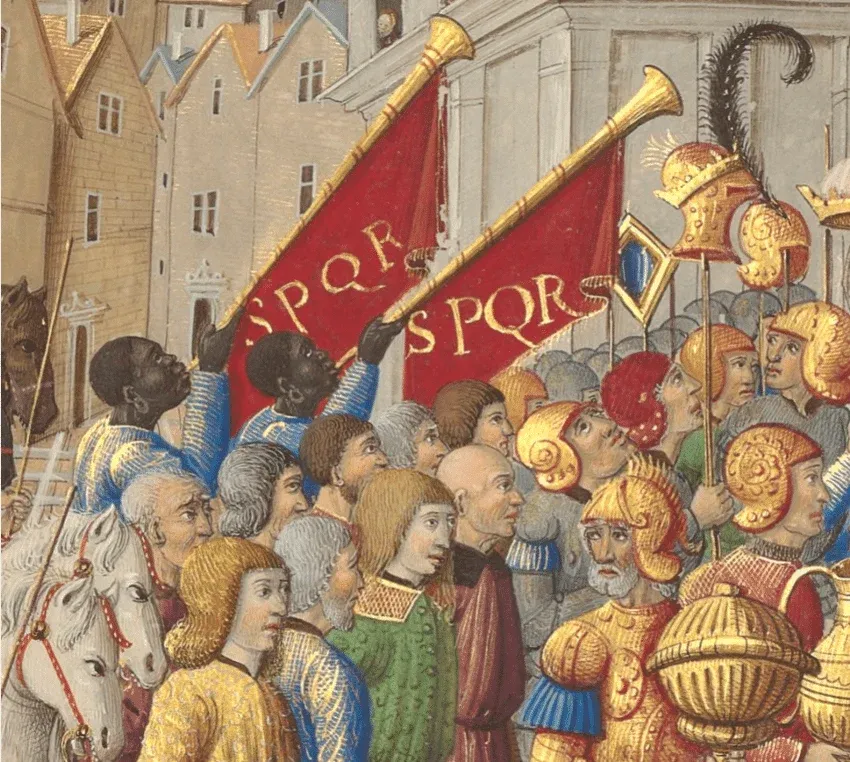
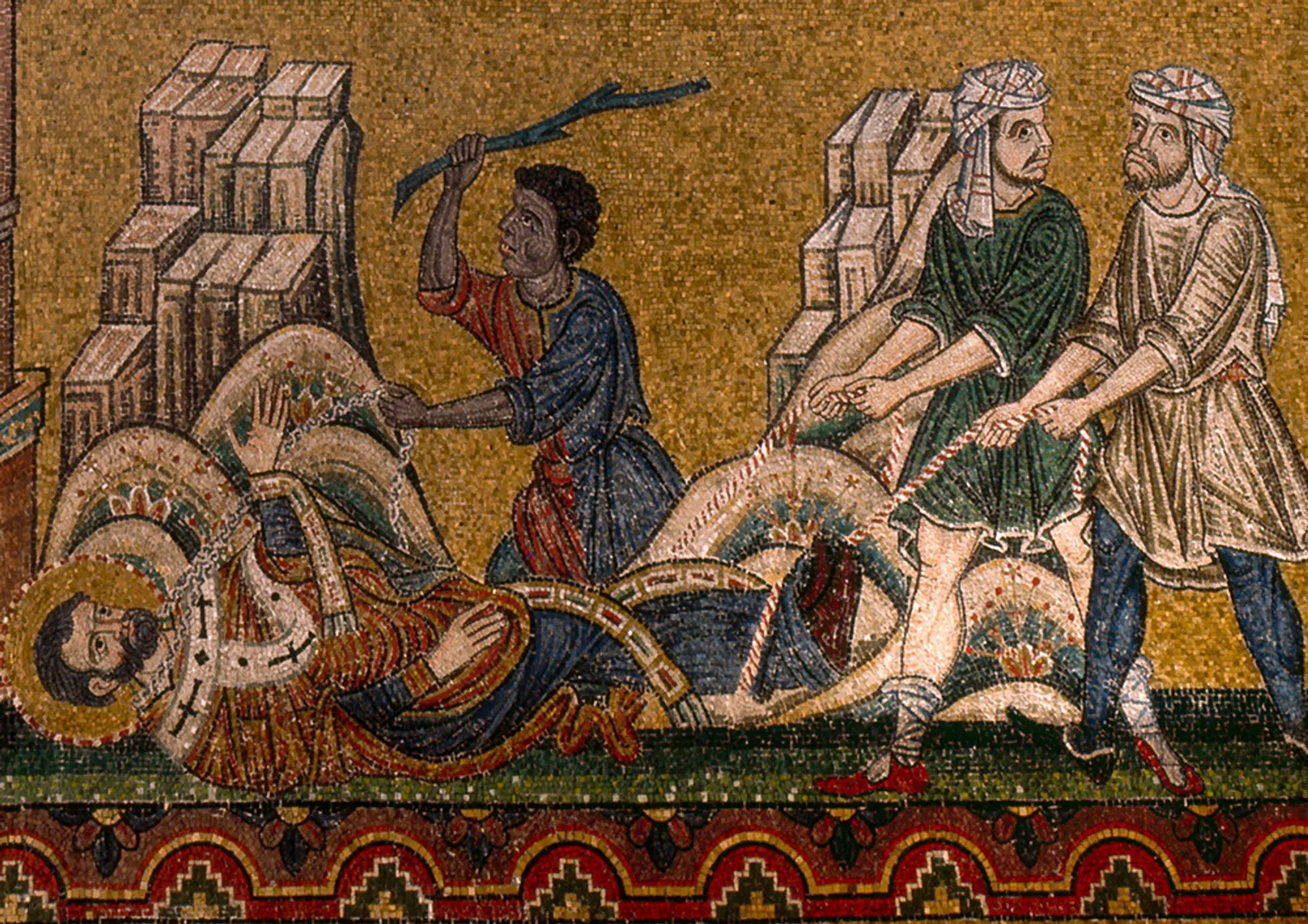
Over at Aeon, art historian Denva Gallant discusses "The Black Executioner" in the Middle Ages. "At the centre of the martyrdom scene stands a Black would-be executioner, his arm raised to deliver a blow. He is visually arresting – the only Black figure in the composition – but he is not unprecedented. By the 13th century, the Black executioner had become a recognisable type in Western art." Perhaps my favorite line came at the end:
The eye cannot operate without categories. Those categories are never neutral; they carry histories within them. They sediment prior distinctions. When we encounter a body and feel that we are simply seeing what is there, we may instead be encountering the afterlife of earlier arrangements. Seeing differently may begin not with new technologies but with an awareness that vision itself has always been shaped, trained and directed.
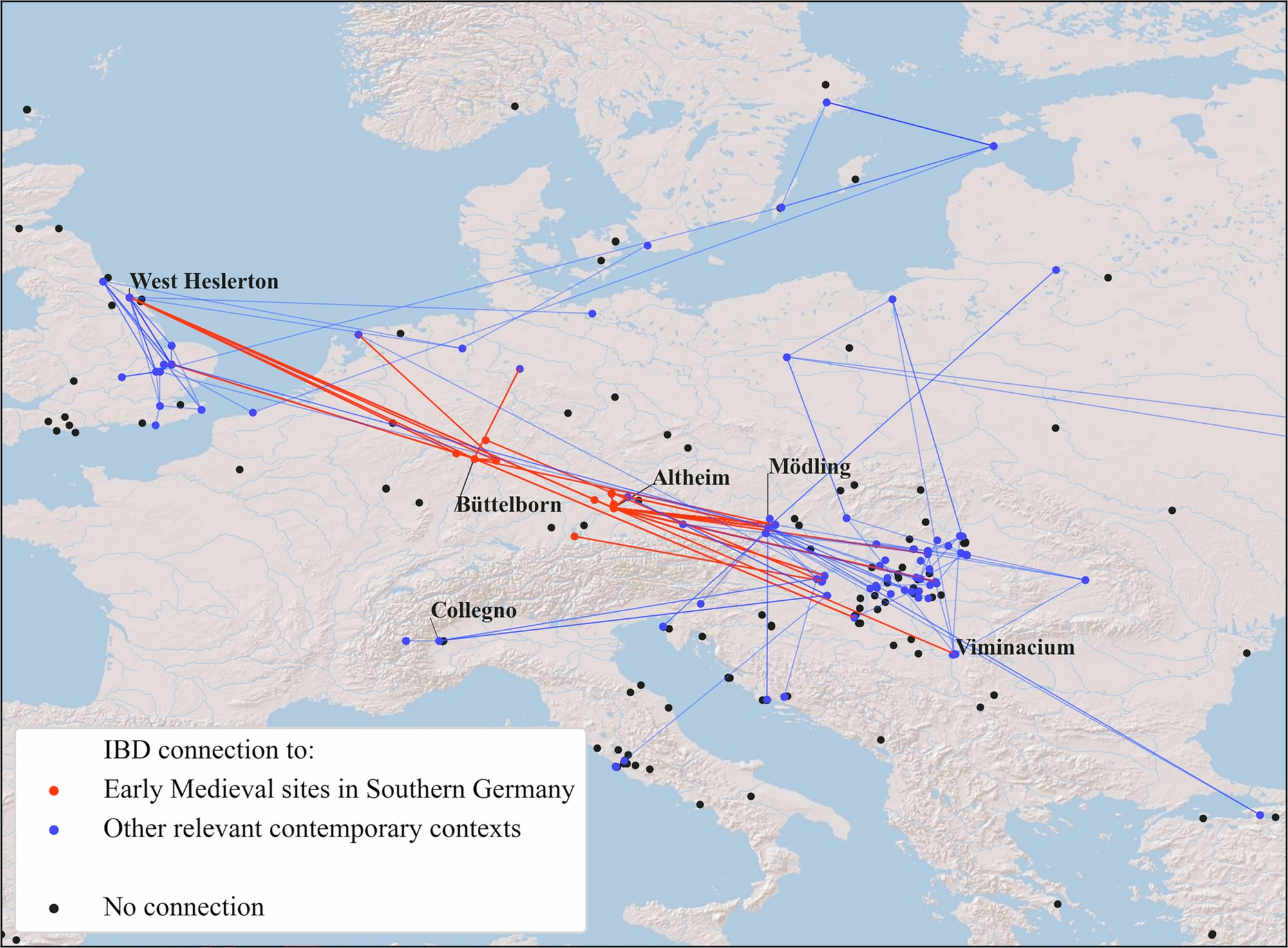
What was the average life expectancy in the late Roman Empire? A new study in Nature analyzes 258 ancient genomes from southern Germany along the Roman frontier zone, alongside 2,500 ancient and 379 modern genomes. There are many interesting findings in the study concerning monogamy and the high mortality rate for women (likely due to the dangers of childbirth), but it was the increase in life expectancy—from perhaps 20-25 years to 43.3 years for men and 39.8 years for women—in late antiquity that is perhaps most important. In comments to LiveScience, early medieval historian Shane Bobrycki noted: "The societies being studied here were much, much, much smaller-scale, so they may have escaped from some of the crowd diseases that afflicted Romans, and in their small rural worlds they may have lived less precarious economic lives and faced less food insecurity than poor Romans."
In papyrology news, the discovery by University of Barcelona's Oxyrhynchus Archaeological Mission of a sealed papyrus containing parts of the Iliad Book II ("The Catalog of Ships") with a mummified individual at Oxyrhynchus has been widely reported. This reporting, however, was not always entirely accurate. A post from The Centre for the Study of Manuscript Cultures at the University of Hamburg, clarifies the find and corrects some of the mischaracterizations in media reports. And in DH news, the Open Greek and Latin Perseus Digital Library's Scaife Viewer is undergoing major updates, incorporating features that users found valuable in the venerable Perseus Digital Library 4.0. This includes a dictionary widget and the integration of commentaries, as well as overall improvements to the interface.
Finally, at Byzantium & Friends, there is an informative conversation between Anthony Kaldellis and Alicia Walker on the "pseudo-Arabic inscriptions (or pseudo-kufic) that appear on a number of tenth- and eleventh-century churches in Greece, most notably at the monastery of Hosios Loukas." They ask: "What did the Arabic script signify in Orthodox culture at the time if not tension with Islam?"
New Ancient World Journals by @yaleclassicslib.bsky.social
Ancient Society Vol. 55 (2025)
Annuaire de l’EPHE, section des Sciences historiques et philologiques (2024-2025) Vol. 157 (2026) #openaccess
Bonner Jahrbücher Vol. 222 2022 (2023) #openaccess
CALÍOPE - Presença Clássica No. 50 (2025) #openaccess
Classical Philology Vol. 121, No. 2 (2026) Transmediality and the Classics
Deimos: Zeitschrift für Antike Militärgeschichte Vol. 2 (2026) #openaccess
Greek and Roman Musical Studies Vol. 14, No. 1 (2026)
Journal of Mediterranean Archaeology Vol. 38 No. 2 (2025)
Memoirs of the American Academy in Rome Vol. 70 (2025) #openaccess
Pallas No. 127 (2025) #openaccess Terres cuites et sociétés antiques
Polis Vol. 43, No. 2 (2026)
Rei Cretariae Romanae Fautorum Acta Vol. 48 (2024)
Ash-sharq: Bulletin of the Ancient Near East Vol. 10 No. 1 (2026)
Bulletin of the American Society of Overseas Research Vol. 395 (2026)
Journal of the American Society for Premodern Asia (JASPA) Vol. 146 No. 1 (2026)
Old World: Journal of Ancient Africa and Eurasia Vol. 6, No. 1 (2026) #openaccess
Zeitschrift der Deutschen Morgenländischen Gesellschaft Vol. 176, No. 1 (2026)
After Constantine Special Issue (2026) #openaccess Proceedings of Entangled Christianity Conference
Early Christianity Vol. 17, No. 1 (2026) Reimagining Gospel Literature
Journal for the Study of the New Testament Vol. 48, No. 4 (2026) NB Lydia Bremer-McCollum "The Pernicious Supremacy of the Christian Codex"
Sacris Erudiri Vol. 64, No. 1 (2025)
Gesta Vol. 65, No. 1 (2026)
Journal of Byzantine Studies = Jahrbuch der Österreichischen Byzantinistik Vol. 75 (2025) #openaccess
Peritia Vol. 36 (2026)
Revue d'Histoire des Textes Vol. 20, No. 1 (2025)
Archaeological Dialogues Vol. 31, No. 2 (2024) #openaccess NB Bruno Vindrola-Padrós, et al. "A guide to the mechanisms of transformation: The role of materials in cognitive change"
Digital Scholarship in the Humanities Vol. 41, Suppl 1. (2026) Digital Humanities 2023: Collaboration as Opportunity
The Journal of Electronic Publishing Vol. 29, No. 1 (2026) Open Research for the Humanities and Social Sciences
Workshops, Events, and Lectures
At the ISAC in Chicago, A Bestiary of Ancient Nubia is on now until August 16, 2026. The exhibition looks at the "panorama of animals in ancient Nubia" from 3800 BCE–900 CE. The has been curated by Marc Maillot.
On April 30, 2026 at 9:00 pm ET, Brenda J. Baker will discuss "New Insights into Changing Lifeways in Ancient Nubia" for the AIA Central Arizona Society. She will look particularly at The Bioarchaeology of Nubia Expedition (BONE) project, which "focuses on the area between the Fourth and Fifth Cataracts of the Nile River in northern Sudan, enriching our understanding of the extent to which people peripheral to core areas where state-level societies operated were integrated."
The eighth talk of the Data in Historical Linguistics Seminar Series will take place remotely on Monday May 11, 2026 at 5pm BST. Federico Viglino will be presenting on "Middle voice in the diachrony of Ancient Greek: a quantitative (and qualitative!) approach." Registration for this talk will close at midnight on Friday 8th May and the link for this can be accessed here.
On Tuesday, May 19 at 2pm BST= 9am EST, the Sino-Hellenic Network will host a roundtable with Geoffrey Lloyd and Walter Scheidel: "Cross-Cultural Comparison: Methods and Futures" at Cambridge University and on zoom. Jenny Zhao moderates.