Pasts Imperfect (8.27.26)
This week, classicist and translator Stephanie McCarter discusses the art of translation, adapting myth, and her new book on Catullus. Then, India's Rāmāyana answer to Nolan's Odyssey, archaeologists at Sardis find a monumental new statue, mapping the ancient jade trade in western Canada, a medieval caravanserai emerges from the sands of Asila in North Sinai, the ethics of collecting ancient DNA, Dr. Wong wins a blue ribbon with her historic fiber arts, a tribute to secular saint Dolly Parton, new ancient world journals, and even some Sea Peoples. Here we come again, y'all.
Choosing Humanity, Art, and Translation: An interview with Stephanie McCarter
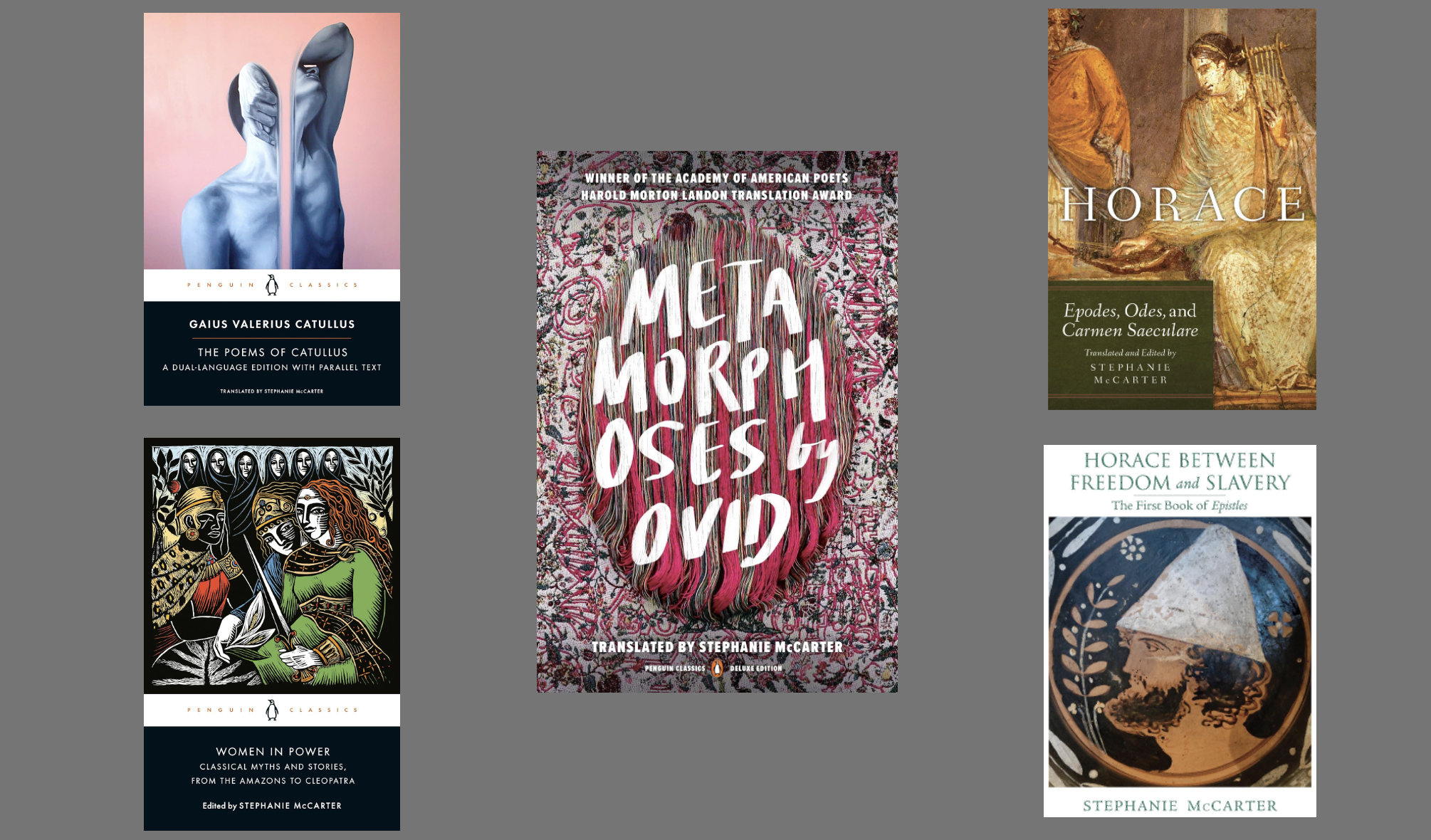
What is it about Ovid, Horace, and Catullus that drew you to working on them? Why do you think they were popular in antiquity?
I was drawn to each for different reasons. I have loved Horace since my teenage years, and I decided to try translating him in the summer of 2016, though I had no notion it would end up as a published book. My first love was English literature, and after writing a traditional monograph (also on Horace) I wanted to reconnect with the poetry I had always loved but felt I’d left behind to pursue classics. Composing in English meter let me do just that and gave me a great deal of nerdy joy in the process. I really had no idea what I was doing and only became a translator by translating Horace – just one of many gifts he has given me!
The Ovid and Catullus translations came more out of my experiences in the classroom and from seeing how my students did not respond favorably to pre-existing translations, particularly those that glossed over or euphemized difficult subject matter. I wanted to give students – and general readers too – a version of these works that spoke to them in a contemporary, poetic idiom and that did not treat sexual language as something unspeakable.
I think audiences in antiquity enjoyed these poems for many of the same reasons we do. They derived ethical and aesthetic value from them and were challenged by the questions they posed. All three of these poets were in a sense “translating” Greek literature into Roman via poetry, and that simultaneous adoption and adaptation of other cultures was fundamental to how Romans contemplated their own identity, and I think it’s fundamental to our own self-definition too.
What is the hardest thing about translating ancient authors?
For me, the hardest part involves the myriad choices I must make before putting words on paper: What are my goals for rendering this poem, this line, this word? What form or tone or style can best achieve these goals? What is it about a particular line I most want to convey – its ideas, its architecture, its thematic resonance, its wordplay, or its poetic effects? How might prioritizing one of these aspects require sacrificing another? All of this fundamentally involves giving oneself the freedom to create a new work entirely, one shaped at every single stage by the subjectivity of the human translator.
How does Ovid adapt myths to his own time and what do you think about modern adaptations of ancient myths?
To quote the novelist Ali Smith, “Nobody grows up mythless... It’s what we do with the myths we grow up with that matters.” Ovid’s Metamorphoses was all about breathing new life (adspirate, 1.3) into old tales, and his myths are heavily adapted to his Roman circumstances. It is no accident, for instance, that he focuses on the forced metamorphosis of the body at a time when the Roman concept of liberty – and the bodily autonomy central to it – was itself being transformed by Augustus (r. 31 BCE-14 CE).
Translation is another way we revive ancient stories, and its relationship with adaptation is interesting to ponder. I suspect that one reason why Christopher Nolan’s Odyssey produced such a hubbub was precisely because he walked an unusually blurry line between translation and adaptation and even, by incorporating characters and themes from the Aeneid, committed what the Roman playwrights termed contaminatio. That complex approach clearly led to a rich and at times heated debate – but how wonderful that such questions occupied our collective conversation for a brief summery moment!
I like adaptations of myth that do what Ovid himself did: retell old stories from fresh perspectives or flip them on their heads to show them in a new light, all while staying closely (though freely) connected to the themes, ideas, and motifs of the original. My absolute favorite film adaptation of Ovid’s Metamorphoses is Céline Sciamma’s Portrait of a Lady on Fire, a retelling of the Orpheus and Eurydice myth that stays firmly rooted in Ovid’s themes of love and the gaze even as it radically rewrites them.
I also love when adaptations acknowledge or, conversely, suppress the source material in clever ways. In Portrait of a Lady on Fire, a physical copy of Ovid’s Metamorphoses plays a key role as characters literally imprint themselves upon its pages. Nolan’s Odyssey goes the other direction, denying us the Homeric source text at those moments we most expect it. We do not get Odysseus’s “nobody” trick because Nolan has his own tricks to offer (especially the trick of the “Sea Peoples”), and he replaces Homeric material with his own film oeuvre, from which he draws extensively, as Benedek Kruchió has shown. These suppressions signal an almost competitive relationship with his source material. Every choice an adapter (or translator) makes has meaning!
What is the role of translators in the present, amid a crush of people saying that AI and Google translate mean we no longer must have human translators?
Put simply, translators must not cede a single inch of ground to machine translation. Translation is an art, not a merely utilitarian tool or necessary evil, and as such it is filled with choice and interpretation and subjectivity and craft and all the other things that make us human. AI-produced versions are not “translating” in any meaningful way so much as stealing and repackaging past human work, all while contributing to the false notion that objective translation is possible. What makes translation interesting is the human choice that has gone into it, and I do not want to spend one moment of my precious human life contemplating the “choices” an LLM has made – perhaps, if they are truly intelligent, they will one day make their own art for each other. In the meantime, I hope none of us will uncritically use machine translation in our classrooms – or, if we do, I hope the syllabus also assigns AI-produced scholarship and allows students to submit AI-produced term papers.
What do students gain from learning to translate Latin and Greek? What techniques or approaches do they learn that can help them understand their own world better?
I think it depends on how we teach them to translate. It should be fun and creative. Translation lets students put their own culture into conversation with that of someone else and gives them new paths for exploring what languages (whether ancient or modern) can and cannot do. Translation compels students to learn the endangered skill of close reading. How better to appreciate, for instance, the power of an alliteration or an enjambment than by recreating it in a totally different language? Creative translation also lets students showcase and discover their individual talents. Perhaps the student who cannot master the literal translation of an ablative absolute or negative clause of purpose has a talent for writing sonnets. Perhaps a student will gain more insight from writing a sestina featuring key ideas from Catullus 63, as one of my own students recently did, than by writing a term paper analyzing these same key ideas. Incorporating translation more purposefully and creatively into our courses can help the languages thrive.
Why is it important to read these authors now?
Having been prolix in my other responses, I will be succinct: We need to read these authors now because they make us contemplate what it means to be human at a time when our humanity is far too often being compromised.

Public Scholarship and a Global Antiquity
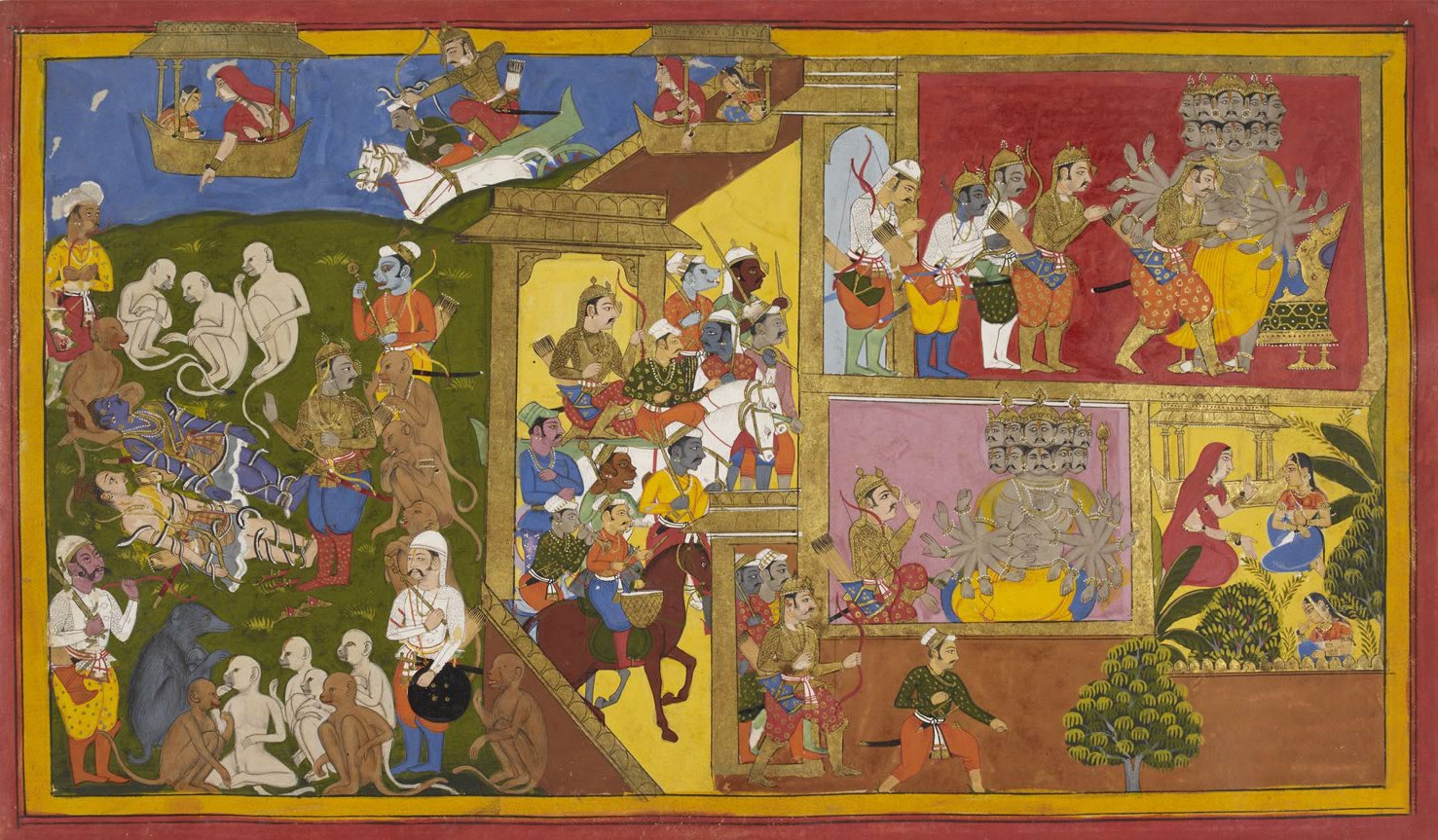
Over at the BBC, they discuss a film version of the Rāmāyana set to come out in the autumn. "The first part is set to be released globally in November, to coincide with the Hindu Diwali festival [a festival that celebrates Rama’s return from exile], and it's been produced on a budget that is unprecedented for an Indian film." The epic poem was orally composed around 500-300 BCE and then later written in Sanskrit—with 24,000 couplets and 7 books. They note that Indian film stars Ranbir Kapoor (Rama) and Yash (Ravana) are the lead actors, joining Hollywood Hans Zimmer and AR Rahman on the soundtrack (because you can't make an epic score without Hans Zimmer, I guess).
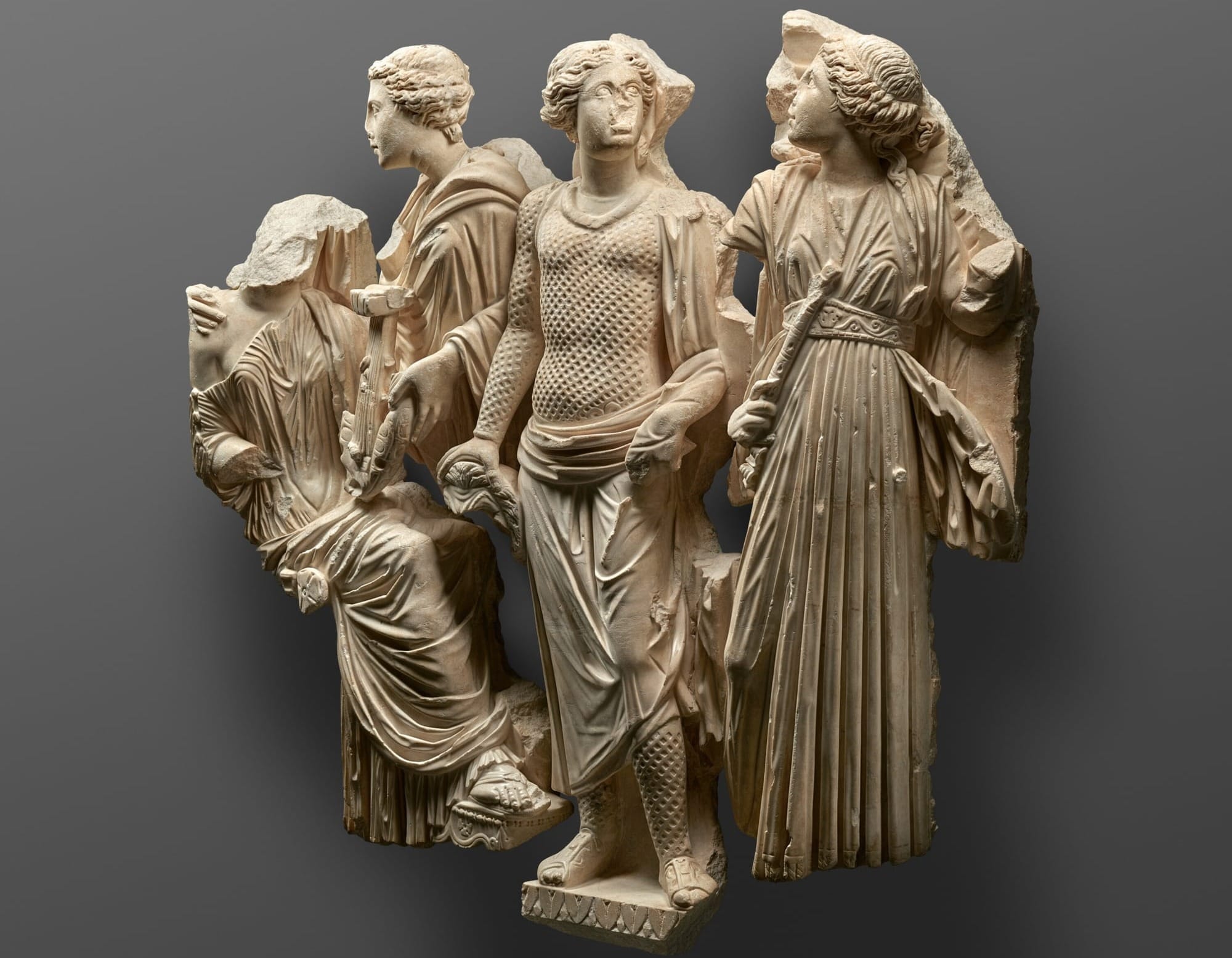
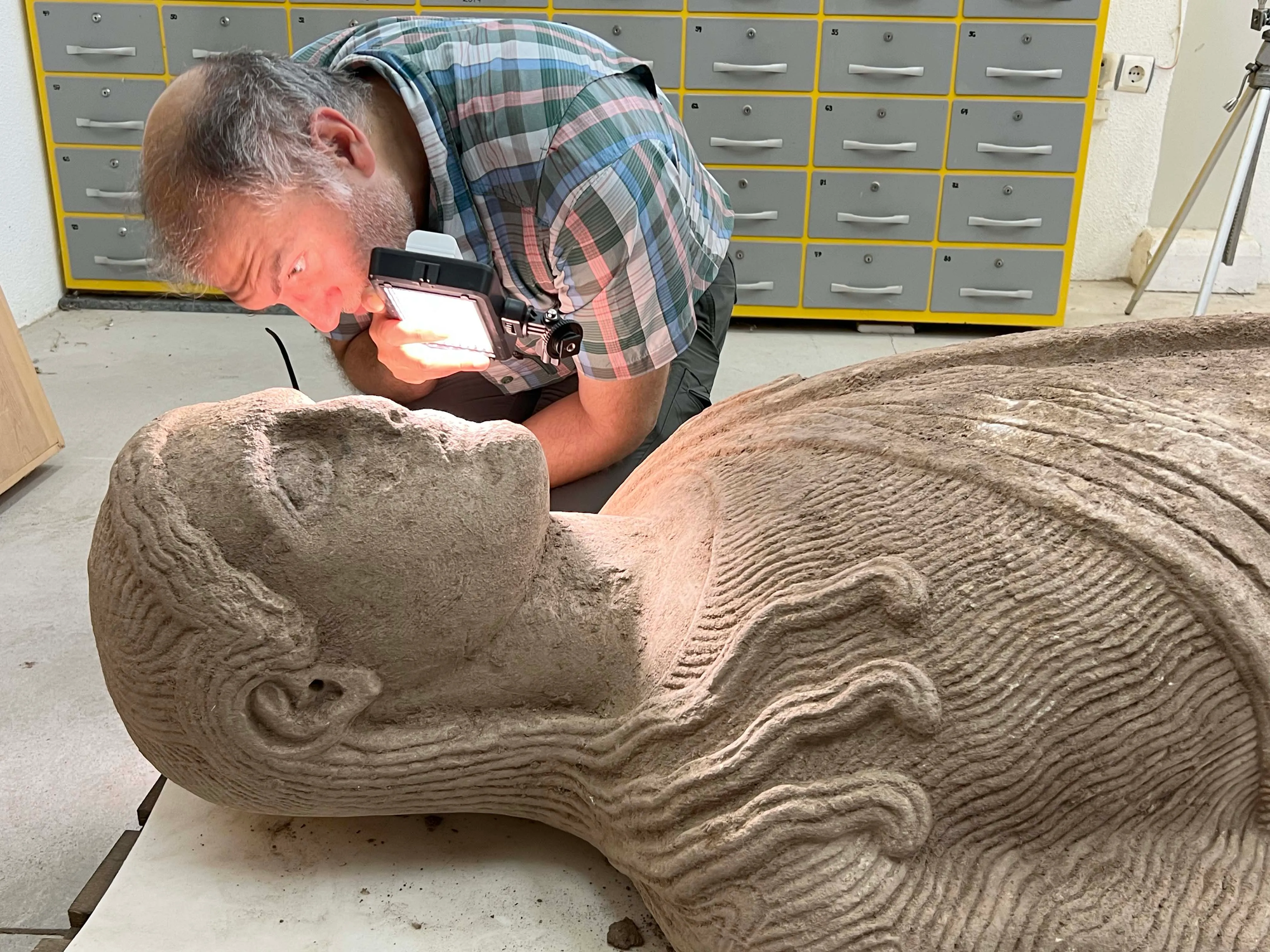
At the Harvard Gazette, they cover the discovery of an over-sized statue by the Archaeological Exploration of Sardis. In comments to the Gazette, archaeologist Nicholas Cahill remarked that “It is very rare to find such monumental sculptures of this period anywhere in the Mediterranean, and this exceptionally well-preserved, unique monument casts important new light on the major arts of Lydia, and on the Lydians’ ties to their own past." The statue rocks a chiton and stands over seven feet tall and likely dates to the 470s to 450s BCE. "When conservation is complete, the fragments will be joined and the statue will be displayed in a Turkish archaeological museum, along with other finds from Sardis."
In book review news, the Times Literary Supplement has some great new reviews in Classics. I enjoyed Catharine Edwards' review of Zachary Herz's The God and the bureaucrat: Roman law, imperial sovereignty, and other stories.
Later emperors often presented law as deriving legitimacy from their own charismatic authority, while that authority was reinforced by their conspicuous attention to legality. Imperial bureaucrats transmitted huge numbers of precedent-setting legal decisions to far-flung parts of the empire. Supported by teams of experts, emperors appeared omniscient in their command of the law and tireless in their devotion to justice. Herz’s book is insightful and curiously moving.
And at the BMCR, they have four August reviews of new open access books, from Nonnus of Panopolis to Honour in Aristotle's Ethics. In October, Cristina Murer has an open access book on Grave Robbing in Ancient Rome and Beyond coming out with De Gruyter.
What can the 3000-year-old jade trade tell us about the networks that once spanned pre-colonial Western Canada? As the CBC reports, a new peer-reviewed study of the jade tools, called stone celts, looks at the trade in these prestige items. "The widespread distribution of such artifacts demonstrates that large social networks formed between Indigenous peoples across Western Canada, said Todd Kristensen, regional archaeologist with the Archaeological Survey of Alberta and the study's lead author." The jade celts were used to dig out canoes and do other types of woodworking, but their presence east of the Rockies was not heavily explored until this new study, which indicated a complex, long distance trade route.
We care a lot about aDNA (the "a" is for "ancient"). And the new special issue of World Archaeology is focused on Emerging Ethical Challenges of Human Remains. Of particular note is the article by Lucy J. Koster et al. on "Giving and taking: negotiating responsible sampling for aDNA and multi-isotope analysis in practice." Meanwhile, Oxford University and Krantiguru Shyamji Krishna Verma Kachchh University have united to examine Harappan communities that thrived in ancient Kutch. The "Excavations at Dholavira" project "will use archaeological excavations, GIS mapping, pottery provenance, and aDNA analysis to reconstruct the region's 8,000-year environmental history." Dholavira became a UNESCO site in 2021.
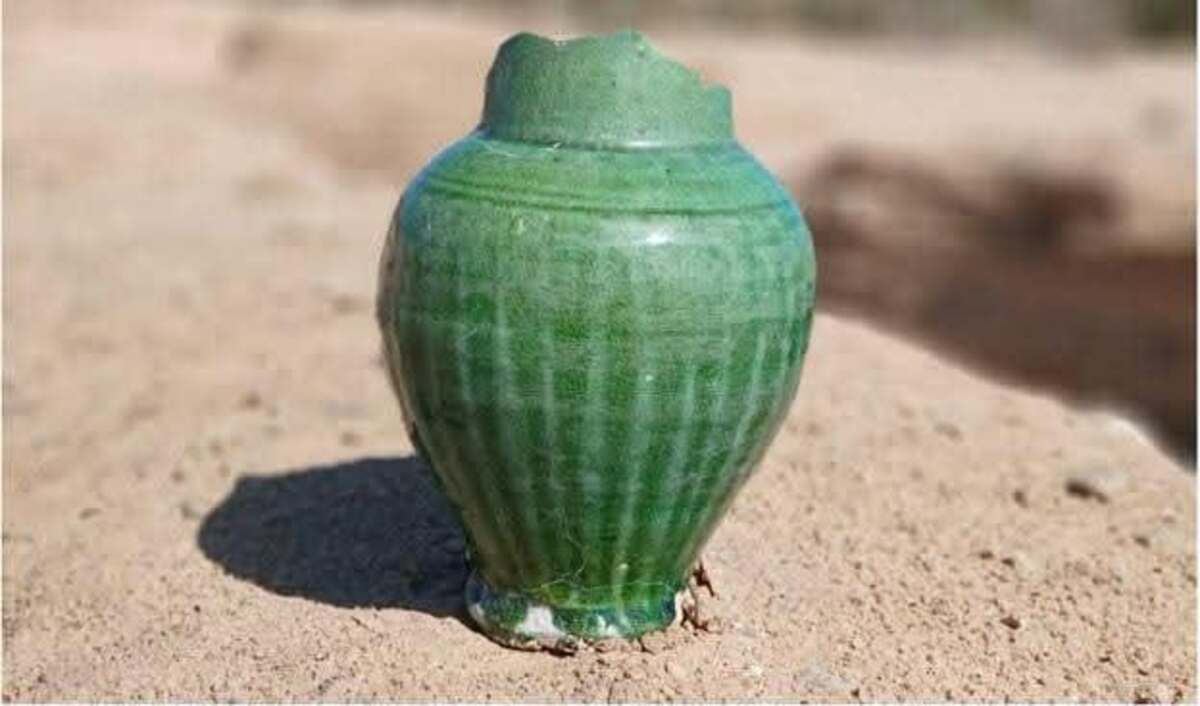
Last week, Egypt’s Ministry of Tourism and Antiquities announced the discovery in North Sinai of a medieval caravanserai in Asila. The roadside inn for traders and pilgrims seems to date to the Mamluk Period. As Archaeology Magazine reports, it is tentatively dated to the reign of Sultan Al-Nasir Mohamed Ibn Qalawun, who ruled from 1285 to 1341 CE. “The finds reinforce the importance of the site for understanding Sinai’s role as a major corridor between Egypt and the eastern Arab world,” Diaa Zahran of the SCA told the magazine.
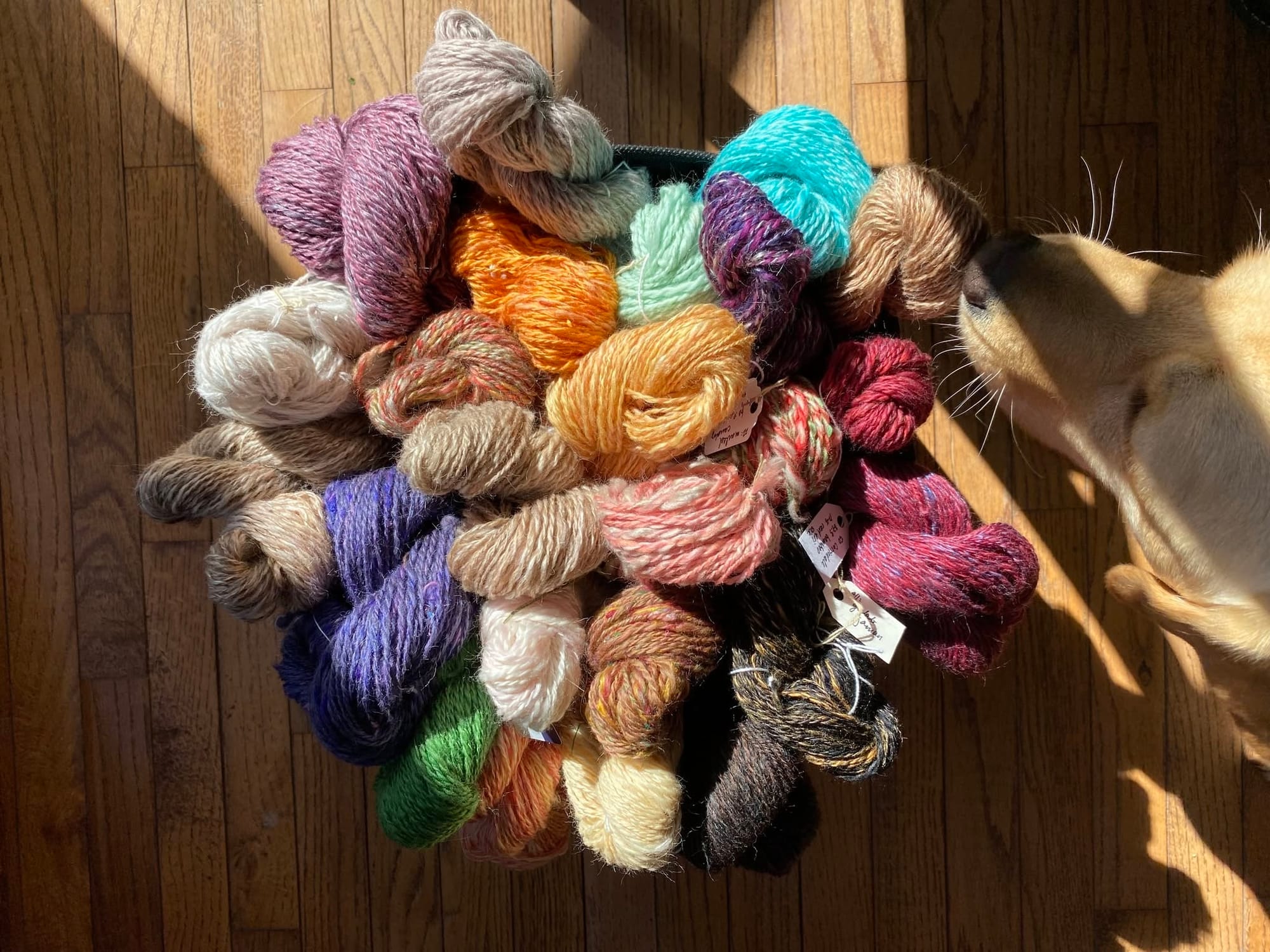
Our very own Stephanie Wong has won Best in Show for the second year in a row at the Michigan Fiber Festival. Dr. Wong wrote her dissertation on "Materialities of the Spanish Pacific: Making the Early Modern" and is an expert in historical textiles and the material culture of early modern Mexico. A great example of how reconstructive archaeology can inform historical research—and help you make some stunning mittens.
Finally, we want to note the passing of secular saint Dolly Parton. I (Sarah here) was headed to teach my grad seminar on Tuesday when I heard a student crying in the hallway. For the rest of the day, everyone from students to administrators were listening to her songs ("Light of a Clear Blue Morning" in particular) in a collective act of grief and appreciation. I can't blame them. Dolly was purposefully playing when we had our second child. Whether 19 or 99, everyone loved Dolly for her humanity, book program, and feminism. A few years ago, I invited classicist Helen Morales to give a talk on Dolly and her book, Pilgrimage to Dollywood, at Iowa. Morales is known as the first Dollyologist and her book, about her trip to Dollywood with Tony Boyle and their daughter, later influenced the making of the excellent podcast "Dolly Parton's America" by Radiolab. It is worth a listen.
New Ancient World Journals by @yaleclassicslib.bsky.social
Ancient Narrative Vol. 20 (2026) #openaccess Receptions of Ancient and Late Antique Narrative in the Eastern Mediterranean
Hermes Vol. 154, No. 3 (2026)
Journal of Ancient History Vol. 14, No. 1 (2026)
Journal of Latin Linguistics Vol. 25, No. 1 (2026) Argument structure alternations in Latin
Philologus Vol. 170, No. 1 (2026)
Scripta Classica Israelica Vol. 45 (2026) #openaccess
Ancient Philosophy Vol. 46, No. 2 (2026)
Elenchos Vol. 47, No. 1 (2026)
Lexicon Philosophicum Vol. 14 (2026) #openaccess
Philosophica Vol. 34, No. 1 (2026) Aristotle’s Organon in Armenian, Syriac and Arabic
History of Religions Vol. 66, No. 1 (2026) Bruce Lincoln's Secrets, Lies, and Consequences: A Review Symposium
Journal for the Study of the New Testament Vol. 48, No. 5 (2026) Booklist
Patristica et Mediævalia Vol. 47 No. 1 (2026) #openaccess
Preternature Vol. 15, No. 2 (2026)
Altorientalische Forschungen Vol. 53, No. 1 (2026) NB Shana Zaia "'Ends' in Empires: 1st Millennium BCE Mesopotamian Perspectives"
Historia i Świat Vol. 15 (2026) #openaccess
Journal of Mediterranean Archaeology Vol. 39 No. 1 (2026)
Journal of Northwest Semitic Languages Vol. 52, No. 1 (2026)
Zeitschrift für Assyriologie und Vorderasiatische Archäologie Vol. 116, No. 1 (2026)
The Journal of Medieval Religious Cultures Vol. 52, No. 2 (2026)
Medievalis Vol. 5, No. 1 (2026) #openaccess
Revue des Études Byzantines Vol. 84 (2026)
Exhibitions, Workshops, and Lectures
On September 11, 2026, Stephanie Langin-Hooper will speak virtually on "Tiny Things at the Kelsey: Miniature Artworks from Seleucia-on-the-Tigris," for the Kelsey Museum of Archaeology. She will discuss "her current research on miniature artworks from the Seleucid and Parthian periods (ca. 300 BCE–200 CE) in the Babylonian city of Seleucia-on-the-Tigris." Register here.
You can join the AIA as famed archaeologist and eclectic tie-wearer Eric Cline presents the first AIA Archaeology Hour talk of the 2026-2027 season: “Homer, Hollywood, and Historical Context: Comments scribbled in a Bronze Age Archaeologist’s Notebook.” This presentation will be held online on Wednesday, September 23, 2026 at 8pm Eastern. Register here.
In December, the Dallas Museum of Art will launch the U.S. tour of Journey Through Pompeii: Masterpieces from the National Archaeological Museum of Naples, curated by Dr. Anabelle Gambert-Jouan. As they note, "The exhibition features exceptional frescoes, bronzes, marble sculptures, and large-scale mosaics that recreate the elaborate interiors of Roman homes, alongside intimate objects of daily life including cosmetics, cookware, and ritual wares." The DMA is the first stop, then the VMFA and the Frist. The exhibition is not up on the website yet, but the press release notes that it runs December 13, 2026 until May 2, 2027.