Pasts Imperfect (4.16.26)



This week, scholar of the ancient Mediterranean and India Tejas S. Aralere discusses ancient astrology in South Asia. Then, what medieval chess can tell us about race relations in the Middle Ages, new interactive maps of late antique church councils, encouraging Classics in China, ancient Native American dice games, lost English dual pronouns, the pope reads about Augustine and his African roots, remembering Dame Prof. Averil Cameron, new ancient world journals, the Sunoikisis summer session, and more. Let's get to it.
Astrology: The Universally Barbarian Ancient Science by Tejas S. Aralere
"Formerly, Yavaneśvara, the Lord of the Yavanas (Greeks), whose vision of truth came as a gift from the grace of the Sun, and whose words are blameless, translated this ocean of words, this jewel-mine of horoscopy. Its meaning was guarded by its being composed in its own language (svabhāṣā), yet its truth had been revealed successively by the foremost of great sages - descending from Viṣṇu, the the Sun, the Moon, and Maya - and was perceived by the foremost of kings in the year 71. He translated and taught this science of horoscopy in excellent words for the instruction and benefit of the world." [1]
These verses conclude the Yavana Jātaka often translated as the “Greek Horoscopy." It is a Sanskrit astrological text composed between 100 and 299 CE. There are two nearly-complete surviving manuscripts from the 11th and 18th centuries. Both identify the author as “Sphujidhvaja.” But as is so often the case with ancient authors, his historical identity eludes us.
The text was first translated into English by Prof. David Pingree in 1978. He was a polymath whose translations and philological work on materials in Sanskrit, Greek, Latin, Syriac, and Arabic created the foundation for the contemporary study of the history of the astral science. He suggested that this Sanskrit verse text originated as a Sanskrit prose translation of a lost Greek original text produced in Alexandria, Egypt. While no one can disprove his theory, the 78 chapters of material containing details specifically relevant to the elite Brahmanical class of Hindu society makes it highly unlikely that a Hellenistic Greek wrote it.
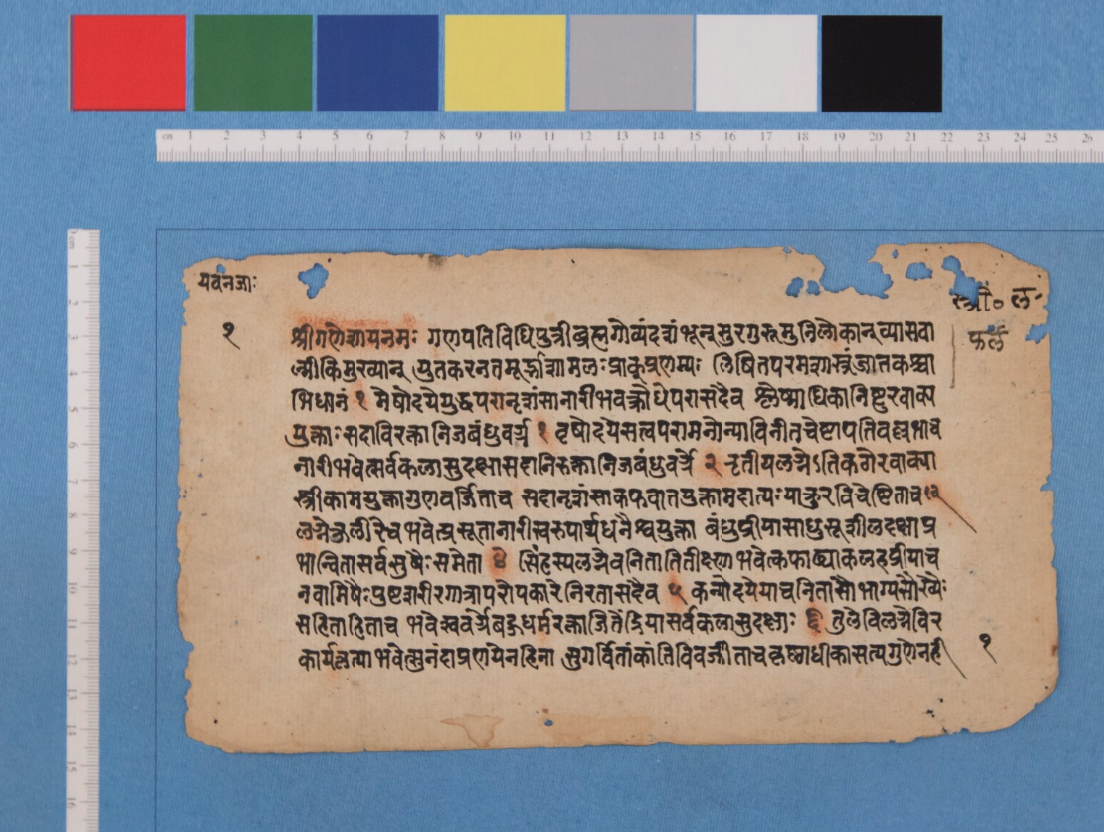
Since the publication of Pingree’s critical edition and translation in 1978, this text was considered proof that “rational” ancient Greek science made its way to a more mystical India. It was the 1970s and scholars had long been searching for an explanation of how the 12 zodiac signs that appear in Babylonian, Greek, and Hellenistic Egyptian sources also came to be used in Sanskrit astral sciences.
Ancient Indian texts indicate that the zodiac was not simply a gift inherited from the West. If we look to the Jyotiḥ Śāstra, translated as the “science of heavenly lights," we glimpse at the Brahmanical tradition as part of the vedāṇgas (12th-6th cent. BCE), the ancillary “Vedic limb” texts containing technical knowledge for mastering the Vedic ritual. The practitioner perfected the science of sacrifice through six subjects:
1) śikṣā – phonetics
2) kalpa – ritual rules
3) vyākaraṇa – grammatical analysis
4) nirukta - etymology
5) chandaḥ - metrics / prosody
6) jyotiṣa – astral sciences
The majority of these are linguistic sciences, suggesting that it was not just perfecting the recitation, but analyzing the meaning of the hymns that mattered. Here, proof lay in grammatical analysis and not in Euclidean geometric proofs like in Greek science. As in most ancient cultures, a celestial calendar determined an auspicious date and time for the ritual, so Jyotiṣa tracked the moon’s movement against a belt of 28 constellations (later 27) called nakṣatras. The 12 zodiac signs were an addendum to this. It seems more likely, though I cannot prove it, that the Yavana Jātaka was composed somewhere like the intellectual crossroads of Taxila in present-day Pakistan, or even Mathura in central India during the Kushan Empire (1st-4th century CE).
There are two problems with Pingree’s original theory of the Greek origins of this work. First is an issue of translation theory that arises from the Greco-Arabic translation movement, in which a whole Greek work by Aristotle or Galen would be translated into Arabic. This was the case for technical terms coming from Greek into Sanskrit (i.e., dekanos to drekaṇa). But I think we need to theorize the development of the main body of the text differently, as a product of scientific and religious conservatism characteristic of Indian and Roman elites. For both, predictive astrology was always considered something of a “foreign” science. Brahmins were wary of outsiders who were not born into their Vedic ritual-performing society.
Individual concepts like melothesia, which mapped the 12 zodiac signs onto the human body, were transmitted and carefully adapted into their extant system. Brahmins, who were the scholarly and priestly class, appear to have struggled with the fact that Greeks excelled at astral sciences, since the renowned astronomer-mathematician Varāhamihira (6th cent. CE) writes:
mleccha hi yavanāsteṣu samyakśāstramidaṃ sthitam | ṛṣivat te’pi pūjyante kim punar daivavid dvijaḥ ||[2]
“Indeed, even among the barbarian (mleccha) Yavanas, this science is properly established and they are revered as Vedic Sages. What then, moreover, of the Twice-Born astrologer?”
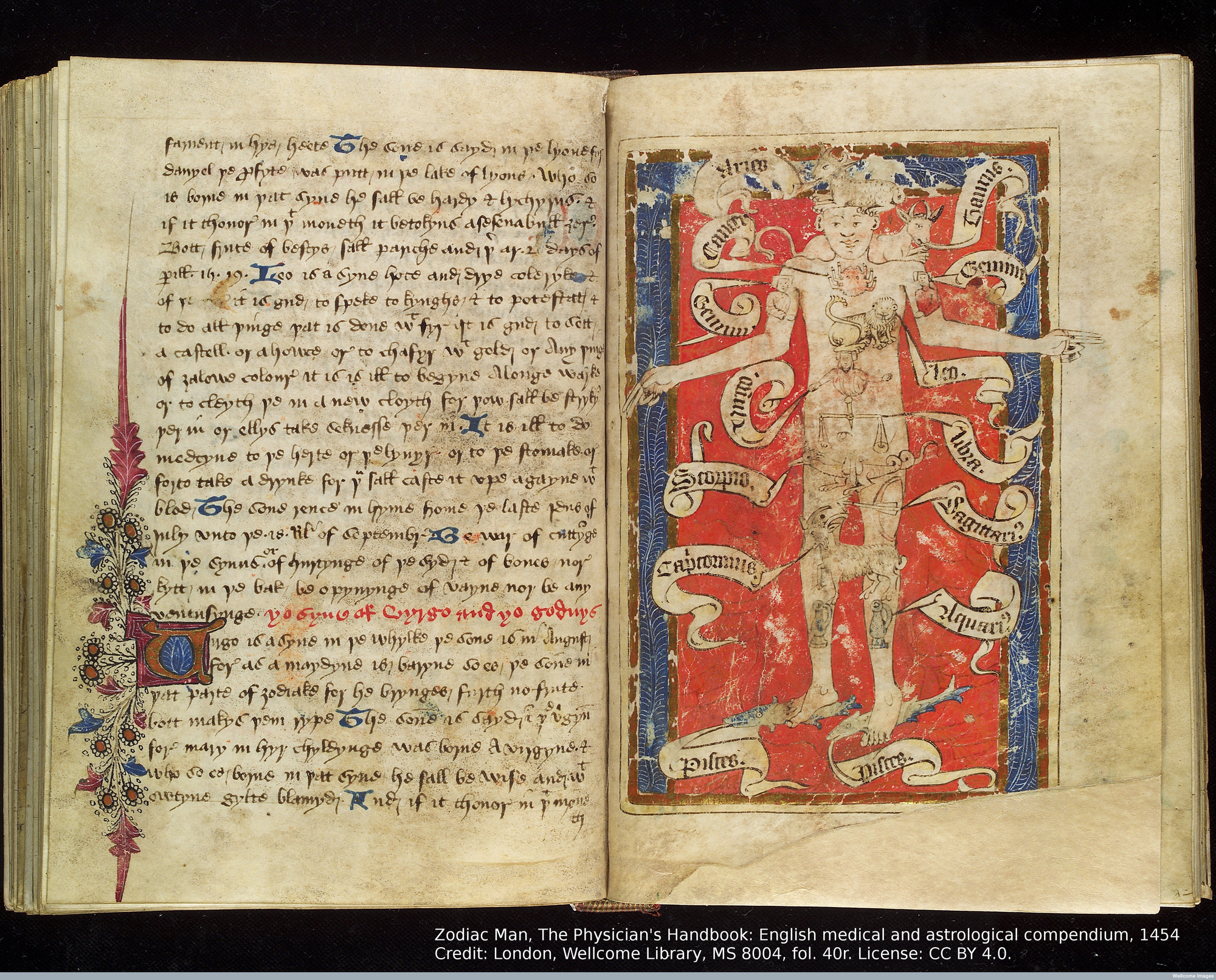
While this is often cited as acknowledgement of the Indic debt to Greek sources, to me it signals something different: that even centuries after the Yavana Jātaka, Indian scholars had a chip on their shoulders about this intellectual inheritance. The tone of cultural superiority is remarkable, with the term mleccha as Sanskrit synonym of barbarian, meaning a non-Sanskrit-phone “mumbler.” What qualified a scientific idea to be accepted into the Brahmanical fold?
Second is the question of intellectual - and therefore cultural - inheritance which is interwoven with issues of nationalism and cultural “advancement.” It began in the 18th century, when Sir William Jones (1746-94), one of the first English translators of Sanskrit, asked his student Samuel Davis (1760-1819) to translate astral science texts to determine if ancient Indian thinkers had original ideas like the Greeks.
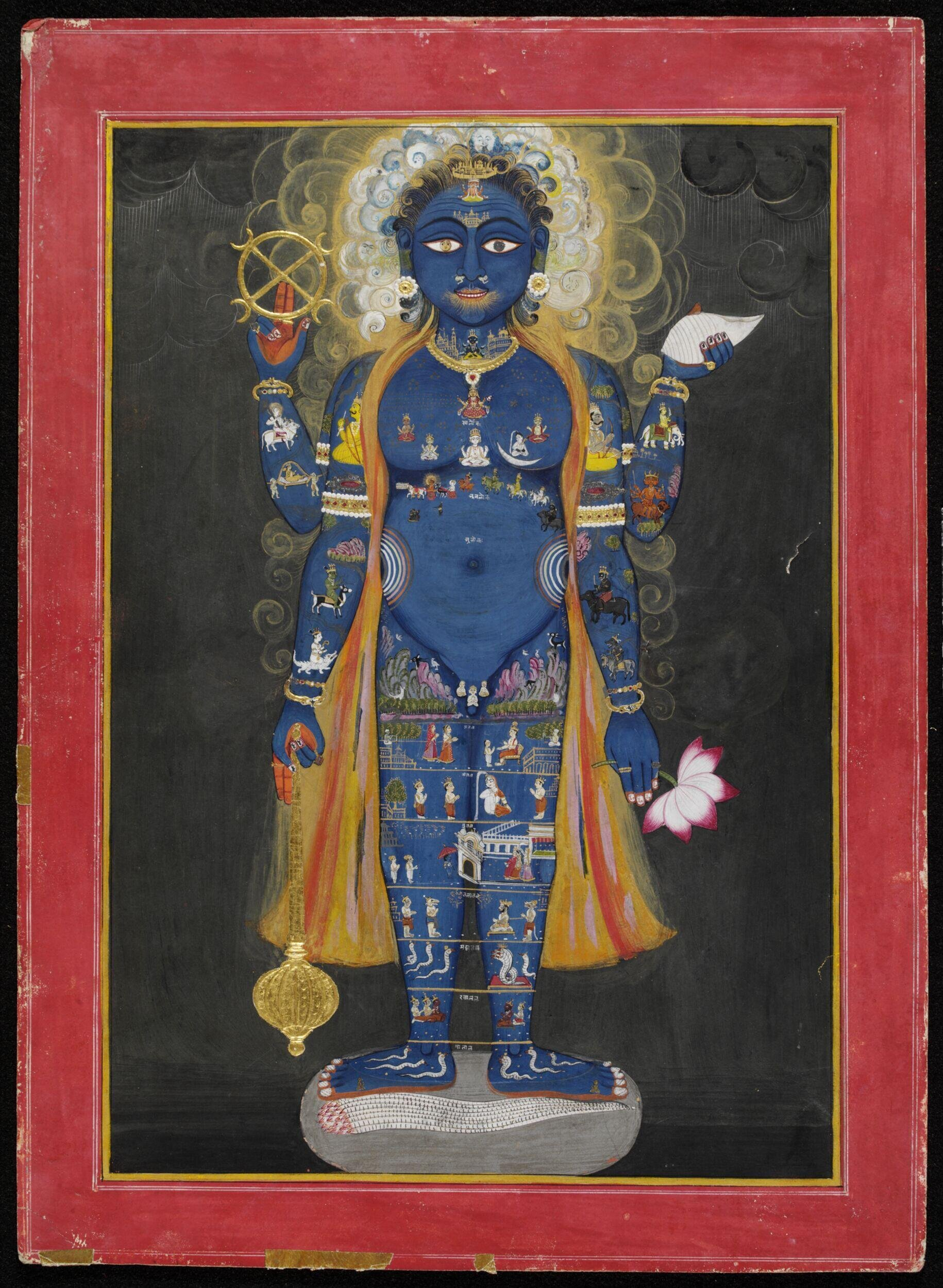
Like Indians, Romans were similarly perceived as lacking scientific originality; viewed simply as building on the Greeks’ accomplishments. But in both of these cases, the complex processes of cultural contextualization were ignored. Historians of science applied an objectivist method that stripped away the context, focusing instead on comparing the accuracy of the numerical data and cosmic models between cultures. This Colonial, European academic practice measured every encountered culture against what the Greeks had written down. The Greeks became the meter stick with which to gauge other cultures.
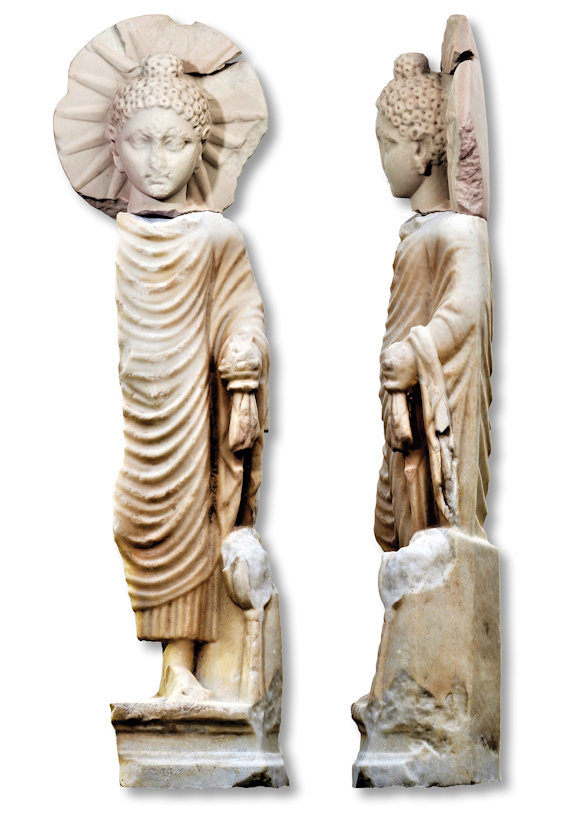
New evidence is continuously forcing modern scholars to rethink conclusions about ancient India. One recent publication connecting Egypt and India documents the excavation of a Buddha statue of Egyptian workmanship, made of Parian Marble. This was one of the most expensive types of Greek marble in antiquity. Such evidence negates age-old claims that ancient Indians never settled abroad like the seafaring Greeks and Romans. It also gives us evidence to reject the Orientalist claims of unidirectional flow of information from the Mediterranean into Asia. Objects and texts like the Yavana Jātaka invite us to think critically about how we define “science” and how it was created through ancient exchanges.
[1] All translations of Sanskrit, Greek, and Latin are my own.
[2] Edition of the text used is “Varāhamihira, and V. Subrahmanya Sastri. Brihat Samhita. Bangalore City: Printed by V.B. Soobbiah, 1947.”
Further Reading:
Pingree’s The Yavanajātaka of Sphujidhvaja is available on archive.org, while Bill M. Mak, “The Last Chapter of Sphujidhvaja's Yavanajātaka critically edited with notes” SCIAMVS Vol. 14 (2013) provides a new edition of the final chapter.
The Interactions of Ancient Astral Science by David Brown (Bremen : Hempen Verlag, 2018) is an excellent comprehensive history of astral scientific exchange. Two active international research projects headquartered in Berlin: Astral Sciences in Trans Regional Asia and ZODIAC – Ancient Astral Science in Transformation are further exploring this field. The ZODIAC project has produced a glossary cross-referencing astral terms in a multitude of ancient languages.
Another multi-lingual astral project is Ptolemaeus Arabus et Latinus (PAL) which provides searchable editions of the Latin and Arabic versions of Ptolemy’s astrological and astronomical works. While, EIDA is a digital humanities project exploring astral diagrams in Chinese, Sanskrit, Persian/Arabic, Greek, Hebrew and Latin sources.
For more on ancient Indians at Berneike, watch the 41st Coomaraswamy Memorial Lecture, given by Steven Sidebotham, “Indians in Roman Berenike and How They Got There."
Public Humanities and a Global Antiquity
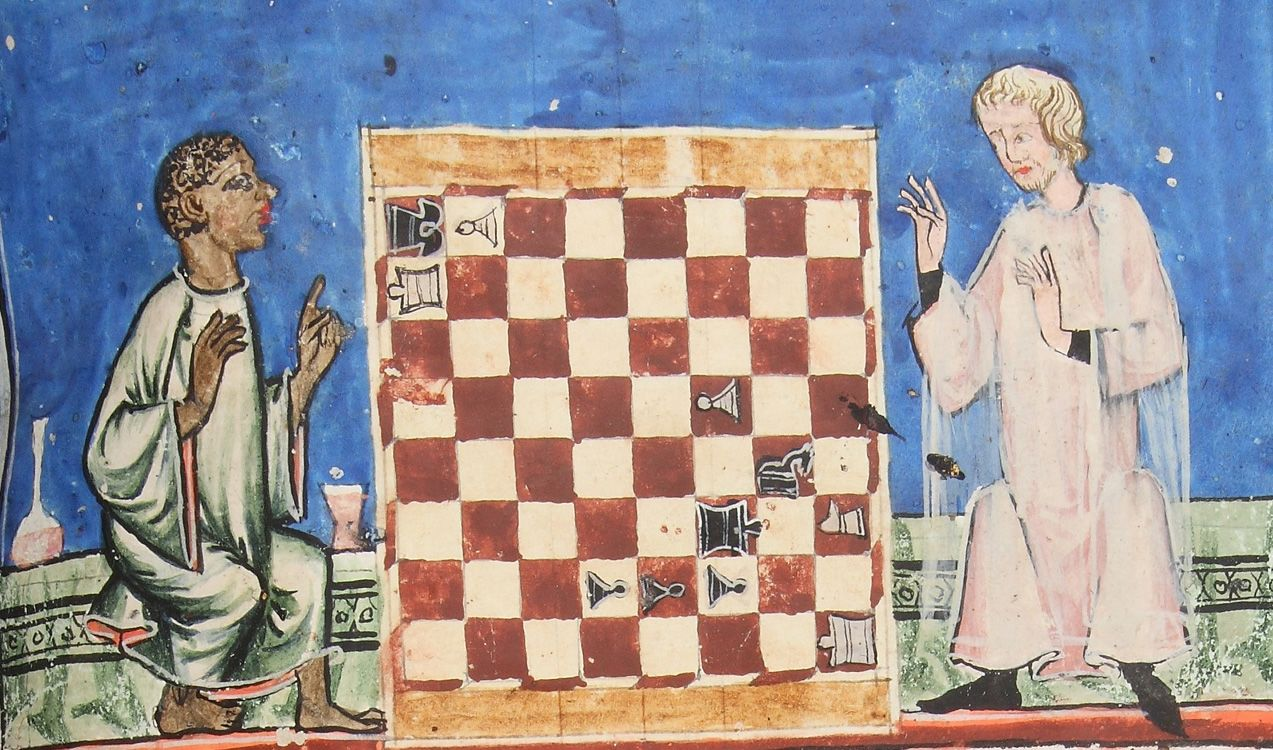
What can chess tell us about racism in the Middle Ages? In 2024, medievalist Krisztina Ilko published ‘Chess and Race in the Global Middle Ages’ in Speculum. It has now won the Medieval Academy of America’s Article Prize in Critical Race Studies. The first portion looks at how chess boards reflect the medieval world with the chess pieces being its population. Then, the second portion "shifts the attention from the chess pieces to the chess players. Ranging from European examples to Persian and Arabic manuscripts, it explores diverse visual strategies through which chess contests facilitated cross-racial interaction." These games are an interesting lens through which to view the Global Middle Ages.
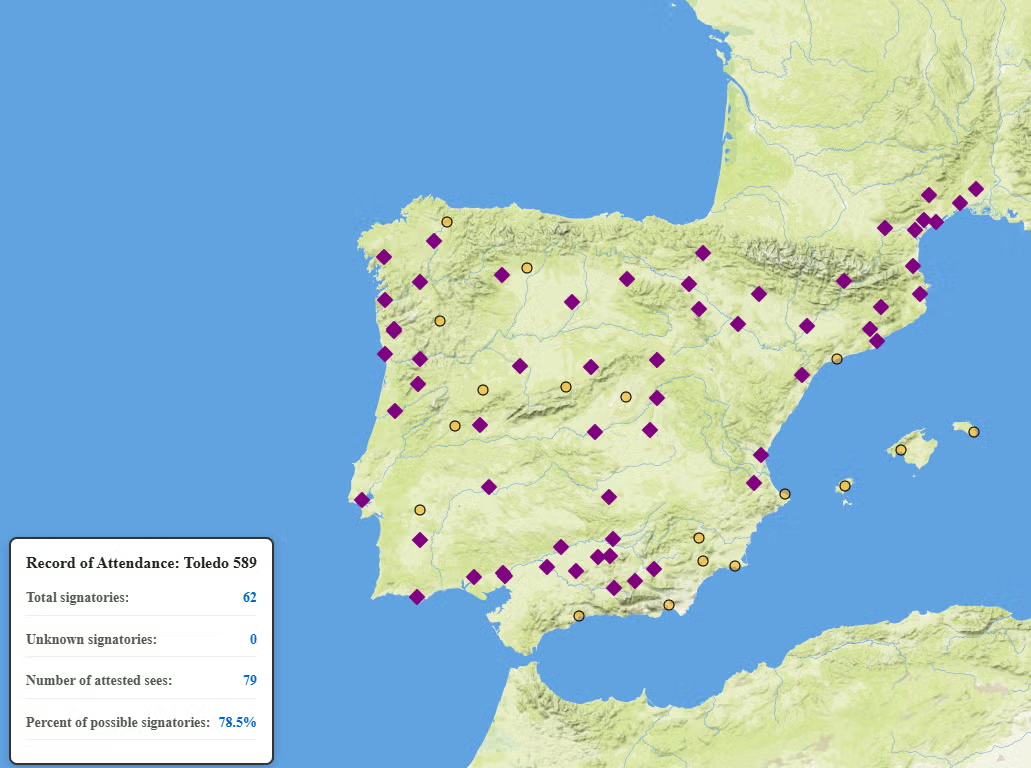
The Ancient World Mapping Center (AWMC) is happy two announce two new, interactive maps focused on late antique church councils. The "first, The Council of Nicaea (325 CE), maps the sees of bishops who attended the First Council of Nicaea, summoned by the Emperor Constantine in 325 CE and generally considered to be one of the most important events in the history of the early Church. The second, Iberian Church Councils (306-589 CE) traces attendance patterns in the councils of the Late Antique Iberian Peninsula, revealing the fragmentation of Roman ecclesiastical and political networks and the reestablishment of peninsular cohesion under the Visigothic Kingdom." Maps!
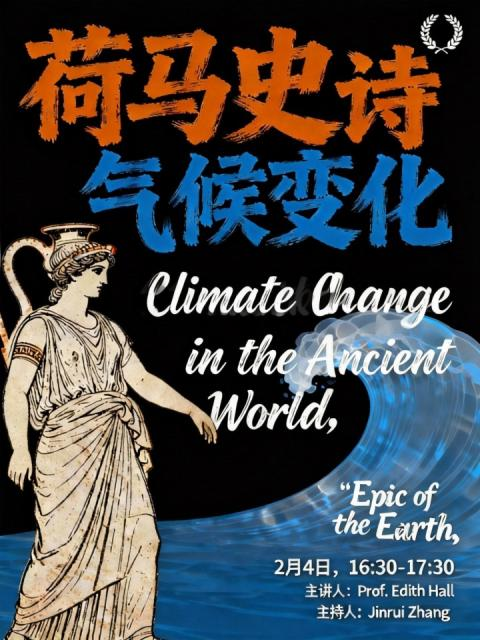
At the SCS Blog, emerging classicist Jinrui Zhang, a high school junior from Beijing 101 Middle School, discusses “Echoes of Antiquity,” which is "a public engagement initiative in China funded by the Ancient Worlds, Modern Communities initiative of the Society for Classical Studies." In it, Zhang reflects on the future of Classics in China, "The communities I worked with in China are proof that the public potential for Classics is larger and more globally situated than our disciplinary imagination typically admits. The public deserves sustained attention, not mere curiosity, but grounded engagement." While over at the SCS Blog, you might also want to check Jillian Stinchcomb's post on "Egypt and Ethiopia in the work of Flavius Josephus."
Over at Neos Kosmos, Homer scholar, stoicism critic, and PI co-founder Joel Christensen discusses the problem with ancient and modern "great men." As Christensen notes, "[f]rom the Trojan War to modern geopolitics, history and myth warn that ego, hubris and ‘great men’ can bring entire societies to the brink." As it turns out, heroes are a bit too narcissistic to care about the chaos, pain, and destruction they often cause.
Archaeological discoveries abound. Over at LiveScience, bioarchaeologist Kristina Killgrove has an article covering new research arguing that "Native Americans invented dice and games of chance more than 12,000 years ago." Then, in China's Henan Province, archaeologists discovered two artificial ditches from the Xia period (c. 2070-1600 BCE) that reveal a high level of engineering to handle rain and wastewater. In a piece by Sophie Hardach on the BBC Tom Birkett (@norseincork.bsky.social), Professor of Old English and Norse at University College Cork, discusses and pronounces the lost English dual pronouns "wit, unker, git" which dropped out of usage in the 12th century.
The findings extend the long record of precolonial Native American dice. https://www.sciencenews.org/article/oldest-known-dice-north-america
— Science News (@sciencenews.bsky.social) 2026-04-04T13:10:12.306140684Z
In book news, I (Sarah here!) am currently finishing Cailan Davenport's Behind Caesar's Back: Rumor, Gossip, and the Making of the Roman Emperors. Davenport spoke on his new book to the New Books in Ancient History pod. In addition, please note that the pope is currently reading Catherine Conybeare's Augustine the African (2025) while traveling in North Africa (probably while ignoring the theological suggestions of J.D. Vance). The new Tertullian and the Jews in Early Christian Literary Imagination by Stéphanie É. Binder is free to read from Cambridge Elements online until April 21, 2026 (Happy birthday, Roma!) and Writing the Heavens: Celestial Observation in Medieval and Early Modern Literature, edited by Aura Heydenreich , Florian Klaeger , Klaus Mecke , Dirk Vanderbeke, and Jörn Wilms is free to read from De Gruyter.
Finally, we wanted to note the passing of Dame Prof. Averil Cameron last week. Cameron was a true trailblazer with unparalleled breadth to her scholarship. She helped to define the field of late antiquity and Byzantine studies. The University of Oxford's obituary is touching, but we would also suggest a full read of her memoir, Transitions: A Historian’s Memoir (2024). S.T.T.L.
New Ancient World Journals by @yaleclassicslib.bsky.social
Akroterion Vol. 70 (2025) #openaccess
Archaeology of Western Anatolia No. 2 (2026) #openaccess
Auster No. 30 (2025) #openaccess
Bulletin of the Institute of Classical Studies Vol. 68, No. 3 (2025) Doing things with Thucydides
Cahiers des études anciennes Vol. 63 (2026) #openaccess Poètes zoologues
Cuadernos de Filología Clásica. Estudios griegos e indoeuropeos Vol. 36 (2026) #openaccess
Gephyra Vol. 31 (2026) #openaccess
Journal of Eastern Mediterranean Archaeology and Heritage Studies Vol. 14, No. 1 (2026)
Journal of Late Antiquity Vol. 19, No. 1 (2026) #openaccess
Journal of Roman Archaeology Vol. 38, No. 2 (2026) NB Rachel M. L. Simpson, Sandra J. Garvie-Lok “Lead Exposure in the Roman Empire: A Review of the Written, Material, and Bioarchaeological Evidence”
Studia Ceranea Vol. 15 (2025) #openaccess NB Marta Czapińska-Bambara "The Octopus as a Literary Figure in Imperial-Era Literature"
Journal of Chinese Humanities Vol. 11, No. 4 (2025) #openaccess Studies on Zhuangzi and Daoism
Journal of the History of Philosophy Vol. 64, No. 2 (2026)
Méthexis Vol. 38, No. 1 (2026)
Philosophy East and West Vol. 76, No. 2 (2026)
Phronesis Vol. 71, No. 2 (2026)
SCIAMVS: Sources and Commentaries in the Exact Sciences Vol. 25 (2025) #openaccess
Journal of Near Eastern Studies Vol. 85, No. 1 (2026) NB Martha T. Roth "On Researching and Teaching Mesopotamian Law"
Indo-Iranian Journal Vol. 69, No. 2 (2026)
Journal of Biblical Literature Vol. 145, No. 1 (2026)
Vetus Testamentum Vol.76. No. 2 (2026)
Zeitschrift für die alttestamentliche Wissenschaft Vol. 138, No. 1 (2026)
Byzantinische Zeitschrift Vol. 119, No. 1 (2026)
Early Medieval Europe Vol. 34, No. 2 (2026)
Ériu Vol. 75 (2025) #openaccess
PAREKBOLAI Vol. 16 (2026) #openaccess
Speculum Vol. 101, No. 2 (2026) NB Fiona J. Griffiths "The Marriage of a Cleric and Canon in Twelfth-Century Paris: Heloise, Abelard, and the Evolution of Clerical Celibacy"
Antiquity Vol. 100 No. 410 (2026)
Cambridge Archaeological Journal Vol. 36, No. 2 (2026) #openaccess Kinship Trouble: Traversing Interdisciplinary Boundaries between Archaeology, Archaeogenetics & Socio-cultural Anthropology
Oxford Journal of Archaeology Vol. 45, No. 2 (2026)
Digital Scholarship in the Humanities Vol. 41, No.1 (2026)
Exhibitions, Lectures, and Conferences
On Wednesday, April 22, 1:30PM EST, the Celtic Studies Association of North America will hold a virtual book launch for Natasha Sumner’s Heroes of the Gael: A History of Fionn and the Fianna (Princeton University Press). The book explores the 1,400 year history of the stories of Fionn macCumhaill. Register here.
The summer semester schedule for the Sunoikisis Digital Classics programme is now online. This year, the theme is "Digital Scholarly Editions in Classics, Byzantine, and Medieval Studies," Convened by: Monica Berti (University of Leipzig) & Martina Filosa (University of Cologne) All sessions start at 17:30 CEST and last 90 minutes. Sessions will appear on YouTube on Tuesday afternoons, and if you watch live you can ask questions or join the discussion via the live chat feature. Session pages below include readings, resources, and suggested exercises. All sessions are licensed under a CC BY-SA 4.0 License and free to use in learning or teaching, and we would love to hear from you if use these with students.
- Tue, April 21, 2026: Introduction to Digital Scholarly Editions (Franz Fischer)
- Tue, April 28, 2026: Tools and Environments for Publishing Digital Scholarly Editions (Chiara Martignano, Roberto Rosselli Del Turco)
- Tue, May 5, 2026: From the Manuscript to the Digital Scholarly Edition (Hannah Busch)
- Tue, May 12, 2026: Linked Open Data in Digital Scholarly Editions (Daniele Fusi, Paolo Monella)
- Tue, May 19, 2026: Wikidata Queries for Greek and Latin Philology (Monica Berti, Camillo Pellizzari)
- Tue, June 2, 2026: Treebanking and annotation to study reception of ancient language and text. Refer to Sunoikisis Digital Classics, Summer 2024, Session 9
- Tue, June 9, 2026: Digital Humanities for Greek and Latin Linguistics and Philology (Valeria Boano, Francesca Dell'Oro, Francesco Mambrini)
- Tue, June 16, 2026: Ancient Languages and Artificial Intelligence (Edward Ross, Chiara Zanchi)
- Tue, June 23, 2026: Digital Objects in Research-Based Teaching (Elisabeth Günther, Sven Günther)
- Tue, June 30, 2026: Digital Editions of Text-Bearing Objects (Seals, Inscriptions etc.) (Chiara Cenati, Lucia Maria Orlandi)