Pasts Imperfect (4.2.26)


This week, Nandini Pandey, Niek Janssen, and Christopher Londa discuss writing, labor, and enslavement in Roman antiquity. Then, a new book on Venice and the Mongols, how ancient Maya communities made good use of local wetlands, Ancient Mediterranean astrological practices, democracy's global origins, introducing Latin to Massachusetts middle schoolers, Paleolithic era dogs, medieval podcasts on the Black Death and Cahokia, new ancient world journals, the upcoming global antiquity AAH meeting, and much more. Let's get to it.
Reading from Below by Nandini Pandey, Niek Janssen, and Christopher Londa
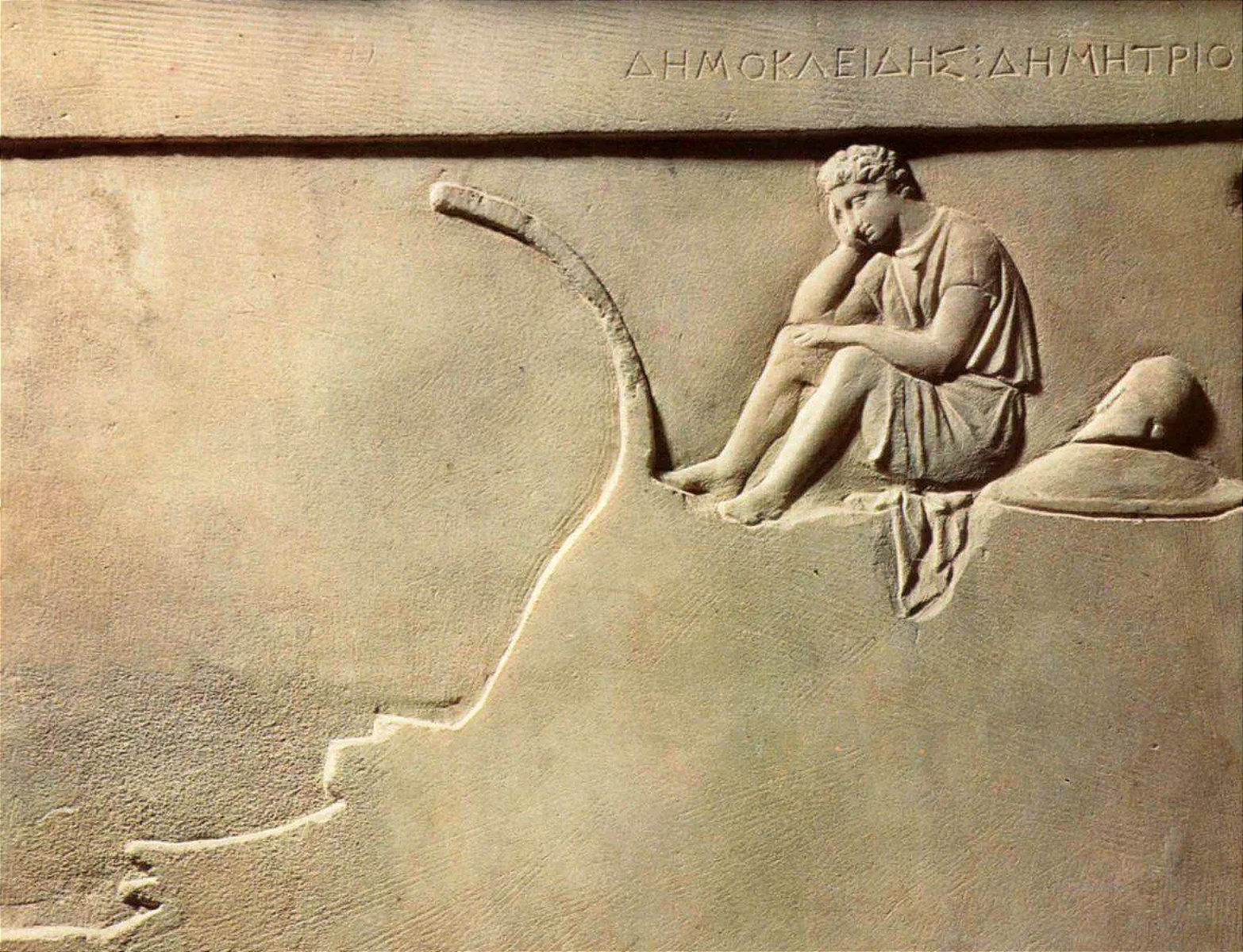
What did reading look like in Roman antiquity? The familiar image of solitary men perusing scrolls oversimplifies the scene. Roman elites were certainly capable of silent reading. But for pleasure, convenience, or physical reasons such as waning eyesight, many preferred to hear words read aloud by enslaved laborers. Although these workers are often elided within the historical record and modern scholarship, they brought ancient literature to life through their voices, bodies, and choices.
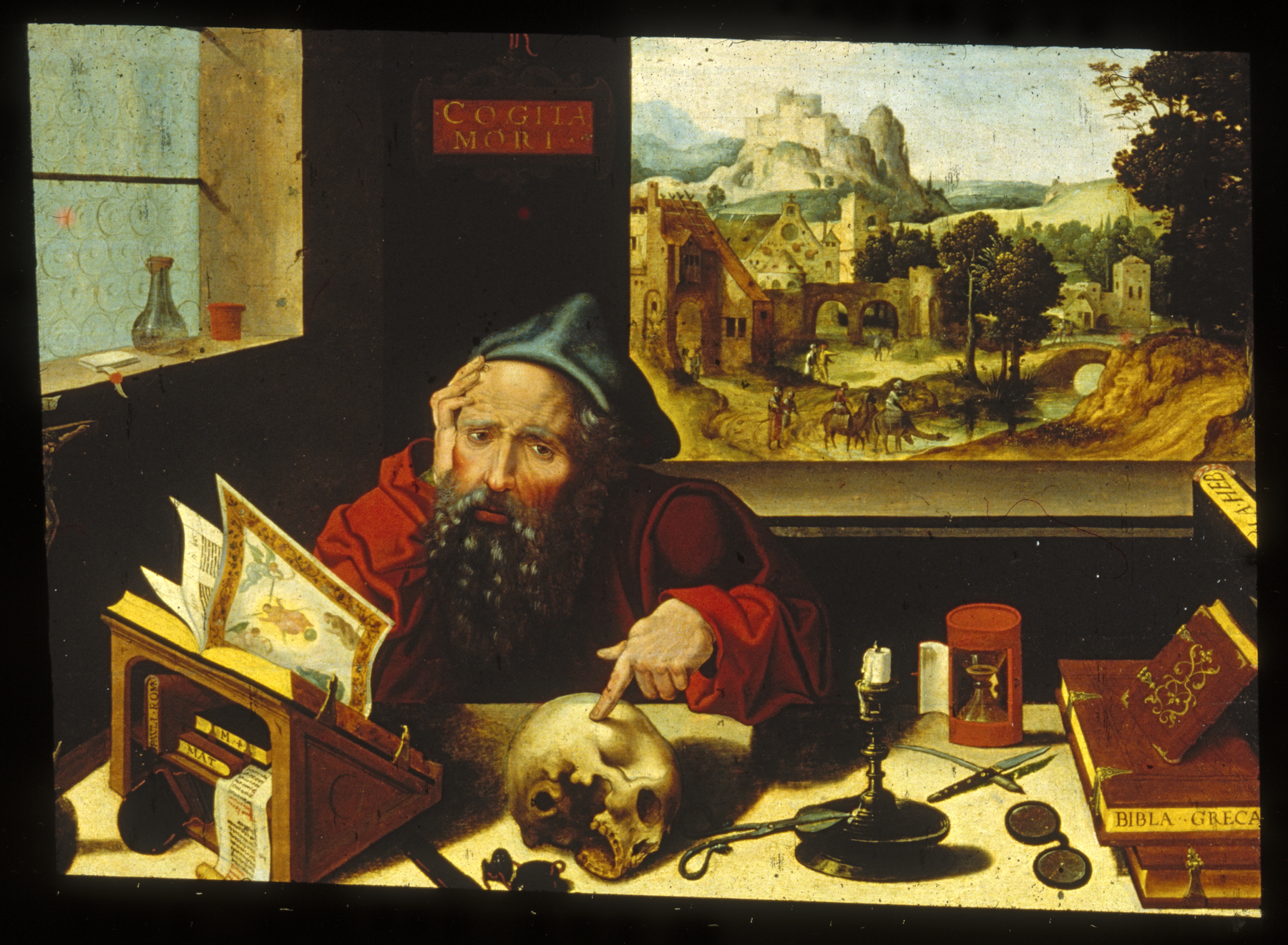
Once-marginalized lectores and lectrices (Greek anagnôsteis) took center stage at a workshop entitled “Reading from Below” at the Center for Hellenic Studies in Washington, DC, this February 25-28, 2026. Specifically, we asked participants how ancient texts’ meanings shift when we remember the power differentials that governed their performance. How might advancements in our understanding of ancient labor conditions enrich our interpretations of literature?
New questions call for experimental formats. In lieu of papers, we asked participants to select short Greek or Latin passages to analyze in small working groups following a “flipped” conference model, ultimately presenting their collaborative findings to a wider plenary audience. These discussions, on texts ranging from Homer and Plautus to Tibullus and Jerome, were energized and enriched by collective “lightning talks” that added consideration of race, queerness, trauma, empire, and other topics.
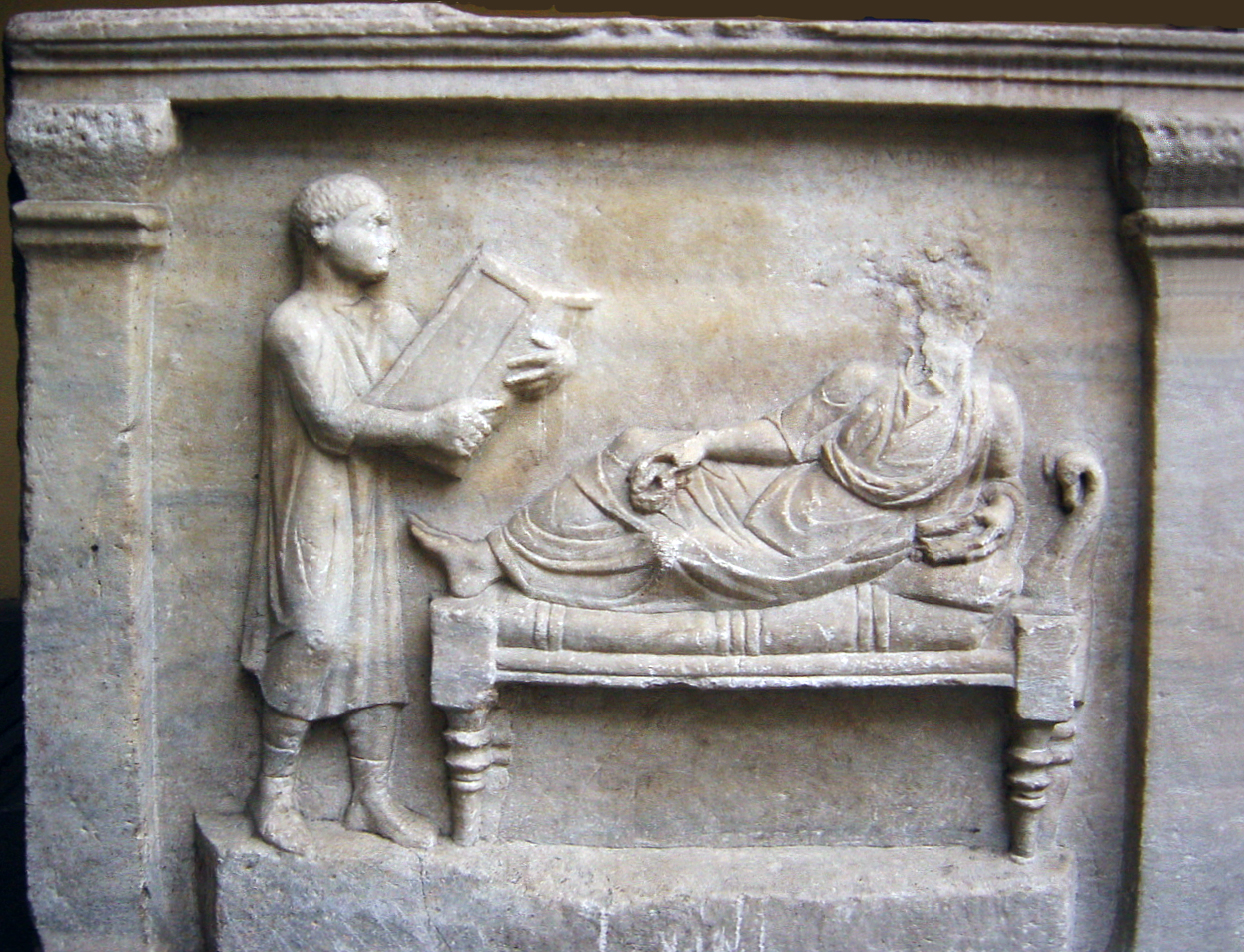
Even over the short span of the workshop, attunement to enslaved lectores opened new insight into ancient texts’ multiplicity of meaning. To name but one example: in letters between the orator Fronto and his pupil Marcus Aurelius, slavery serves as a metaphor to think through the complex power dynamics between a student who is also a future emperor and his teacher, who doubles as his subject. Such allegorizing strikes a different tone when we hear it through the ears of the enslaved courier (tabellarius) who reads the letter to Marcus Aurelius.
Participants also found that reading with the lector/lectrix in mind is not an innocent undertaking. How equipped are we to imagine the experiences of enslaved readers? How is our investment in these questions shaped by our own positionalities and our disciplinary imbrication with slavery and colonialism? Just as “Reading from Below” is deeply indebted to prior scholarship, we envision our workshop as a launchpad for further conversation. We invite Pasts Imperfect readers to join us in re-centering socially marginalized workers as agents, audiences, and co-creators of ancient literature.
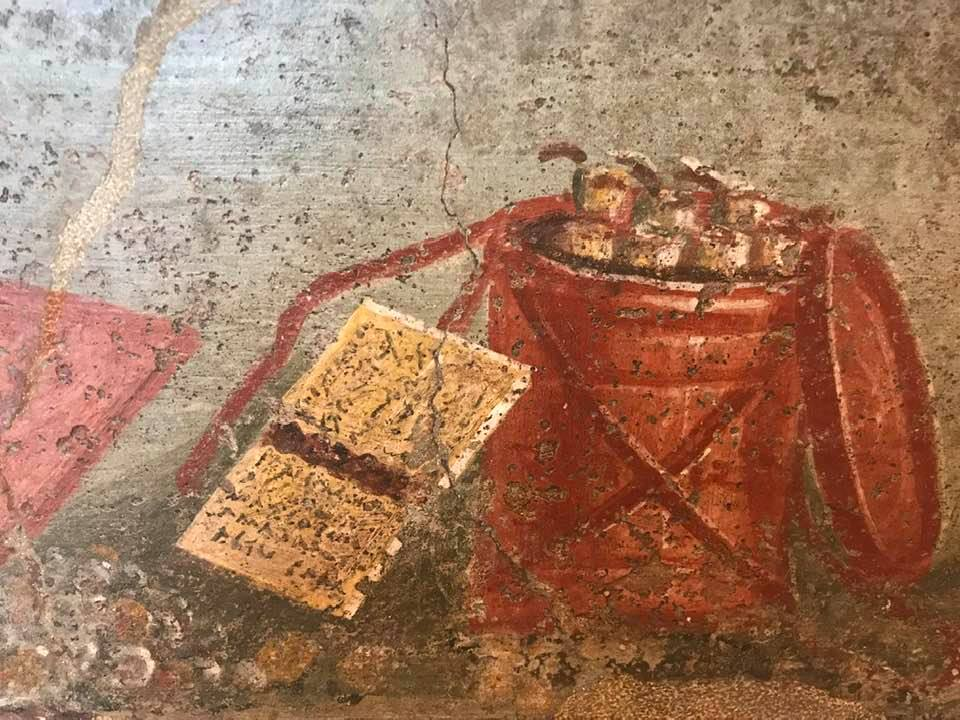
Further Reading on Reading
Study of enslaved literary workers has never been more urgent or possible thanks to groundbreaking recent scholarship in Roman and early Christian studies. Candida Moss, in God’s Ghostwriters: Enslaved Christians and the Making of the Bible (2024), examines the enslaved labor that enabled the Christian literary tradition: see especially her chapter “Faces of the Gospel” on lectores/lectrices (themes include embodiment, performance, gender, literacy).
With Jeremiah Coogan and Joseph Howley, Moss co-edited the 2025 volume Writing, Enslavement and Power in the Roman Mediterranean, 100 BCE–300 CE. Component essays leverage keywords (e.g. “Editing,” “Letters,” “Collection”) to unearth the conflicts and complexities buried at the intersection of Roman slavery and literate skill. Essays on “Disability” by Moss and on “Gender” by Cat Lambert, alongside Sarah Beckmann’s chilling 2023 article on “The Naked Reader: Child Enslavement in the Villa of the Mysteries Fresco” offer an powerful argument for expanding whom we imagine when we reconstitute scenes of ancient reading.
Co-editor Joseph Howley’s essay on “Despotics” and his 2020 piece on reading “In Ancient Rome” have contributed key concepts for interrogating the social forces that enabled ancient reading, including that of the “epistemic firewall.” Forthcoming and in-progress books by Howley, Lambert, Christopher Londa, Tom Geue, and Patrice Rankine promise to add further clarity and questions to a dynamic avenue of inquiry. Black feminist theory, most influentially Saidiya Hartman’s 2008 “Venus in Two Acts,” remains a spiritual and ethical guide for these inquiries (see Coleman 2020 and Warwick 2024).
“Reading from Below” also builds upon nearly a decade of collaborative discussion. We highlight below select past and future events in reverse-chronological order, and welcome readers’ contributions to this living archive in the comments section.
Upcoming Workshops and Conferences in 2026:
Slavery and Humanity Revisited: The Impact of Slave Systems on Personal Experience, Symposium Vesuvianum, Italy | October 7–11 (org. John Bodel, William Owens, Roberta Stewart)
Writing from the Margins: New Approaches to Ancient Authorship, Durham University | May 13–15 (org. Erica Bexley, Katherine McDonald, Lucy Jackson)
Critical Fabulation Workshop, Classical Association Conference, Manchester | April 12 (org. Nandini Pandey & others)
Previous Workshops and Conferences in 2026:
Labo(u)r , University of London, Institute of Classical Studies | March 9 (org. Bobby Xinyue, Gesine Manuwald, Fiachra Mac Góráin)
Reading from Below: Enslaved Readers and Performers in the Greek and Roman Worlds, Center for Hellenic Studies | February 26–28 (org. Niek Janssen, Christopher Londa, Nandini Pandey)
Copyist of their Text, Author of their Copy: Writing between Gesture and Thought from Antiquity to the Middle Ages, University of Liège | January 22–23 (org. Gabriel Nocchi Macedo, Alain Delattre, Eleni Skarsouli, Marie Christians)
Scribal Cultures of the Ancient World, Society for Classical Studies Annual Meeting, San Francisco | January 9 (org. Michael A. Freeman)
For a prior list of workshops, see our Google Doc.
Public Humanities and a Global Antiquity
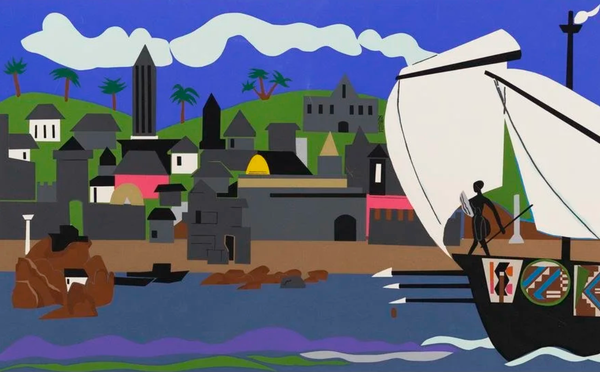
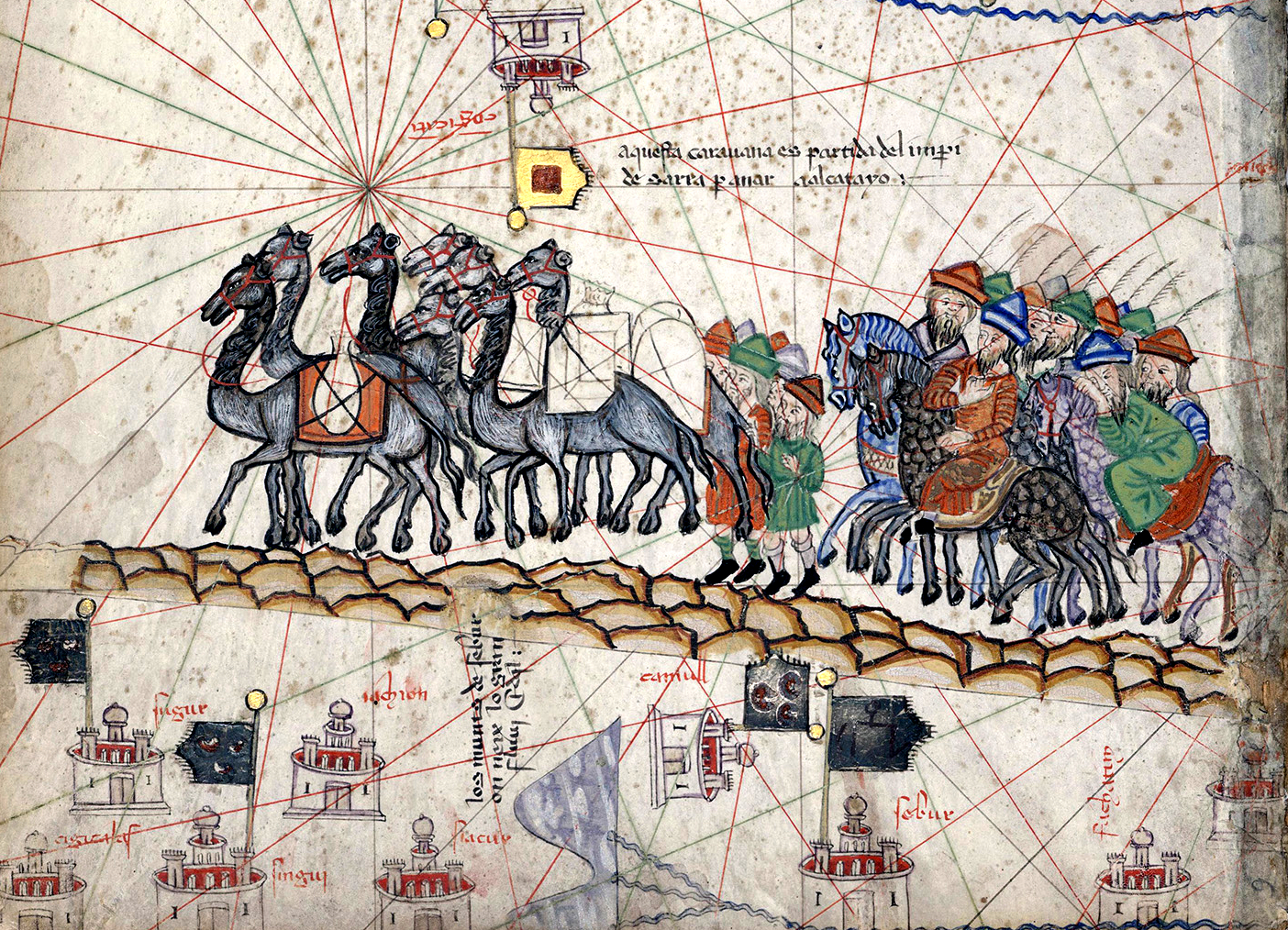
We all still have a lovely (albeit chronic) case of tsundoku (積ん読), but that will not stop us from anticipating the May 2026 publication of Nicola Di Cosmo's and Lorenzo Pubblici's new Venice and the Mongols: The Eurasian Exchange That Transformed the Medieval World. The Mongols were not simply a destructive force. As the authors note, "Mongolian support of European merchants allowed for the exchange of goods and ideas across their vast empire, and [we show] how cooperation with the khans enabled the Venetian city-state to trade safely, grow its influence, and expand its territory eastward while opening Europe to new markets." I khan't imagine a better way to kick off our summer reading.
Lidar fans, rise up! Recent analyses in Central America have shown researchers that ancient Maya communities made good use of local wetlands during times of strife. They built infrastructure like artificial canals and raised roads.
Early settlers constructed a large, elevated road system along the northern reaches of the complex, and further excavations uncovered evidence of an intricately structured agricultural system. This infrastructure allowed Maya farmers to harvest a diverse array of domesticated plants, from maize and guava to beans, squash, avocado, and figs.
The Multicultural Middle Ages podcast interviewed medievalist and historian of medicine Monica H. Green, along with Winston Black and Lucy Barnhouseto, to discuss the new open-access teaching module on the Black Death. They also address the application of new biological sciences for the study of historical pandemics and the use of "recently discovered—or newly interpreted—written records from the 13th and 14th centuries." And over at the American Medieval podcast, Matthew Gabriele discusses Cahokia with Sarah Baires, an archaeologist that specializes in the cities of Indigenous North America.
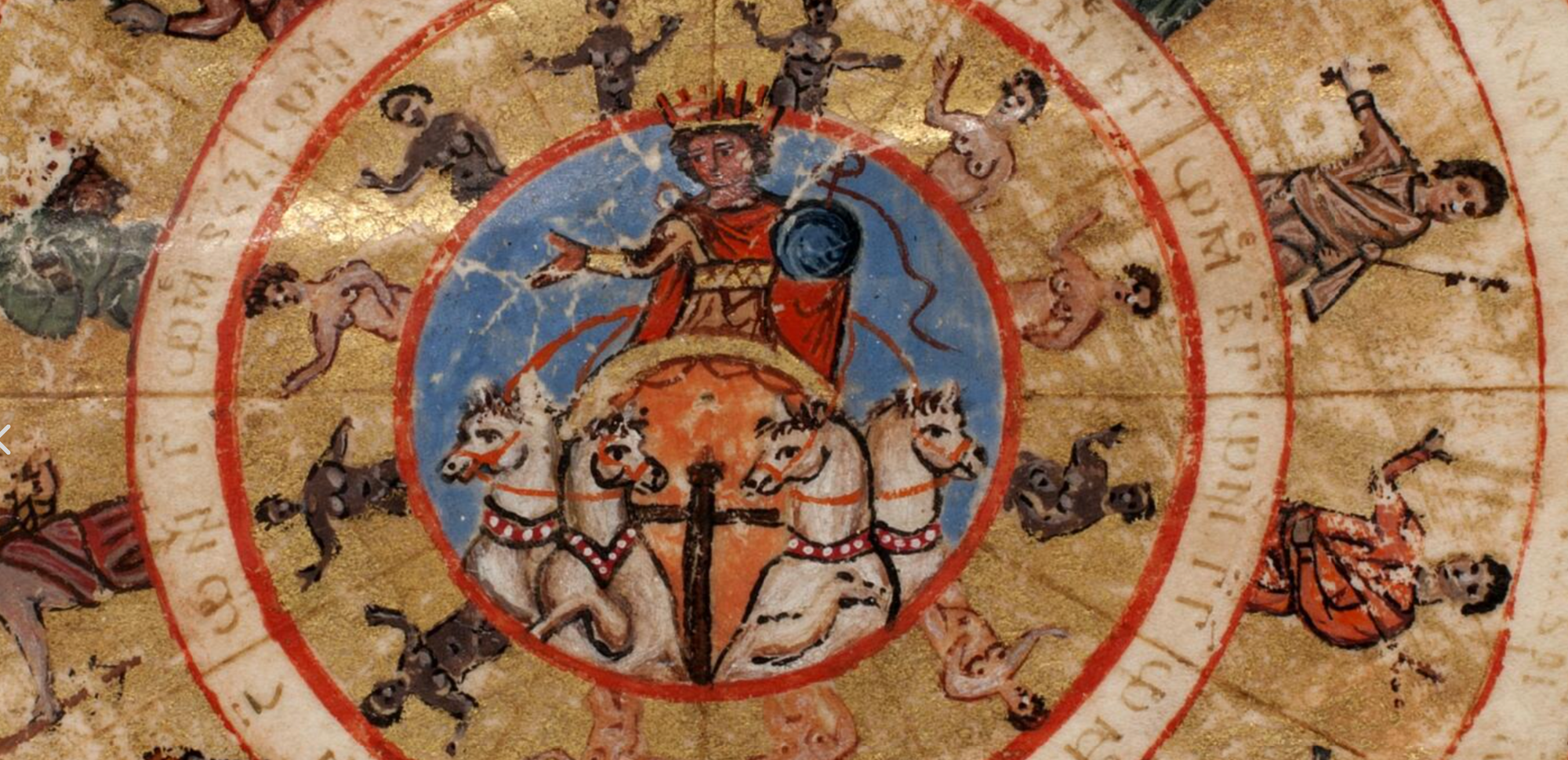
Ancient Mediterranean astrological practices? Sign me up! A new exhibit at the Neues Museum in Berlin features horoscopic artifacts ranging across time periods and geographies. The exhibit explores astrology's early roots in Babylon (ca. 410 BCE) and gets into some pretty sick ancient science.
It's a midterm year, so the ancient historians among us may be thinking about the history of democracy. An international team of researchers has published a study of democracy's global origins—it's not just ancient Greece and Rome, people! The team analyzed 40 cases of ancient societies across Europe, North America, and Asia, over the course of millennia. Says Gary Feinman, the MacArthur Curator of Mesoamerican and Central American Anthropology at the Field Museum’s Negaunee Integrative Research Center:
Our research shows that many societies around the world developed ways to limit the power of rulers and give ordinary people a voice.
We already know that there is some fantastic outreach going on in our field. And Dominic Machado is one of those reaching out! Over at Holy Cross' magazine, they have a great video looking at how "Students in Associate Professor of Classics Dominic Machado's community-based learning course worked with middle school students in the Marlborough School District to help bring the Latin language to life for the younger audience." Wicked awesome, y'all.
Two things I (Stephanie) love: dogs and antiquity. A team of paleogeneticists has recently discovered that humans had pups before they had farms! Because who doesn't need a canine companion when you're hunting and gathering? During the Paleolithic era, around 14,000 years ago, humans had begun caring for genetically similar dogs, even exchanging them among their communities. This article is awesome, not least because a scientist describes two dog genomes as canine "Rosetta Stones."

And finally? International Transgender Day of Visibility (TDOV) was on Tuesday, March 31, 2026. As NPR notes, "One of the first people known to change their gender was an ancient Egyptian pharaoh." The graphic article about Hatshepsut is drawn by artist Jackie Lay and is a great teaching resource. The research came from Kara Cooney's The Woman Who Would Be King: Hatshepsut's Rise to Power in Ancient Egypt and Elizabeth B. Wilson's "The Queen Who Would Be King," in Smithsonian Magazine. Academics writing for the public: it makes journalism and online content better for us all.
New Ancient World Journals by @yaleclassicslib.bsky.social
Acta Antiqua Academiae Scientiarum Hungaricae Vol. 65, No. S (2025) Supplementum Byzantinum
American Journal of Philology Vol. 147, No. 1 (2026) #openaccess NB Sara Forsdyke "State of Play: Ancient Democracy Today"
Anales de Historia Antigua, Medieval y Moderna Vol. 59 No. 2 (2025) #openaccess
Anzeiger für die Altertumswissenschaft Vol. 87, No. 3 (2025) #openaccess
Arion Vol. 33, No. 3 (2026)
The Classical Review Vol. 76 , No.1 (2026)
FuturoClassico No. 11 (2025) #openaccess
Hesperia Vol. 95, No. 1 (2026)
Historia Vol. 75, No. 2 (2026)
Japan Studies in Classical Antiquity Vol. 6 (2026) #openaccess
Journal of Late Antique, Islamic and Byzantine Studies Vol. 5, No. 1 (2026)
Kernos Vol. 38 (2025) #openaccess
Latomus Vol. 84, No. 3 (2025) Autour de l'épistolographie
OANNES Vol. 8, No. 1 (2026) #openaccess
Pallas No. 126 (2024) #openaccess Dans le sanctuaire de Pallas
Religion in the Roman Empire Vol. 12, No. 1 (2026) #openaccess Activating Rituals (II): Materiality, Performativity, and Communication with the Superhuman
TAPA Vol. 156, No. 1 (2026) #openaccess
History of Political Thought Vol. 47, No. 1 (2026)
Journal of Indian Philosophy and Religion Vol. 30 (2025)
Apocrypha Vol. 35, No. 1 (2024)
Early Christianity Vol. 16, No. 4 (2025) NB Teresa Morgan "Histories of Early Christianity/Christianities"
Journal of Ancient Judaism Vol. 17 No. 1 (2026)
The Journal of Religion Vol. 106, No. 1 (2026)
Revue Mabillon Vol. 36, No. 97 (2025)
Ancient Civilizations from Scythia to Siberia Vol. 31, No. 2 (2025)
Eurasian Studies Vol. 23 Nos. 1-2 (2025)
Near Eastern Archaeology Vol. 89, No. 1 (2026)
Zeitschrift für archäologische Aufklärung Vol.2, No. 2 (2026) #openaccess Maske
Zeitschrift für Orient-Archäologie Vol. 17 (2024) #openaccess Maîtres auxerrois du ixe siècle : Heiric et Remi d’Auxerre
Bulletin du centre d’études médiévales d’Auxerre Special Issue no. 17 (2026) #openaccess Maîtres auxerrois du ixe siècle : Heiric et Remi d’Auxerre
Cahiers de civilisation médiévale Vol. 69, No. 272 (2026)
Cahiers de l'Institut du Moyen-Âge Grec et Latin Vol. 94 (2025) #openaccess
Peregrinations: Journal of Medieval Art and Architecture Vol. 10. No. 1 (2026) #openaccess NB Lawrence Nees "Long-Distance Exchanges in the Art of the First Millenium"
Nottingham Medieval Studies Vol. 69, No. 1 (2025)
Journal of Skyscape Archaeology Vol. 11 No. 1 (2025)
Journal of Global Slavery Vol. 11, No. 1 (2026) NB Kostas Vlassopoulos "What Is Slave Agency?
Enslaved Persons and the Making of Ancient Societies"
International Journal of Humanities and Arts Computing Vol. 20, No. 1 (2026)
The Papers of the Bibliographical Society of America Vol. 120, No. 1 (2026)
Lectures, Workshops, and Exhibitions
The next installment of the University of Bristol's Institute of Greece, Rome and the Classical Tradition's ‘Oblique Classicisms/ Hidden Histories’ online lecture series will feature Emily Greenwood "‘Thrice Removed: Black Classical Separation" on April 8th, 5PM BST= 12PM EST.
In reception news, Mediterranean Antiquity in the Work of H. P. Lovecraft: A virtual conference convenes on April 10–11, 2026 at Miskatonic University and online. As they note, "[c]ontributions to this conference aim to elucidate the multifarious ways that Lovecraft manipulates the ancient Mediterranean in his criticism and fiction, and particularly, how he maneuvers ancient Greece, Rome, and/or other civilizations in support of his bigotry." Register here.
Rather selfishly, I (Sarah here!) want to remind everyone that the Association of Ancient Historians (AAH) meeting will be in Iowa City in two weeks. It is kicking off from April 16-18, 2026—and you can still register. We are focusing on the theme of a global antiquity and have some amazing keynotes and papers. We will also be celebrating Richard J.A. Talbert and the 25th anniversary (1 year late!) of the landmark publication of the Barrington Atlas of the Greek and Roman World. If you can't afford registration, don't worry. Please contact me directly at Sarah-Bond@uiowa.edu.