Pasts Imperfect (3.19.26)


This week, scholar of late antique Judaism and Angelologist Mika Ahuvia discusses the shared vocabulary of angels in antiquity. Then, ancient graffiti written in South Asian languages are discovered in Egypt's Valley of the Kings, Yvonne Chireau discusses the religious history in Sinners, putting a price on Egyptian Blue at Pompeii, a new history trail at the Grand Meadow Chert Quarry, damage to cultural heritage in Iran and Lebanon, a new book on Odysseus, modern parallels between King Croesus and Trump, a conference on Greek and Chinese philosophy, new ancient world journals, and much more. Let's get to it.
The Angels of the Nations by Mika Ahuvia
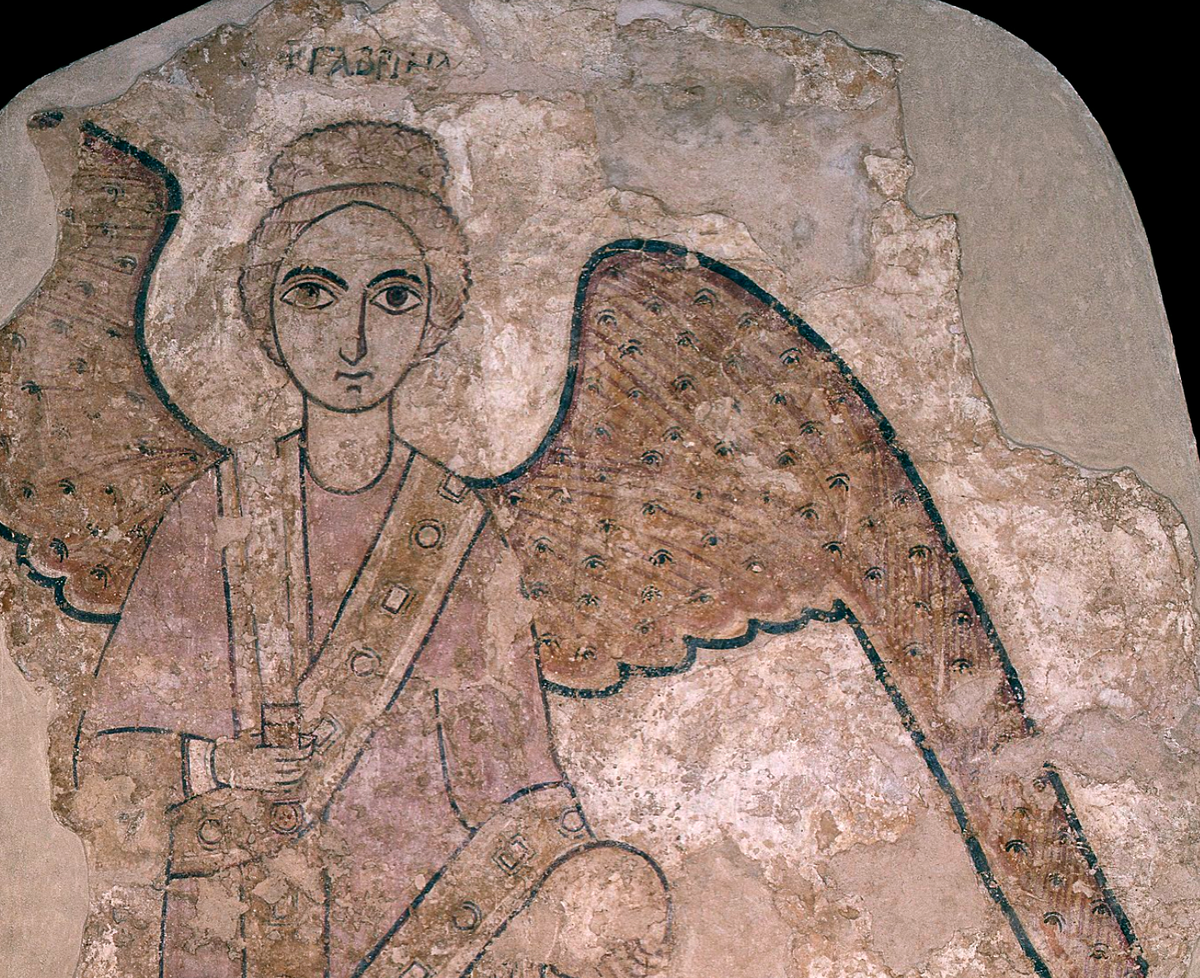
During a conflict in the middle east in the mid-second century BCE, the book of Daniel emerged. In it, the angel Gabriel tells the troubled visionary Daniel that he's heard his prayers and seen his affliction and he would have come sooner, but the “prince of Persia” — an angelic being — detained him in battle for twenty-one days, and that he could only depart when Michael, the angel representing the people of Israel, came to his aid (Dan 10:13). The book of Daniel introduces the angelic princes later known as archangels into Hebrew Scriptures while referencing an older idea from Deuteronomy (4:19).
The idea assigned the heavenly bodies to the worship of other nations, leaving Israel with God alone. From that productive tension, the angels of the nations emerge: each people with its heavenly prince, each prince arguing on their behalf before the throne. The Talmudic sages later named the Persian angel Dubiel — related to the word for bear, the animal that represented the Medio-Persian dynasty in biblical imagery, famously ravenous and rapacious in conquest — and narrated his dealings with Israel's angelic advocates (b. Yoma 77a).
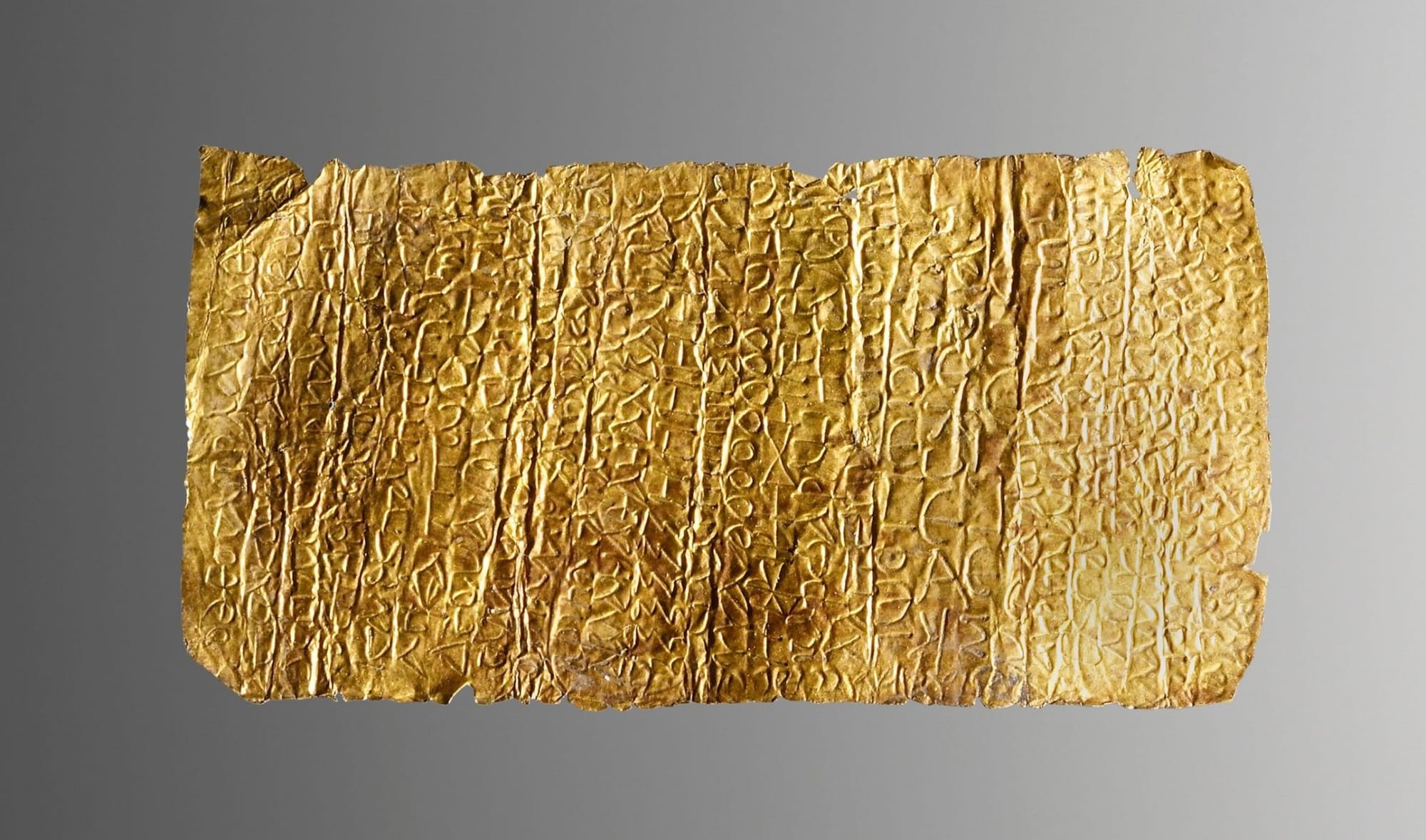
Angelic patrons were not a marginal belief in antiquity or limited to Jews. Guardian angels accompanied individuals from birth to death; angelic beings were assigned to protect cities in the late antique imagination. Julian the Apostate invoked angelic national guardians as a critique of Christian universalism, arguing that Moses himself attested to the practice in Deuteronomy. And with ritual-magical assistance, angels and archangels could be persuaded to assist all inhabitants of the ancient Mediterranean, regardless of their ethnic or religious identity.
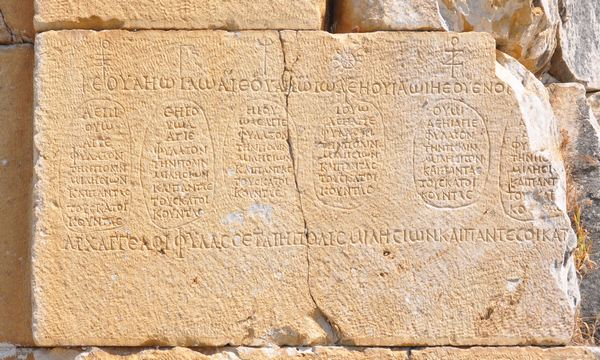
On the ancient theater wall at Miletus, someone carved an inscription invoking the seven archangels to protect the city and all its inhabitants. As Rangar Cline has shown, this inscription was not distinctively Christian, as scholars long assumed, but drew on a shared late antique magical tradition — charakteres, vowel sequences, and angelic names that appear on Jewish and polytheist amulets alike. The ovals of the inscription were designed to look like personal protective amulets, only scaled up for an entire city: a civic amulet, asking the archangels to guard Miletus from plague and danger.
Angels diffused through the ancient Mediterranean the way languages do: borrowed, adapted, translated, made local. Angels moved fluidly between Jewish, Christian, and polytheistic contexts, becoming part of a shared religious vocabulary that no single people owned. And yet, they were no less important in the religious imagination for being shared across communities.
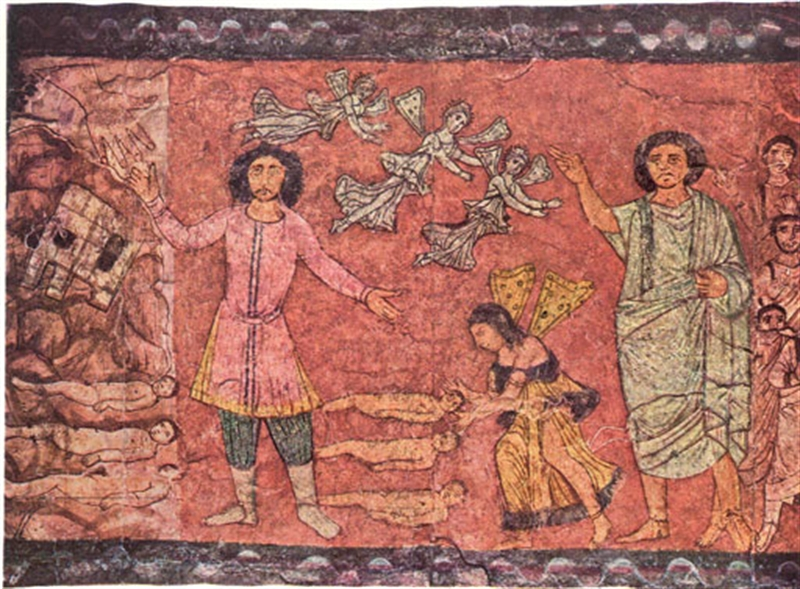
At the Dura-Europos synagogue in Syria, the largest painted panel depicts a trio of winged Psyche figures and one vividly active feminine figure, dazzling and animating the dead in a scene of resurrection from Ezekiel 37. Scholars with the biblical text in one hand and the trowel in the other had previously explained away these Psyche figures as mere personifications of wind mentioned in Ezekiel, but in a forthcoming article, I argue that Psyche functioned here as an angelic attendant at death, drawing on a visual vocabulary ancient viewers would have recognized: the mortal who descended to the underworld and later became divine, turning to assist others in their transition to the afterlife.
Our vocabulary for angels today is far more limited than it was in antiquity. The Hebrew mal'akh and the Greek aggelos both meant messenger, human or divine — their words shaped and changed reality; their impact revealed whether they were divine in origin. Within the Hebrew Bible, angelic beings appear as wind and fire, as Mischwesen — mixed beings — in the prophetic visions. Rabbinic literature synthesizes these diverse traditions, rendering angels as fluid, mutable presences.
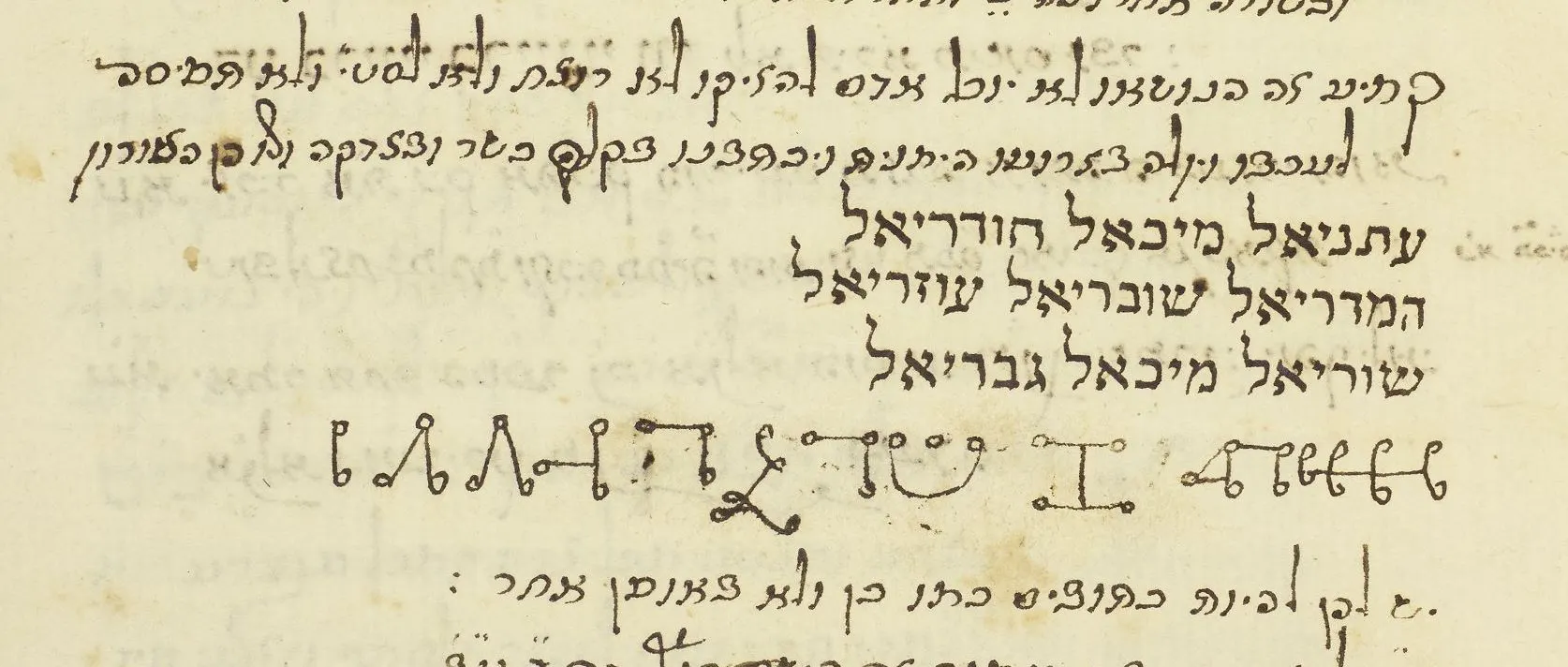
In Genesis Rabbah, the rabbis describe the fiery sword guarding Eden as fluid and in flux, taking shape as "sometimes men, sometimes women, sometimes spirits, sometimes angels." The liturgical poet Yannai, composing for synagogue congregations, described the angelic host similarly: God's beings who "become men, become women, become spirits, become demons, become every form." Indeed, this fluidity extended to gender. The angel Anael was described in a medieval Hebrew treatise as appearing in the likeness of a woman, holding a mirror and comb — an image drawn from late Roman depictions of the toilette Venus, which remained popular even as the Empire Christianized, likely because Venus remained associated with beauty, health, and fertility.
What I find most moving about ancient beliefs in angels is their insistence that the invisible world is populated, attentive and responsive to human suffering, whether from in-laws, from illness, or from war: a nation under siege has a prince fighting for it in the heavens; a city threatened by plague can be guarded by archangels whose names are carved into stone; the dead are not alone — winged beings, luminous and mutable, attend the soul at the moment of its passage. We have mostly lost this vocabulary and the framework to make sense of it. But in antiquity, it was a shared language of comfort, spoken by Jews, Christians, and their traditional polytheistic neighbors alike.
Mika Ahuvia is Associate Professor of Classical Judaism at the University of Washington and author of On My Right Michael, On My Left Gabriel: Angels in Ancient Jewish Culture (University of California Press, 2021).
Public Humanities and a Global Antiquity
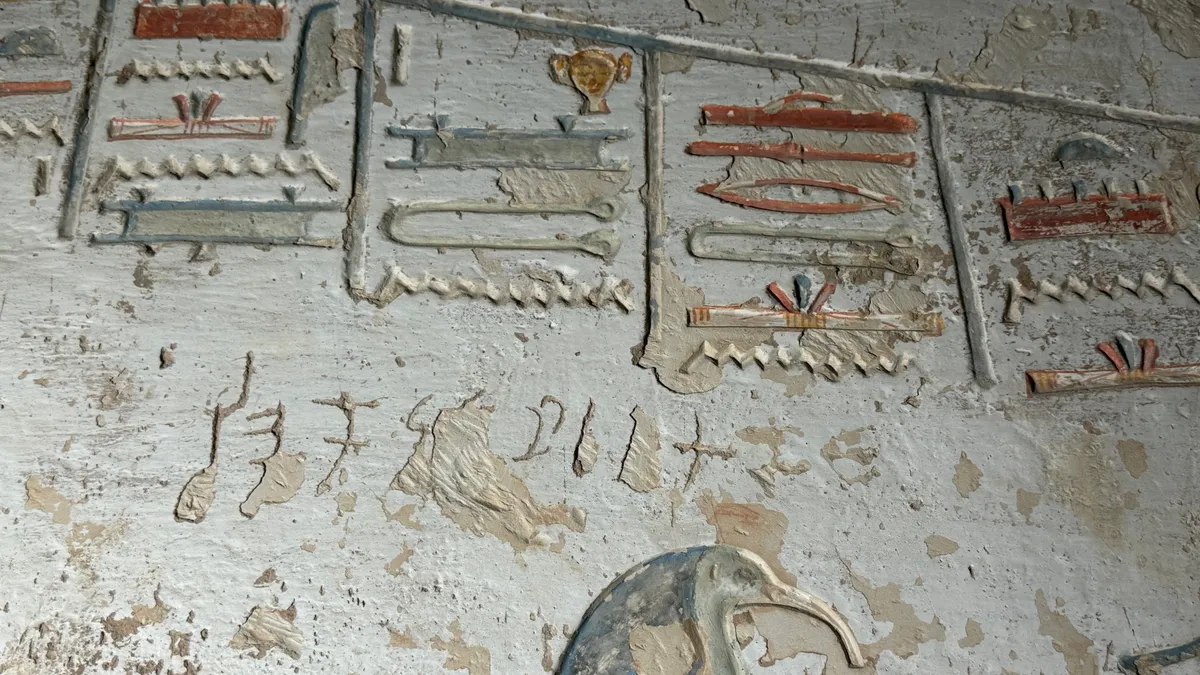
Can graffiti help us to recover a more global antiquity? Over at LiveScience, reporter Owen Jarus discusses the discovery of Old Tamil (a language from India) and other graffiti in South Asian scripts found in Egypt's Valley of the Kings. The roughly 30 inscriptions were etched in three Indian languages within six different tombs. They date to between 1 and 300 CE.
One of the Sanskrit texts was written by a man named Indranandin, who claimed that he was a "messenger of King Kshaharata." In an email to Live Science, Strauch noted that the Kshaharata dynasty ruled part of India during the first century A.D. and it's not clear which specific King Kshaharata the messenger served. Since Egypt was ruled by the Roman Empire, Indranandin may have traveled through the Valley of the Kings on his way to Rome.
It was a big day for Black horror at the Academy Awards on Sunday. Ryan Coogler's Sinners (2025) won four Oscars. In an interview at Religion Dispatches, Megan Goodwin spoke to Yvonne Chireau, Peggy Chan Professor Emerita of Black Studies, about her work as an advisor on religious issues and history in the film. Chireau discusses her work and thoughts on the movie, but also provides a reason for more academics to get involved with popular media:
Well, my thinking was that this kind of work makes an argument for what we do. I’m a religionist; you’re a religionist. When movies and TV take religion seriously, it helps the audience get curious about religion. It helps them see that religion matters, and that they maybe want to learn more about it. So in a way, this movie is making an argument for the study of religion.
In this "Behind the Scenes" interview, "Professor Yvonne Chireau explores the backdrop of Hoodoo in the deep south and how its beliefs and traditions in spirituality, ancestors, the hereafter, and defense against evil inform the world and characters of Sinners."
There is a new article penned by Mishael Quraishi et al. focused on pricing out the Egyptian Blue needed to paint the "Blue Room" at Pompeii (93-168 denarii). Then, researchers are investigating how to make Bronze Age textiles using a reconstruction of a warp-weighted loom from the second millennium BCE site of Cabezo Redondo in Spain. According to the New York Times, archaeologists excavating near Hejia Village in China found what appears to be a fortified gate that once led to the capital of the Western Zhou dynasty. And in Minnesota, the Grand Meadow Chert Quarry will soon open up a new trail that will focus on the history of the indigenous Dakota, Ioway and Ho-Chunk tribal nations who quarried flint for tools in the area around 700 years ago.
The war in Iran rages on and the Israeli air strikes have caused massive casualties as well as cultural heritage damage. In the New York Times, Farnaz Fassihi reports on the monuments damaged so far and the thoughts of local Iranians:
"For me, ancient monuments are as important as human lives, because they connect me to my past," Mojtaba Najafi, a prominent Iranian scholar and researcher, said in one post. "And their destruction means my memory is being demolished."
Israeli strikes on Lebanon are also causing incalculable damage. Last Friday, a missile strike hit the ancient city of Tyre and damaged it, while also killing at least one civilian.


"Faranak Amidi presents global stories from the fifth floor of Broadcasting House, home to the BBC’s Language Services." This episode focuses on the Iran war.
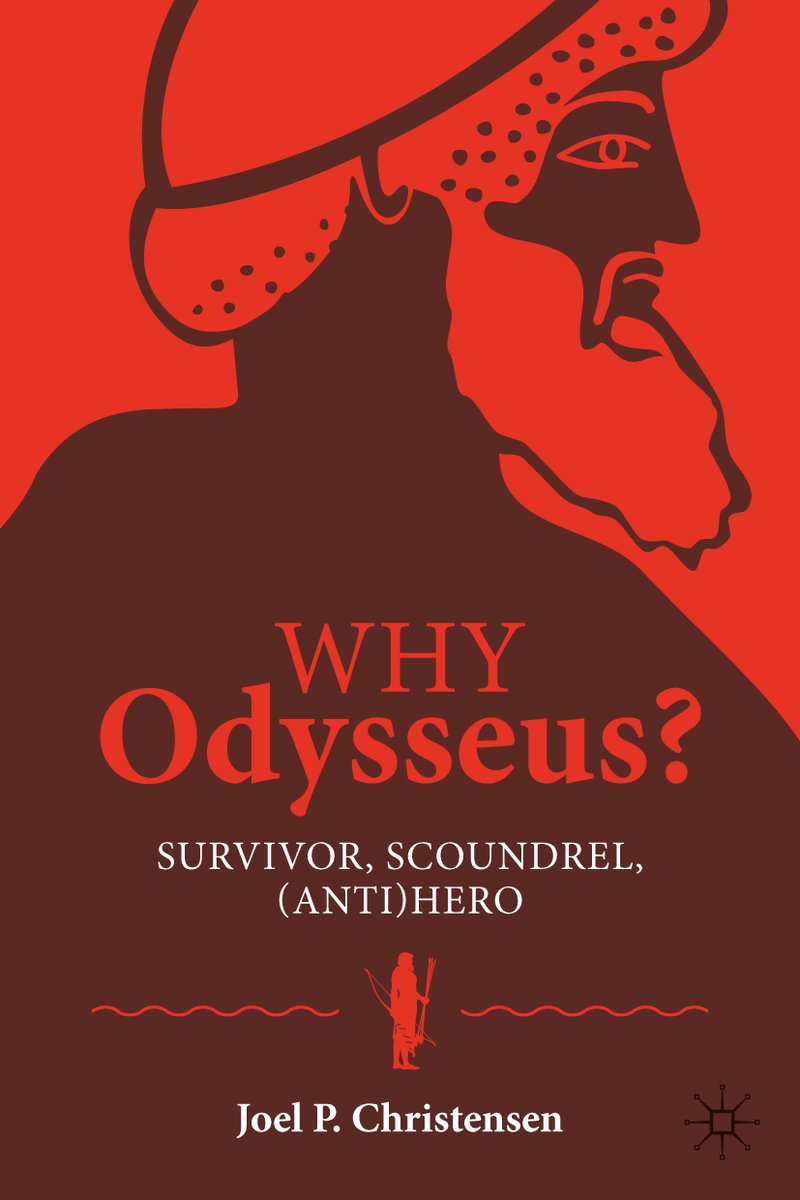
Let's talk new books. Our very own Joel Christensen has a new book, Why Odysseus? Survivor, Scoundrel, (Anti)Hero, coming out on the many faces of the (anti)hero Odysseus. You can preorder it now, just in time to yell at the screen during Christopher Nolan's Odyssey. We do love a good reception history. And in terms of open access? I (Sarah here!) am currently obsessed with the new, open access volume, Beacons and Military Communication from Antiquity to the Early Modern Period. As they note, "It is the first archaeological study to trace how military signalling systems shaped landscapes and societies from antiquity to the early modern period. Spanning ancient Greece, Viking Age Scandinavia, and medieval North Africa." 🔥🔥🔥
And finally? We just wanted to point out that Jeopardy host Ken Jennings referenced King Croesus (and by extension, Herodotus) when discussing Trump's ill-conceived war plans.
They’re telling me a great empire will be destroyed if I attack Persia. Even the oracles who don’t like me very much, very nasty, they all said to me, “Sir, it’s one of the great empires, and it’ll be destroyed. And all because you attacked Persia.” That’s what they’re telling me.
— Ken Jennings (@kenjennings.bsky.social) 2026-03-17T02:16:27.084Z
Ken Jennings shouts out Croesus and his misinterpretation of the Oracle at Delphi.
New Ancient World Journals by @yaleclassicslib.bsky.social
AI & Antiquity Vol. 2, No. 1 (2026) #openaccess
American Journal of Archaeology Vol. 130, No. 2 (2026)
Archiv für Papyrusforschung und verwandte Gebiete Vol. 71, No. 2 (2025)
Digital Classics Online Vol. 12 No. 1 (2026) #openaccess
Hermes Vol. 154, No. 1 (2026)
Journal of Ancient History and Archaeology Vol. 12 No. 4 (2025) #openaccess
Greece & Rome Vol. 73 , No. 1 (2026)
Helios Vol. 52, No. 1 (2025)
Lucius Annaeus Seneca Vol. 5 (2025) #openaccess
Pallas No. 124 (2024) #openaccess La loi des séries
Revue de philologie, de littérature et d'histoire anciennes Vol. 98, No. 2 (2024)
Veleia No. 43 (2026) #openaccess La amicitia femenina: utilidad, simpatía y empatía
Apeiron Vol. 59, No. 1 (2026)
Arabic Sciences and Philosophy Vol. 36, No. 1 (2026)
Archiv für Geschichte der Philosophie Vol. 108, No. 1 (2026) #openaccess NB Emily Nancy Kress "Concocting Teleology in Aristotle’s Meteorology 4 and Generation of Animals"
Islamic Intellectual Traditions Vol. 1, No. 1 (2026) #openaccess
Micrologus: Nature, Sciences and Medieval Societies Vol. 34 (2026) Marginal Intelligences. Glossae as Places of Creativity and Differences (4th-16th c.)
Revue de métaphysique et de morale Vol. 125, No. 4 (2025) Notions communes : usages anciens et modernes
Rhetoric & Science Vol. 2 (2022-2025) #openaccess
After Constantine No. 6 (2026) #openaccess
Early Science and Medicine Vol. 31, No. 1 (2026)
Gnosis Vol. 11, No. 1 (2026)
Novum Testamentum Vol. 68, No. 2 (2026) NB L.L. Welborn “Our Outer Person Is Wasting Away”
Paul, Cicero, and Seneca on Old Age and Death"
Revue de l'histoire des religions Vol. 243, No. 1 (2026)
Revue de Qumran Vol. 37, No. 2 (2025)
Vigiliae Christianae Vol. 80, No. 2 (2026) NB Konrad Boeschenstein & Giorgia Bove "Sophia as Onoma Theou: an Onomastic Case Study on the Intersection of Christianity, Politics, and Intellectual Culture."
Vox Patrum Vol. 97 (2026) #openaccess Daily Life in Byzantium
Zeitschrift für Antikes Christentum Vol. 29, No. 3 (2026) Tiere in der christlichen Spätantike
Anatolica Vol. 51 (2025)
Erudition and the Republic of Letters Vol. 10, No. 4 (2025) Byzantine History and the Antiquarian: Frames, Methods, and Questions on Material Culture and Byzantine Antiquarianism, c. 1400–1750
Arheologia No. 1 (2026) #openaccess
Internet Archaeology, No. 72 (2026) #openaccess Life after Life of Archaeological Archives – Accessibility and Re-use of Archaeological Collections in Heritage Management. EAC symposium proceedings
Journal of African Archaeology Vol. 23, No. 2 (2025)
Revue archéologique de l’Est Vol. 74 (2025) #openaccess 70 ans d’activité éditoriale
Lectures, Workshops, and Exhibitions
As part of the 2026 Cambridge Festival, Tatiana Barkovskiy, will ask (online) "Did women do philosophy in the Middle Ages?" on Tuesday, March 23rd, at 6:00pm GMT = 1pm EST. Cheers to women's history month.
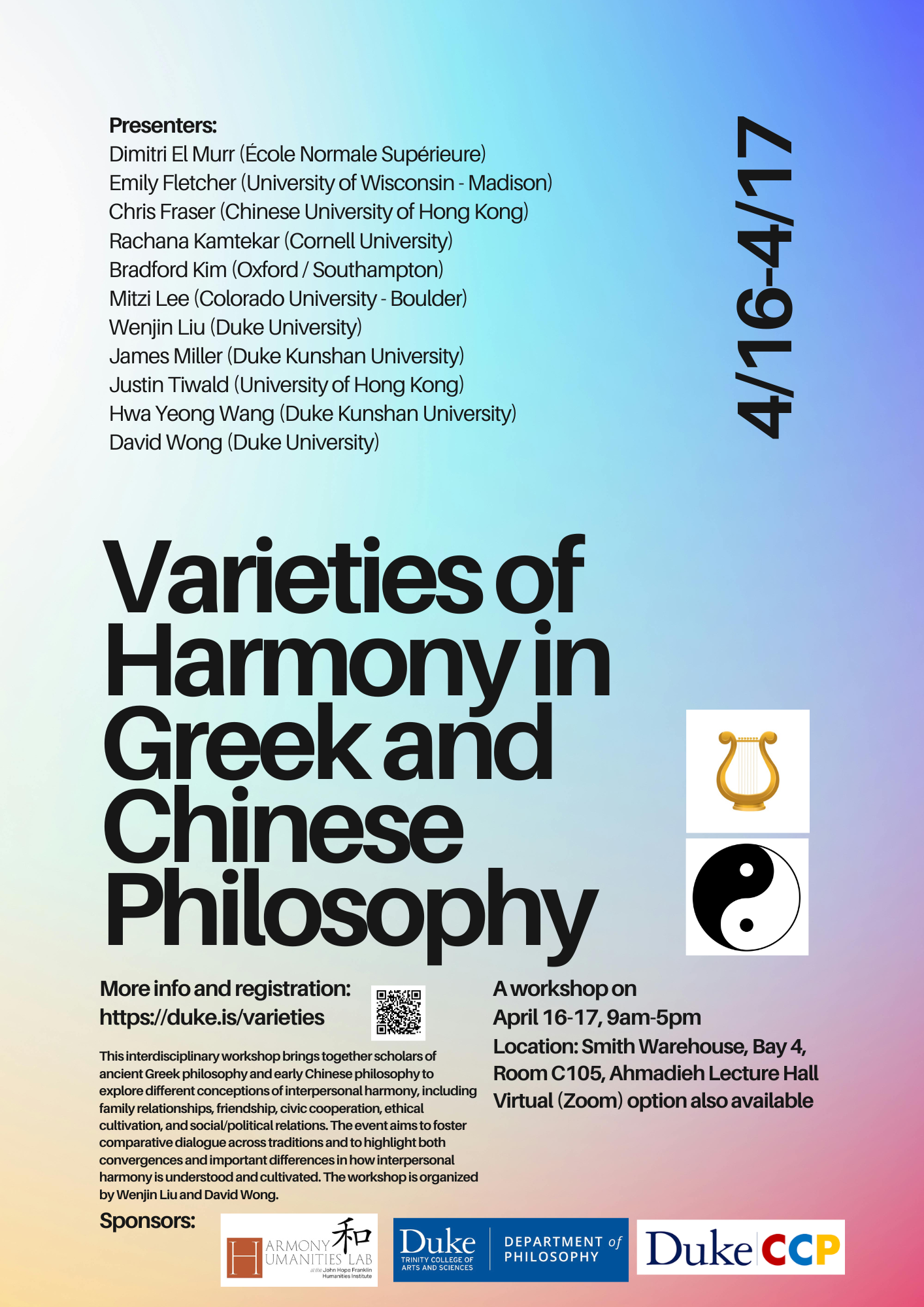
The workshop, "Varieties of Harmony in Greek and Chinese Philosophy," will take place at Duke University on April 16-17, 2026, with sessions running 9:00 AM-5:00 PM each day. They note that "It is an interdisciplinary workshop that brings together scholars of ancient Greek philosophy and early Chinese philosophy to explore different conceptions of interpersonal harmony, including family relationships, friendship, civic cooperation, ethical cultivation, and social/political relations." Click here to register for in-person attendance at the conference. To register for attendance virtually via Zoom, click here.
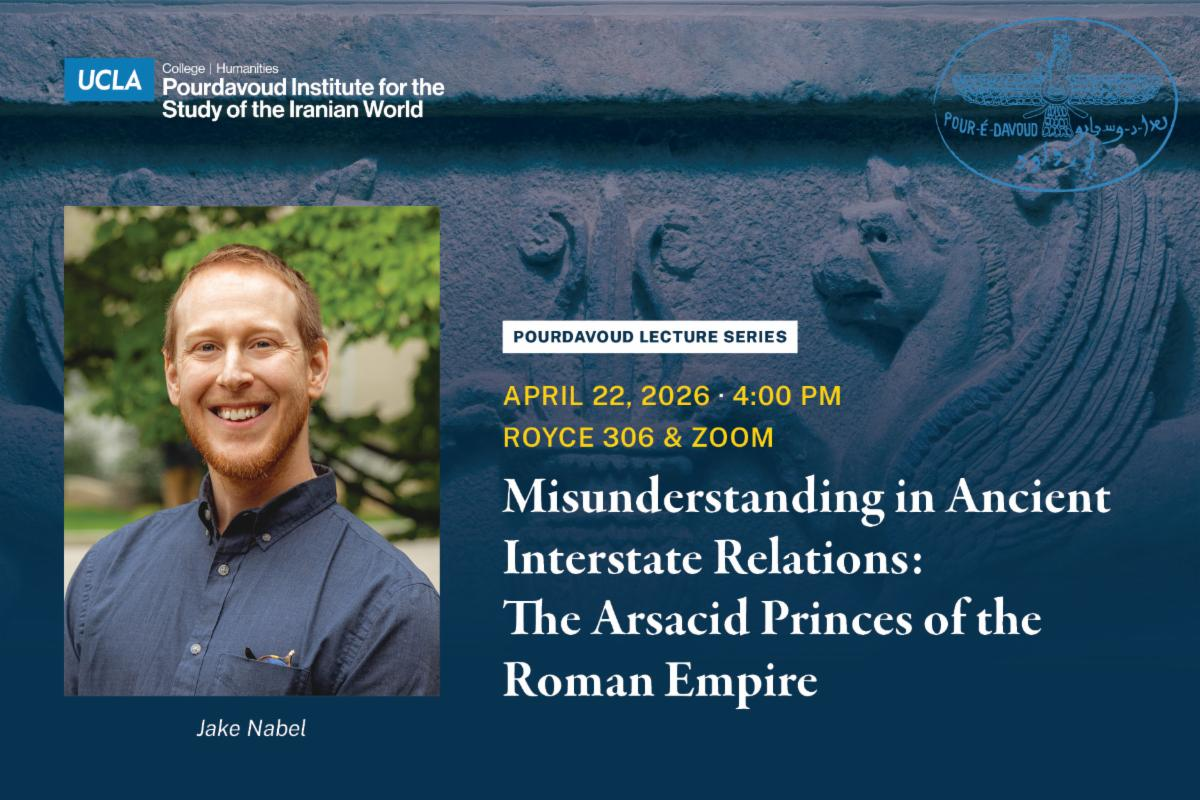
On Wednesday, April 22, 2026 at 4:00 pm Pacific Time, Jake Nabel will discuss "Misunderstanding in Ancient Interstate Relations: The Arsacid Princes of the Roman Empire" for the Pourdavoud Institute for the Study of the Iranian World in Royce Hall 306 and Via Zoom. Register here. Zoom link.
Thanks for reading! See you in April. Eid Mubarak to all celebrating Eid al-Fitr.