Pasts Imperfect (1.22.26)


This week, intellectual historian and classicist Inger N.I. Kuin discusses her new book on Diogenes and ruminates on the controversy in Texas surrounding teaching Plato. Then, a new edited, open access volume on the Material Dimensions of Ancient Philosophy and another on the joy of Chinese philosophy, a novel study looks at the protected flora and fauna found at ancient archaeological sites, a new textile exhibition at the Art Institute considers loss and absence, the RaceB4Race Symposium returns, and lots more in this philosophy focused issue of PI. Andiamo!
The Stakes of Doing Ancient Philosophy by Inger N.I. Kuin
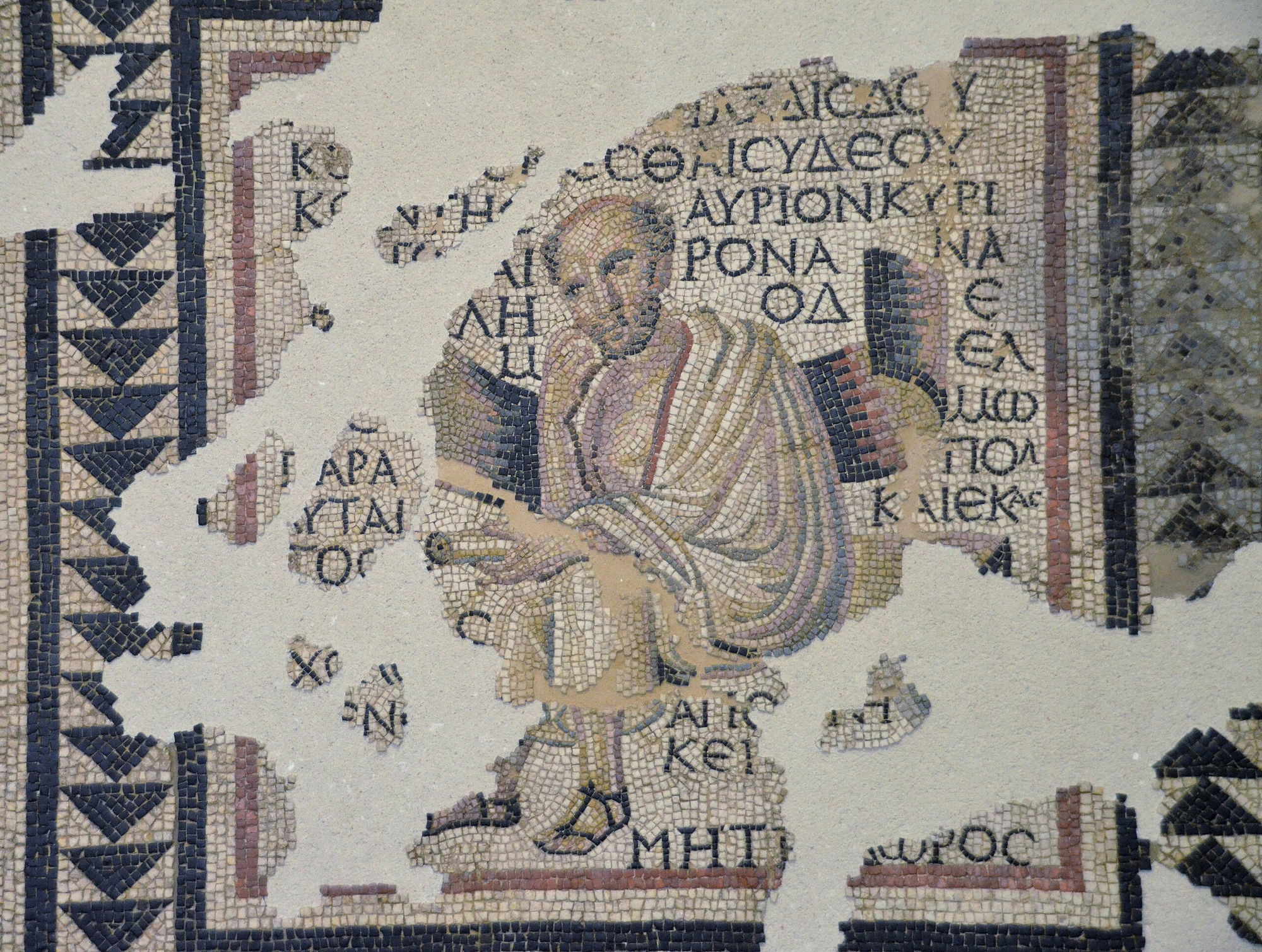
In the early 360s BCE, Diogenes was still finding his way in the big city. He had met one man, though, who seemed to him different from everyone else and made him feel like coming to Athens had been the right choice. His name was Antisthenes. He lived a sober life and was known to be a wise philosopher, but refused to take any students. When Diogenes started following him around anyway, Antisthenes threatened to hit him with his walking staff. The would-be student’s response was:
“Hit me. As long as I think you have something to say you will not find a staff hard enough to keep me away from you.”
In spite of its clear problematic undertones, I have always found this exchange between Diogenes and his philosophical model Antisthenes profoundly moving. What speaks to me in Diogenes’ answer is that for him, philosophy is a high-stakes game. In Antisthenes he has found someone who, he thinks, can help him figure out what a better, more just, and more truthful way of life might look like. And for Diogenes, this knowledge is worth it – worth fighting off a beating.
My first encounter with philosophy was reading Diogenes’ contemporary, Plato, in my Dutch high school in the 1990s. Even though we would only make it through snippets of the dialogues in ancient Greek, our teacher intently conveyed to us the significance of what they contained. The dangerous allure of Callicles’ flawed argument that might makes right in Gorgias. Socrates’ courage in the face of an unjust, disingenuous prosecution in Apology. My teacher had been born under German occupation during the last years of World War II and lived through the tensions of the Cold War. His vehemence about philosophy as an essential safeguard against abuses of power made sense, and, even though at times the issue felt comfortably abstract to me, I was affected. I majored in philosophy in college.
Earlier this month, the value of reading and teaching Plato made headlines in the US. A philosophy professor at Texas A&M University was told by his department chair to remove Plato readings pertaining to race and gender from his syllabus or have his course on contemporary moral issues cancelled. The demand came after the university system moved to ban courses that “advocate race or gender ideology” in the fall. The professor chose to save his course: he agreed to alter his syllabus, and replaced the Plato readings with “lectures on free speech and academic freedom.”
The case immediately received massive attention, at least in part because of the apparent incongruity: don’t many conservatives critiquing “race and gender ideology” in education want universities to devote more attention to the classics? Indeed, Texas A&M University hastened to say in a statement that it would “teach numerous dialogues by Plato in a variety of courses this semester and will continue to do so in the future.” So perhaps the issue is not so much whether or not to teach Plato, but rather which Plato, and how.
While doing research for my book about Diogenes over the past few years, I have had much opportunity to think about his relation to Plato: their differences and their similarities. Measured against the accepted norms of their time, Diogenes was the more radical thinker by far. He thought slavery was an absurd, unnatural institution, for instance, while in Plato we only find arguments for treating the enslaved well. And it was actually Plato who nicknamed Diogenes “the Dog” – probably in response to the latter’s harsh manners and his insistence that we don’t need to cover up our bodily functions in shame. Diogenes, of course, appropriated the taunt as a badge of honor.
Conversely, Diogenes and Plato shared reservations about the traditional institution of marriage (the readings that were rejected at Texas A&M were from accounts of same-sex erotic desire in Symposium), and they both followed in the footsteps of Socrates, being equally convinced that asking philosophical questions in pursuit of truth and wisdom is essential to living a good life.
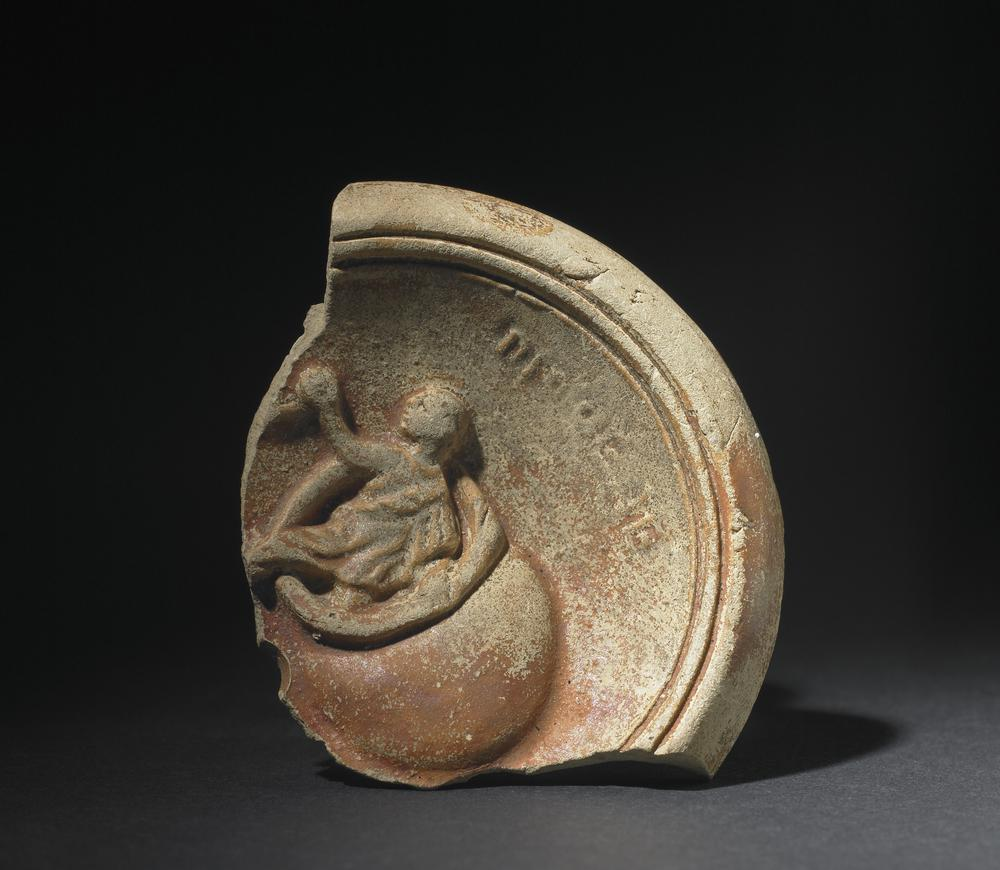
The most famous moment from Diogenes’ life is his meeting with Alexander III of Macedon in 336 BCE. I will leave the question of the historicity of the event to the side here (I argue in my book that they did actually meet), and focus instead on its meaning. Alexander was in Corinth to seek the support of the so-called Corinthian League for his campaign against Persia, and insisted that he be brought to Diogenes, who had moved there. The king had to go to the outskirts of town, to a wooded area known as the Kraneion, where the philosopher was living in a large clay pot laid on its side to make an improvised shelter. Once Alexander at last stood face-to-face with the philosopher, he asked Diogenes what he could do for him. Diogenes answered:
“Just step aside, out of my sun.”
This fearless and irreverent response to the most powerful man in the world as it was known to him encapsulates everything that Diogenes stood for: total independence, courage in the face of power, and joyful contentment with what nature bestows freely on us humans. Diogenes understood that he had to refuse Alexander’s offer so as not to become beholden to him. He trained himself to be immune to desires for wealth, status, or power in order to be free to speak his mind.
Diogenes had come to Athens after being forced out of his native Sinope on the Black Sea coast, today in Turkey. In Athens and later Corinth, he chose to remain an outsider and used this vantage point to criticize every aspect of the status quo. Other ancient philosophers tried to influence society from the inside, and by and large took up more conciliatory, even conservative, positions – though some of these ideas can still sound plenty crazy by twenty-first century standards. My point is painfully obvious, but seems worth making in light of the flurry of responses from the last few weeks: ancient philosophy is as diverse and complicated as can be. Irrelevant it is not, and therefore, as Diogenes already knew, it is very much worth the fight.
Inger Kuin joins Johanna Hanink in the λέσχη to discuss her new book Diogenes: The Rebellious Life and Revolutionary Philosophy of the Original Cynic (Basic Books 2025)
Public Humanities and a Global Antiquity
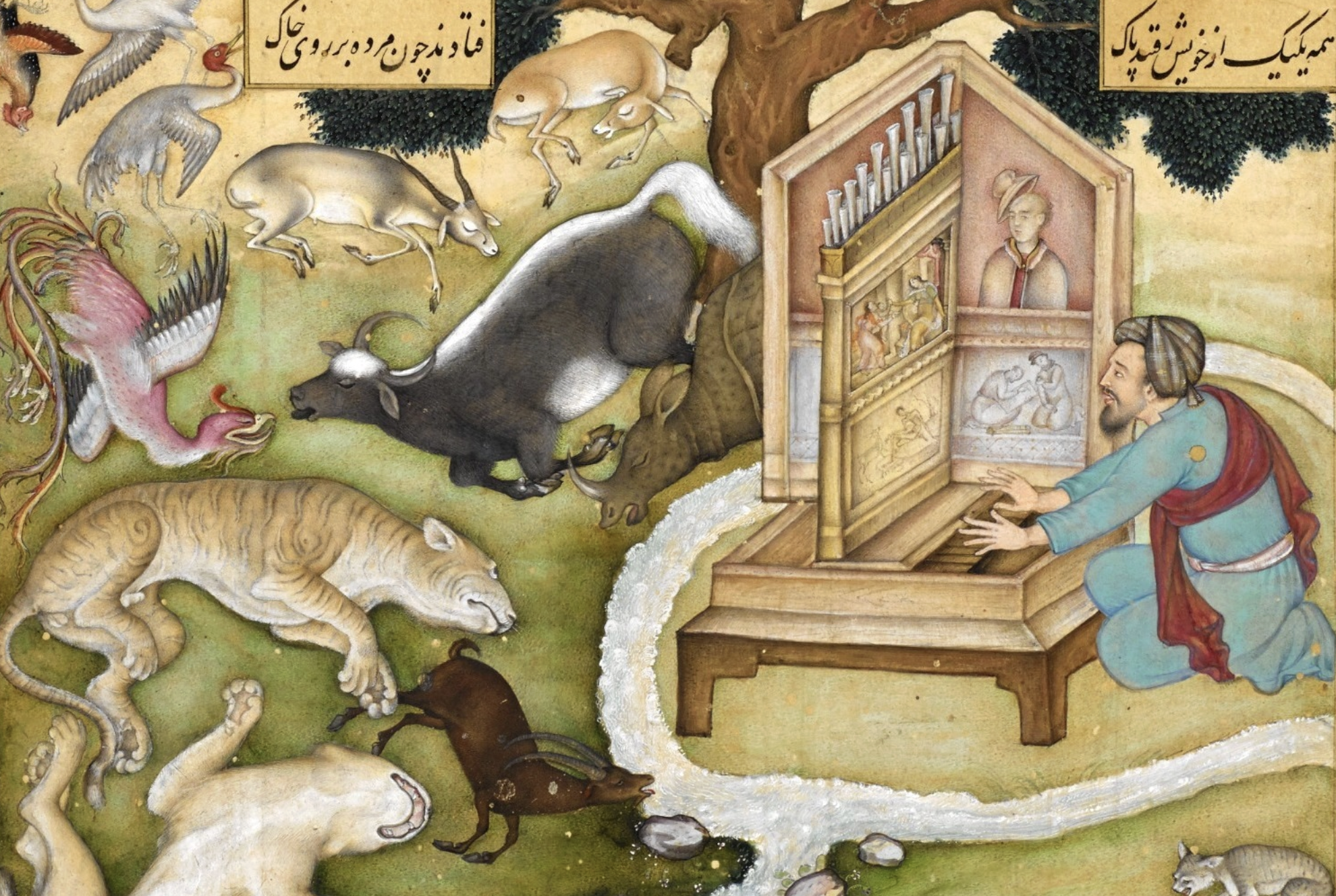
Angie Hobbs, Professor of the Public Understanding of Philosophy Emerita at the University of Sheffield, has recently made a powerful case for the continued relevance of Diogenes's older and somewhat better known contemporary in her Why Plato Matters Now, out from Bloomsbury this past fall. She recently discussed the book with Jon Hawkins and Peter West for The Philosopher and went on the New Books Network to discuss it with Morteza Hajizadeh.
The open access collection of papers, Materia Philosophiae. Material Dimensions of Ancient Philosophy, edited by William Wians and Robert Hahn, examines the relatively neglected material underpinnings of ancient philosophy. Contributions consider how technological developments may have influenced philosophical thought, the use of material artifacts as examples, and the impact of writing mediums, among other topics.
It's not only ancient Greek philosophers who continue to matter. Regius Professor of Logic at Aberdeen Michael Beaney's open access monograph The Joy of Chinese Philosophy (De Gruyter), brings out the analytic riches of ancient Chinese philosophy through close readings of the "Happy Fish Dialogue" of the the Zhuangzi. This text also takes center-stage in a recent episode of the History of Philosophy Without Any Gaps podcast: "Like a Fish Out of Water: Animal Stories in the Zhuangzi." (And podcast host, Peter Adamson, has also recently offered ten helpful rules for writing on the history of philosophy.)

The value of a cross-cultural approach to ancient philosophical traditions will be evident in the collection Ancient Greek and Indian Buddhist Philosophers on Reality and Selfhood, edited by Ugo Zilioli and Jan Westerhoff, out next month from Bloomsbury. Historical connections between the traditions are possible, if not established, but even in the absence of documented influences, the contributions in this volume illustrate the value of placing these traditions in conversation. They also make clear that early rational reflection on the nature of the self and reality was not the sole preserve of the Greeks.
Of course it is not only ancient philosophy that is (again) facing a challenge of relevancy. Disciplines in the humanities that require a great deal of technical knowledge, linguistic and otherwise, face particular difficulties in making the case that they matter. On the Byzantium and Friends podcast, a Sumerologist, Jana Matuszak, and a Hittologist, Petra Goedegebuur discuss the "The survival of esoteric academic fields" with Byzantinist Anthony Kaldellis. The discussion provides a wonderful overview of the fields in their institutional contexts and the challenges they face in continuing their scholarly traditions.
Turning to material culture, a new study underscores that archaeological sites have their own specialized ecosystems. Over at the BBC, they speak to Alejandra (Ale) Arana about their new study of "Wildlife in the Ruins." As they note, "There is strong evidence that archaeological sites served as an alternative protective network for biodiversity." From the geckos chilling in pre-Inca pyramid sites to the orchids flowers around an Etruscan necropolis to Delphi's new species of snail, archaeological sites protect more than cultural heritage within their bounds.

A recent study of ancient feline DNA led by Shu-Jin Luo and published #openaccess in Cell Genomics indicates that the domestic cat (Felis catus) was a relatively late arrival to China--likely introduced from the Levant through the Silk Road about 1400 years ago. Earlier felid finds at archaeological sites are actually remains of leopard cats (Prionailurus bengalensis) who lived in close proximity to human inhabitants

Over in the London Review of Books, Roman historian (and Roxy Music expert) Michael Kulikowski has a thorough review of Andrew Dyck's new tome, Cicero: the man and his works (Cambridge: Cambridge University Press, 2025).
The barbarity of Antony’s vengeance – the hand that wrote and the tongue that pronounced the Philippics were nailed to the rostra in the Roman Forum – did less to guarantee Cicero’s immortality than his extraordinary writings, which are here given their due. The roll call of eminent Ciceronians is longer even than the book with which Dyck has cemented his place in it.
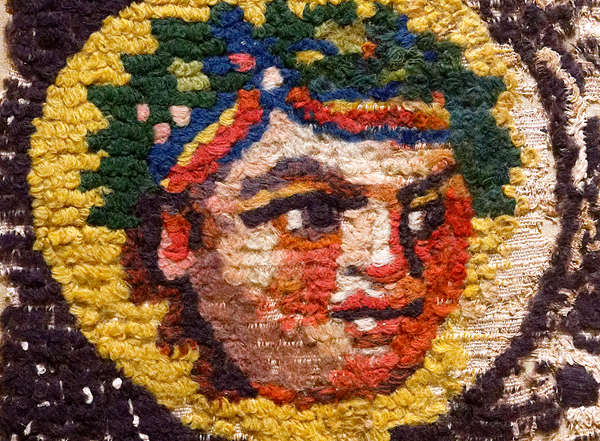
Y'all, your Chicagoan/weaver/textile aficionado PI editor is proud to finally say that she has visited the Art Institute's fantastic exhibit On Loss and Absence: Textiles of Mourning and Survival. Just wow: so much to explore from the AIC's textile collection, with both premodern and reception objects from around the world. Material culture nerds will have a field day—visit before it closes on March 15, 2026!
On Loss and Absence: Textiles of Mourning and Survival, edited by Isaac Facio, Nneka Kai, L Vinebaum and Anne Wilson (Yale Press, November 2025).
New Ancient World Journals by @yaleclassicslib.bsky.social
Bulletin de correspondance hellénique Vol. 147, No. 1 ; No. 2 (2023) #openaccess
Carnuntum Jahrbuch 2024 #openaccess
ChironVol. 55 (2025)
Ciceroniana On Line Vol. 9 No. 1 (2025) #openaccess Lecturae Ciceronis II:. The Letters Ad Brutum between politics, rhetoric, and philosophy
Classical Philology Vol. 121, No. 1 (2026)
Clotho Vol. 7 No. 2 (2025) #openaccess
Dialogues d'histoire ancienne Vol. 51, No. 2 (2025) . Territoires civiques de Sicile orientale. Sources écrites et numismatiques
Gallia Vol. 82 (2025) #openaccess Topographie urbaine en Gaule durant l’Antiquité tardive : des chefs-lieux de cité multipolaire
Göttinger Forum für Altertumswissenschaft Vol. 28 No. 1 (2025) #openaccess Strassen- und Siedlungssysteme in der Antike
Journal of Mediterranean Archaeology Vol. 38 No. 1 (2025)
Illinois Classical Studies Vol. 50, No. 2 (2025)
Lucentum No. 45 (2026)
Millennium Vol. 22 (2025)
Nova Tellus Vol. 44 No. 1 (2026) #openaccess NB "Cosmic Fire: Heraclitus and Universal Conflagration"
Peuce N.S. Vol. 23 (2025) #openaccess
Phoenix Vol. 9, No.2 (2025) Greek and Roman Mime
Revue archéologique Vol. 79, No. 2 (2025)
RursuSpicae Vol. 6 (2025) #openaccess La langue des oiseaux Des sons à la parole, Antiquité, Moyen Âge
Talia Dixit Vol. 20 (2025) #openaccess
Teiresias Journal Online Vol. 4 No. 2 (2025) #openaccess
Tyche Vol. 39 #openaccess
Augustinian Studies Vol. 56, No. 2 (2025) NB Catherine Conybeare "Was Augustine Black?"
Noctua Vol. 12, No. 4 (2025) #openaccess
Polis Vol. 43, No. 1 (2026) Ancient Philosophy of Law
Rhizomata Vol. 13, No. 2 (2025) NB C. D. C. Reeve "Philosophy in the Seventh Letter"
Acta Asiatica Varsoviensia Vol. 38 (2025) #openaccess
Avar Vol. 4, No. 2 (2025) #openaccess
Bibliotheca Orientalis Vol. 81, Nos. 5-6 (2024)
Revue d'Égyptologie Vol. 74 (2024)
Archiv für Religionsgeschichte Vol. 27 (2025) The Religion of Little Things
Bulletin for Biblical Research Vol. 35, No. 2 (2025)
History of Religions Vol. 65, No. 2 (2025) Religious Ambivalences
Method & Theory in the Study of Religion Vol. 38, No. 1 (2026) NB Philip A. Harland "Putting the Persian Back in “Magic”: Problems with Ignoring Ancient Ethnographic Discourses"
Novum Testamentum Vol.68, No. 1 (2026)
Preternature Vol. 15, No.1 (2026) The Liminality of Water and Aqueous Realms
Vigiliae Christianae Vol. 80, No. 1 (2026) NB Håkon F. Teigen "Mani and the Whale: a Buddhist Motif in the Coptic Manichaica and the Construction of Mani as Universal Apostle"
CERÆ Vol. 12 (2025) #openaccess
Early Medieval Europe Vol. 34, No. 1 (2026)
Journal of Latin Cosmopolitanism and European Literatures No. 12 (2025) #openaccess Tangling with the Classics: Reception in the Middle Age
Journal of Medieval Religious Cultures Vol. 52, No.1 (2026)
Archaeologia Austriaca Vol. 109 (2025) #openaccess
Journal of Contemporary Archaeology Vol. 12 No. 1 (2025) NB Gabriel Moshenska "The Legend of Ea-Naṣir: How a Babylonian Businessman Became an Internet Meme"
Journal of Music Archaeology Vol. 3 (2025) #openaccess
Madrider Mitteilungen Vol. 66 (2025) #openaccess
Exhibitions, Lectures, and Workshops
On January 21st, 10am EST, the Institute for Information Literature at Purdue will host an online talk "Medieval Information Literacy: Research Into Practice" with Drew Whitworth and Kristin Leaman. They will explore how scholars have created systems to organize information on the medieval world.
The "Love: A RaceB4Race Symposium" will be held at Arizona State University from January 23-24, 2026, in person and livestreamed. "This symposium explores the concept of love in the broadest sense. How does race inform the way we conceive of love? How does it influence our capacity to love? What does it mean to love in a time of turmoil, and what can the premodern world teach us about this? How do we negotiate loving a being, a nation, a profession that fails to love us back? In a time where hateful rhetoric floods our media and culture, how do we imagine, build, and sustain communities of love?" Register here.

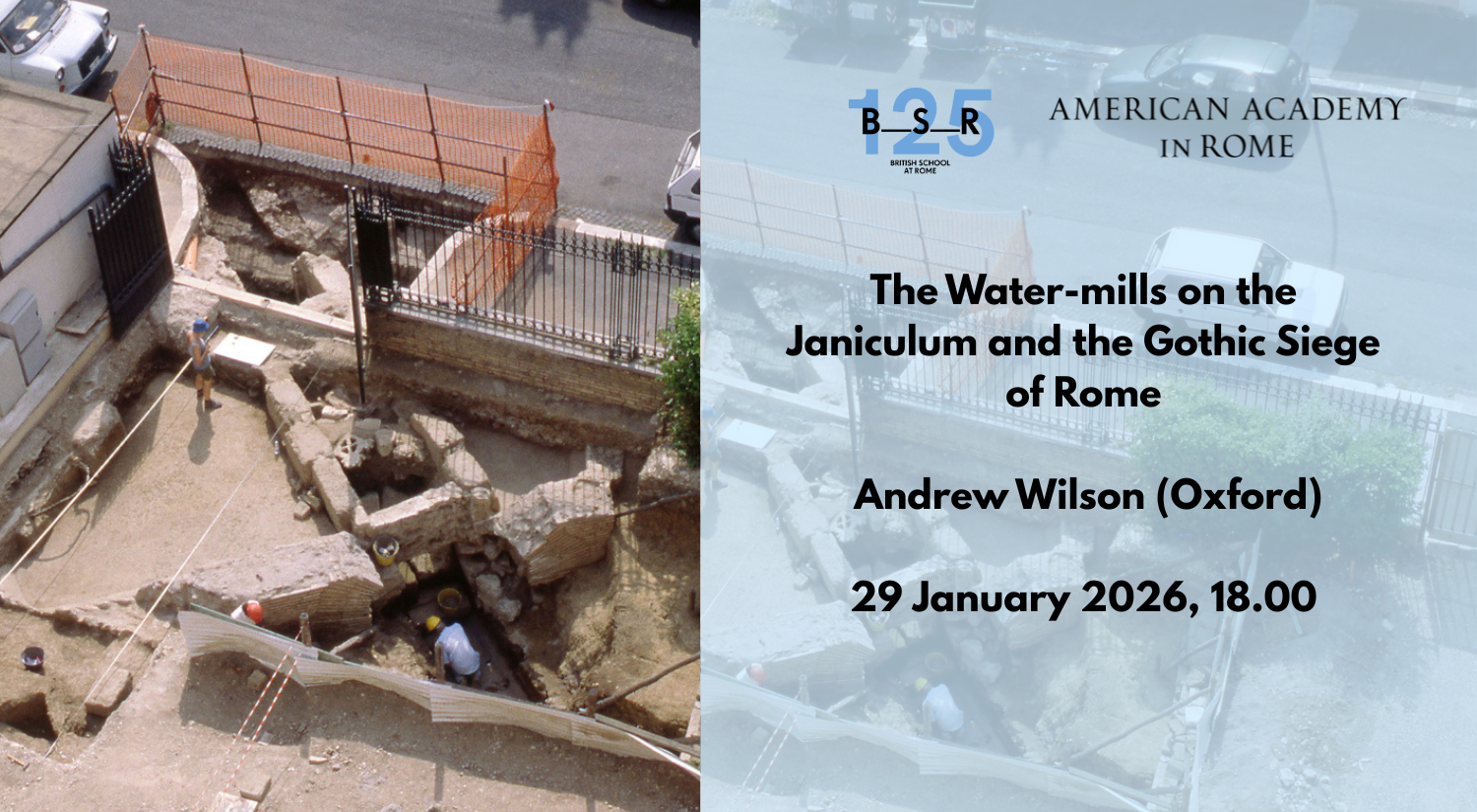
On January 29, 2026 the American Academy in Rome will present the third lecture on Material Environments, on campus and streamed on Zoom. Roman economy expert Andrew Wilson will speak on "The Water-mills on the Janiculum and the Gothic Siege of Rome." As they note, "this talk draws together the results of several excavation campaigns conducted in and around the Academy parking lot, exploring their significance for the changes to the material environment of the neighborhood."
Scholars of ancient Greek philosophy and leading moral psychologists will converge at Stanford and online, January 30th through February 1st, for the 7th Annual Stanford Ancient Philosophy Conference. Contact Soham Shiva (sshiva@stanford.edu) for zoom details.
Edith Hall and Arlene Holmes-Henderson have been leading an initiative to provide classics and philosophy courses to inmates in British prisons– featured last year in The Guardian. A hybrid conference on the program will take place at the University of Durham March 5th and 6th 2026: "Teaching Philosophy and Antiquity in Prisons."

,_second_half_of_the_2nd_or_early_part_of_the_3rd_century_AD,_found_in_Autun_(Augustodunum),_Mus%C3%A9e_Rolin,_Autun,_France_(2).jpg)
.jpg?ref=pasts-imperfect.ghost.io)
_Plato_charming_the_wild_animals_with_music,_Khamsa_of_Nizami,_Mughal,_1595_-6,_f.208,_British_Library.jpg?ref=pasts-imperfect.ghost.io)